






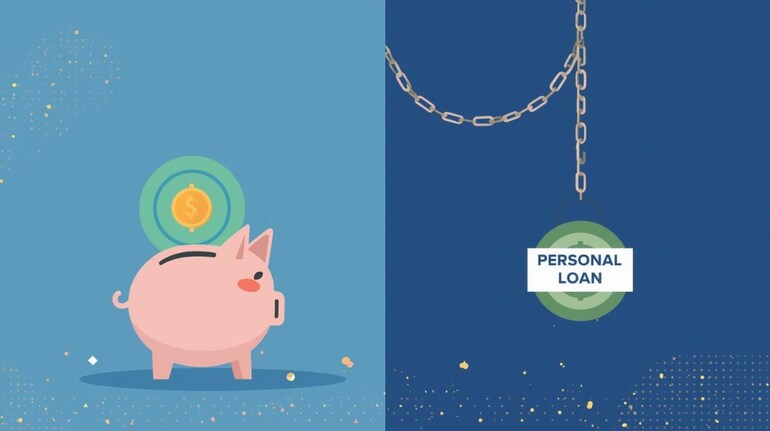

If you suddenly need money, most people think of a personal loan first. It feels straightforward. Apply, get approved, start paying EMIs. But if you already have money sitting in a fixed deposit, there’s another option that often turns out to be far cheaper: borrowing against your own FD.
On paper, both are loans. In reality, they work very differently.
Loan against fixed deposit
When you take a loan against your FD, you’re not breaking the deposit. The bank simply gives you a loan using that FD as security. Typically, you can borrow 75-90 percent of the FD's value. The interest rate is usually 1 to 2 percent higher than the rate your FD earns.
If your FD earns 7 percent, your loan might cost 8 to 9 percent. Meanwhile, your FD continues to earn its 7 percent. That means your real, effective cost is just the difference. In simple terms, you’re paying roughly 1 to 2 percent extra to access your own money without losing the FD benefits.
There’s usually very little paperwork, almost no processing fee, and the money comes quickly because the bank already holds your deposit. It’s one of the simplest forms of borrowing.
Compare that with a personal loan
A personal loan is unsecured. The bank is taking a risk because there’s no collateral. So it charges you for that risk. Interest rates can range from 10 percent to 18 percent or even more, depending on your credit score and income profile. On top of that, there’s often a processing fee, sometimes prepayment charges, and stricter eligibility checks.
If you take a Rs 5 lakh personal loan at 14 percent for three years, you’ll pay a significant amount in interest. That’s why personal loans are considered one of the costliest mainstream borrowing options.
Which one is cheaper?
If you already have a fixed deposit, borrowing against it is almost always cheaper than taking a personal loan. The math usually works in your favour because your effective interest cost is low and you avoid premature withdrawal penalties.
But there are situations where a personal loan makes sense. If your FDs are meant for something specific, like your child’s school fees or a house down payment, you may not want to put them at risk. Also, if you need a larger amount than your FDs can support, a personal loan might be the only practical option.
The real takeaway is this: if you’re choosing between the two and you already have a sizeable FD, don’t automatically apply for a personal loan. Run the numbers. In many cases, you’ll realise you were about to pay far more interest than necessary.
Sometimes the cheapest loan is the one backed by your own savings.
Discover the latest Business News, Sensex, and Nifty updates. Obtain Personal Finance insights, tax queries, and expert opinions on Moneycontrol or download the Moneycontrol App to stay updated!
Find the best of Al News in one place, specially curated for you every weekend.
Stay on top of the latest tech trends and biggest startup news.





