

Presenting the Union Budget in the Lok Sabha on February 1, Finance Minister Nirmala Sitharaman on Sunday did not announce any new relief for homebuyers, despite expectations of tax breaks or incentives to support housing demand. The absence of new measures occurs when property prices remain high, and borrowing costs continue to strain household budgets.
For many people, deciding whether to buy or rent a home is one of the most significant financial choices they will face. It involves more than monthly payments; it concerns long-term security, flexibility, and peace of mind. With house prices remaining high in many areas and rents continuing to increase, the decision has become even more challenging. Understanding the key advantages and disadvantages of each option can help individuals choose the path that best fits their finances, lifestyle, and future goals.
Pros and cons of buying a home
When you consider buying a home, you might see many benefits. For example, you own the property, it is completely yours, and the home is an asset. Over time, the value of the home may increase, helping you build wealth. With fixed equated monthly instalments (EMIs), your payments stay the same, unlike rent, which can go up each year.
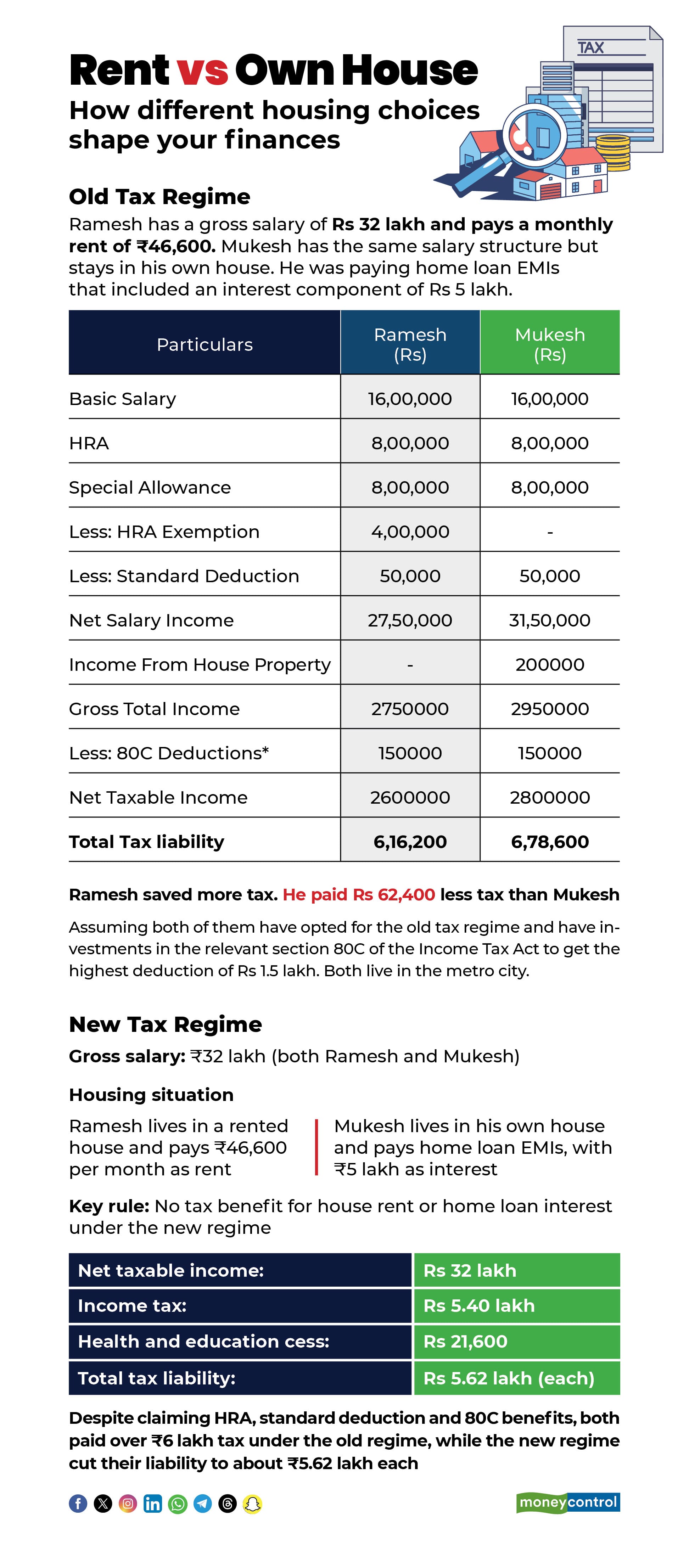
You are free to renovate, decorate, or extend the home as you wish. There’s no need to worry about being asked to leave if the landlord sells.
"Buying a home helps create a long-term asset. It can offer price appreciation, predictable EMIs, and tax benefits on home loans. For many Indian families, it also brings emotional comfort and a sense of stability," said Adhil Shetty, CEO of BankBazaar.com "But these benefits come with costs. Upfront expenses are high. Maintenance is ongoing. Property is also illiquid. In the early years, this can strain cash flows. A home loan also ties households down at a time when careers, incomes, and cities may still be changing," added Shetty.
While a home comes with high upfront costs, it requires you to make large deposits for registration and stamp duty, in addition to the cost of the home. Overall, moving costs can also be expensive. Owning a home also comes with responsibility. You need to maintain it and repair it every now and then.
While there is no doubt that having a home creates a long-term asset, you can only benefit from it when you have a second home to live in. Also, selling a home takes time, which makes moving harder. Moreover, a loan can last 20–30 years or more. Until and unless you pay up your EMIs, technically, your home belongs to your bank, not you.
Pros and cons of renting a home
Renting a home comes with lower upfront costs. Usually just a deposit and a few months’ rent. It is easier to move for work, family, or lifestyle changes. Repairs and major maintenance are usually handled by the landlord. Also, there is no property market risk. You are not affected if house prices fall.
"Renting works differently. It keeps monthly costs lower and allows flexibility. Renters can live closer to work, move cities easily, and invest surplus savings in financial assets. Over time, these investments can grow steadily. This approach often suits the early earning years. The downsides are clear. There is no ownership. Rents usually rise. Housing security depends on the landlord," added Shetty.
You must understand that monthly rent does not create an asset. Whether your salary increases or not, rent can go up when contracts are renewed after 11 months. In Delhi NCR, it usually rises by 10 per cent.
Furthermore, many restrictions exist when decorating your rented home. Some landlords might not permit keeping pets. In fact, landlords may choose not to renew a lease or may sell the property even after your contract does not end. Over time, renting can cost more than buying without providing any return.
The choice between renting and buying should be driven by financial readiness, not social pressure. Renting early while investing regularly builds financial strength. Buying makes sense only when income is stable, location plans are clear, and the EMI fits comfortably within the household budget. "A home should support long-term wealth, not control it," said Shetty.

Discover the latest Business News, Sensex, and Nifty updates. Obtain Personal Finance insights, tax queries, and expert opinions on Moneycontrol or download the Moneycontrol App to stay updated!
Find the best of Al News in one place, specially curated for you every weekend.
Stay on top of the latest tech trends and biggest startup news.