






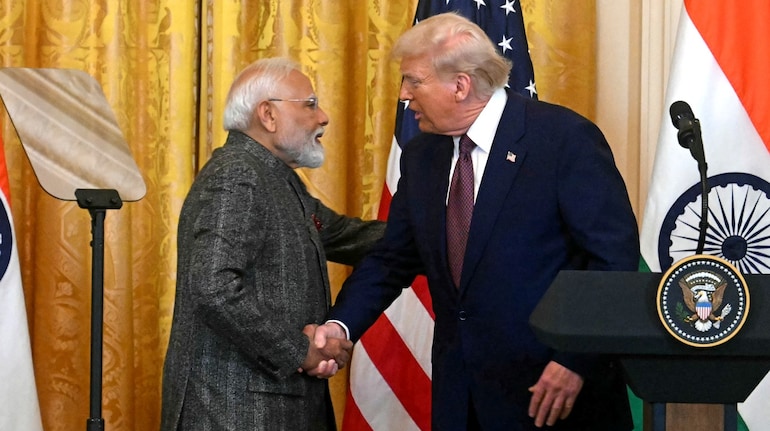

India and the United States have agreed to reduce tariffs on a range of sectors, including industrial goods, agricultural products, gems and aircraft parts under a framework for an interim trade agreement.
Announced jointly on February 7, the framework commits to bringing reciprocal tariffs on Indian exports down to 18 percent.
It also reiterates both sides’ intent to negotiate a wider bilateral trade pact that will include further market-access concessions.
For investors, this raises a practical question: which sectors could benefit from this move, and what is the right way to invest in them without taking unnecessary risk?
Several export-oriented sectors are better placed to gain from the deal, especially those with strong linkages to the US market and established manufacturing capabilities in India.
According to Lt Col Rochak Bakshi, CFP, Trunor Enterprises, “Sectors where sentiment had weakened earlier are now seeing renewed interest.”
Capital goods companies with US exposure and textiles should be among the key beneficiaries of the tariff deal. Bakshi says, “Sentiment in these areas had hit a low earlier, and this development helps revive confidence. However, investors should remember that stock performance will ultimately depend on how well companies deliver on earnings.”
Textiles and exports: A possible turnaround
Textiles, in particular, stand out as a potential turnaround sector. Shweta Rajani, Mutual Fund Head at Anand Rathi Wealth Limited, says the sector was among the worst hit after tariffs were imposed.
“Indian textile exporters had seen a sharp business contraction of nearly 35-50 percent and were forced to offer 15-25 percent price discounts to remain competitive,” Rajani explains. With tariffs now reduced to 18 percent, she says India’s cost competitiveness has been restored, especially against countries like Vietnam and Bangladesh.
“This is likely to support volume recovery, margin normalisation and better capacity utilisation over time,” she adds.
Rajani also points to pharmaceuticals and seafood as relatively steady beneficiaries of the India-US deal. India already has a strong presence in the US market in these segments, supported by experience in regulated manufacturing, strong supply chains and scale.
Earlier, higher tariffs had diluted India’s pricing advantage despite these strengths. “The reduced tariff regime restores this competitive edge, which can support higher export volumes, better realisations and renewed growth momentum,” Rajani says.
That said, experts caution investors against assuming that all sector gains will be long-lasting. While some stocks may see a short-term boost driven by sentiment, sustained performance will depend on consistent improvement in earnings.
How should retail investors take exposure?
For retail investors, the bigger question is how to invest in these themes, through sectoral funds, individual stocks or diversified mutual funds.
Both experts advise caution. “If one cannot devote sufficient time towards research, it is better to take exposure through diversified mutual funds and leave the decisions to professional fund managers backed by research teams,” Bakshi says.
Rajani echoes this view, recommending diversified equity fund categories such as flexi-cap, multi-cap and market-cap-based funds. These funds spread investments across sectors and themes, reduce concentration risk and allow investors to participate across market cycles with greater stability.
For investors, the takeaway is clear: while the India-US tariff deal opens up opportunities in select sectors, long-term success still depends on diversification, earnings delivery and staying aligned to one’s risk comfort, not chasing headlines.
Discover the latest Business News, Sensex, and Nifty updates. Obtain Personal Finance insights, tax queries, and expert opinions on Moneycontrol or download the Moneycontrol App to stay updated!
Find the best of Al News in one place, specially curated for you every weekend.
Stay on top of the latest tech trends and biggest startup news.





