






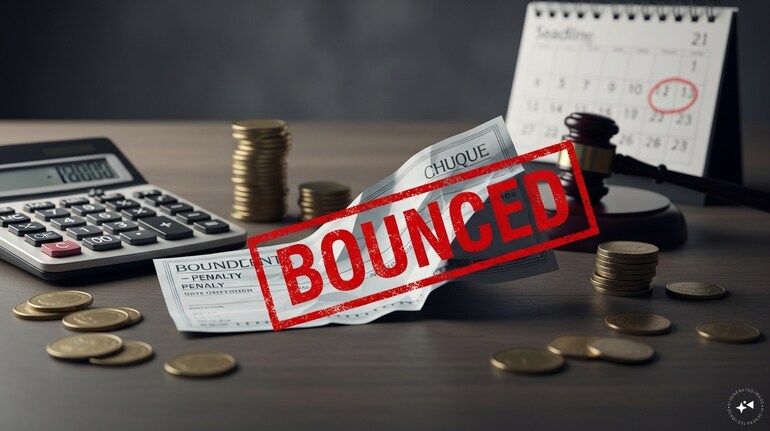

Most of us have written a cheque at some point without giving it too much thought. You assume the money will be there, or maybe you’re waiting for another payment to come in. But if that cheque is presented and your account doesn’t have enough balance, it’s not just a bank penalty you’re dealing with. It can become a legal issue under Section 138 of the Negotiable Instruments Act.
And yes, the law does say that if you are convicted, you could face up to two years in jail, or a fine that can go up to twice the cheque amount, or both. That doesn’t mean everyone goes to jail for a bounced cheque, but it does mean you shouldn’t treat it casually.
Here’s how it usually unfolds.
When a cheque bounces, the bank gives the person who deposited it a return memo explaining why it was rejected, most commonly because of insufficient funds. After that, the person who was supposed to receive the money has 30 days to send you a legal notice demanding payment. Once you receive that notice, you get 15 days to pay up.
If you clear the amount within those 15 days, the matter generally ends there and no criminal complaint is filed. This is the part many people miss. The law gives you a window to fix things before it reaches court.
The real trouble begins when you ignore the notice, avoid communication, or simply hope the other person won’t pursue it. If you fail to pay within the 15 days, the other party can file a criminal complaint. Then you may have to attend court hearings, hire a lawyer, and deal with months, sometimes years, of legal stress.
In many cases, courts encourage settlement and focus on ensuring the money is paid rather than sending someone to jail. But if you repeatedly fail to appear in court or refuse to comply with orders, the situation can become much more serious.
Post-dated cheques are not a loophole either. If you issue one for rent, a loan, or a business deal, and it bounces when presented, the same law applies because it was meant to clear a legal liability.
The simplest way to stay safe is also the most obvious one: never issue a cheque unless you are certain the money will be in your account when it is deposited. And if something goes wrong, address it immediately instead of avoiding it.
A bounced cheque may start as a financial slip-up, but if ignored, it can turn into a long and exhausting legal battle. Acting early can save you a lot of unnecessary trouble.
Discover the latest Business News, Sensex, and Nifty updates. Obtain Personal Finance insights, tax queries, and expert opinions on Moneycontrol or download the Moneycontrol App to stay updated!
Find the best of Al News in one place, specially curated for you every weekend.
Stay on top of the latest tech trends and biggest startup news.





