







India’s insurance sector is at an inflection point. While penetration remains low and growth opportunities large, concerns over rising premiums, claim disputes, high distribution commissions and weak governance are eroding customer trust.
In recent days, regulators and policymakers have raised these structural issues and warned that the next phase of expansion will depend as much on credibility as on capital.
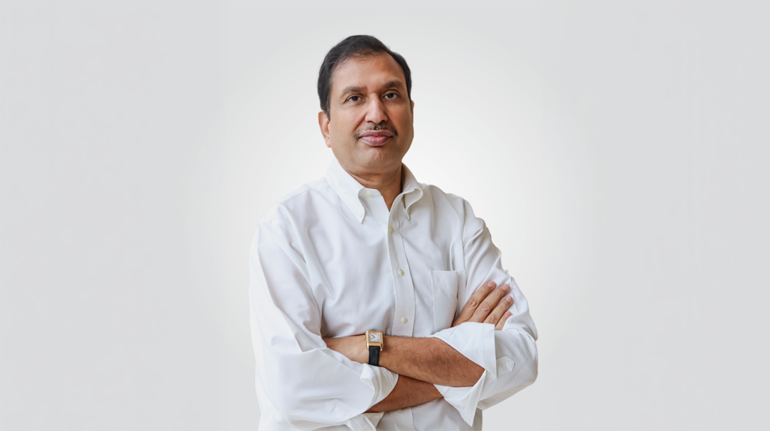
Go Digit Group of Companies chairman Kamesh Goyal has closely watched the industry evolve over the last two decades. In an interview to Moneycontrol, he talks about why insurance costs remain high, the need for reforms and what it will take to make insurance affordable, as the sector prepares for next growth cycle. Edited excerpts of the interview:
Distribution costs remain a key concern and the Economic Survey has flagged high-commission structures. Are stronger checks needed in bancassurance and other channels? What is your assessment of RBI’s recent norms?
Over the last year, the signal has been quite clear. When the finance minister, the RBI Financial Stability Report, the Economic Survey, amendments to the Insurance Act, and comments from the IRDAI chairman all highlight higher costs, it tells us this is structural, not incidental.
The intent of the 2023 EoM regulations was to protect the end customer. However, the outcomes have not fully aligned with that objective. In certain channels, particularly where insurance is bundled with another product, customer choice can be constrained and costs may not always reflect competitive discovery. If left unaddressed, this will gradually weaken trust.
The RBI’s recent norms on mis-selling are constructive and signal seriousness. However, governance reinforcement is equally important. A significant share of insurance business flows from banks to their affiliated insurers. There is currently no formal mechanism requiring bank boards to annually certify that this business is conducted on a demonstrably arm’s-length basis, with transparent comparison of pricing, product features, and commissions.
What more can be done to improve distribution norms for banks?
Two steps can materially improve outcomes — first, bank boards should certify arm’s-length conduct in insurance distribution. Second, a reasonable cap on the proportion of business directed to affiliated insurers would strengthen competition.
At the same time, we should recognise that higher cost and conduct issues are not limited to banks alone. Across other channels also, the need for IRDAI-led distribution reforms is overdue. Without sharper frameworks that align incentives to customer outcomes and bring greater transparency to cost and value delivered, costs will remain high and trust will continue to be tested.
These reforms are pro-customer and pro-sustainability. The encouraging part is that the policy system has clearly recognised the issue - now the focus must shift to execution.
What has been the impact of GST changes on insurance products and customer adoption?
In health insurance, the GST reduction has supported growth. In motor, particularly in the two-wheeler segment, there has been some positive momentum. In life insurance, the initial boost appears to have moderated.
However, tax measures can only provide temporary stimulus. Long-term penetration depends on structural trust, product clarity, and affordability. When customers feel pricing is fair and products are transparent, adoption follows naturally.
The broader focus today on improving product design and governance will ultimately have a far greater impact on penetration than tax changes alone.
Health insurance complaints are rising, especially around claims. Premiums for senior citizens are increasing and group health portfolios are under stress. How should the industry respond?
Health insurance globally is complex and India is confronting the same structural challenges.
One issue lies in product design. Customers sometimes hesitate to fully disclose pre-existing conditions, fearing higher premiums or denial of coverage. When such conditions surface at the time of claim, disputes arise. Trust erodes on both sides. Unless we move toward a minimum level of product standardisation, especially for common conditions such as hypertension or diabetes up to defined ages, this cycle will persist.
Second, healthcare inflation is not being addressed systemically. Minor procedures are often undertaken in tertiary hospitals. India needs stronger primary care, referral discipline, and tiered hospital utilisation. Without that, costs will continue to escalate.
Third, hospital pricing lacks transparency and benchmarking. As ownership structures evolve and institutional capital plays a larger role, cost discipline becomes even more important.
In group health, aggressive pricing in certain segments has created sustainability pressures. If retail customers indirectly subsidise underpriced corporate portfolios, retail premiums will continue to rise and dissatisfaction will deepen.
The positive side is that India still has the opportunity to implement structural reform at relatively low penetration levels. If we standardise products, improve cost transparency, and align incentives properly, health insurance can become significantly more stable and trusted over the next decade.
The FDI limit for the insurance sector has been raised to 100 percent. What impact do you foresee?
It is still early to see transformational effects. Reinsurance participation may increase, particularly in GIFT City. However, large-scale capital inflows into the broader insurance sector are more likely to depend on structural developments such as PSU disinvestment and further equity offerings by large public insurers.
The reform is directionally positive. Over time, greater capital flexibility should enhance competition and innovation.
What are the biggest challenges and opportunities for the insurance industry?
India remains significantly underpenetrated in insurance, that is the opportunity.
But penetration will not increase sustainably if costs remain high and trust continues to erode. The industry must reduce end-customer costs, simplify products, strengthen distribution governance and structurally reform health insurance design.
It is widespread knowledge that lot of vehicles plying on the road are uninsured. There is need for the state governments to run drives to ensure that vehicles are insured. This will enable victims of road accidents to get proper compensation.
Another area which has been consistently highlighted by government, IRDAI and also mentioned in RBI’s report is the need to develop much more domestic reinsurance capacity. The premium retention trends are not encouraging.
The encouraging aspect is that policymakers and regulators have recognised these challenges. With coordinated action and disciplined implementation, India can build an insurance system that is both growth-oriented and deeply trusted.
If we act decisively now, the next decade can be far stronger than the last decade.
Discover the latest Business News, Sensex, and Nifty updates. Obtain Personal Finance insights, tax queries, and expert opinions on Moneycontrol or download the Moneycontrol App to stay updated!
Find the best of Al News in one place, specially curated for you every weekend.
Stay on top of the latest tech trends and biggest startup news.





