






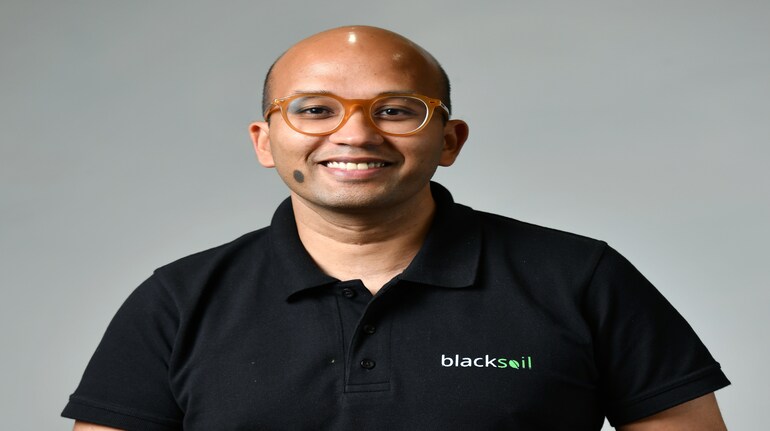
Having concluded the Caspian Debt acquisition and raining Rs 65 crore of equity, Ankur Bansal, co-founder and managing director, BlackSoil Capital says he is open to more inorganic options if that would help diversify his business and access to scale. Working on reducing the concentration risk in portfolios and diversifying the funding sources, Bansal, an investment banker before founding BlackSoil, is engaged with credit rating agencies to see if the company can get a leg up in ratings.
Edited excerpts:
Now that the Caspian deal is done with and you have had another round of capital raise, what’s next from BlackSoil?
Our NBFC lending was paused for the last almost 9 months. The book has shrunk because we saw stress in the market and it was just not MFI. While MFI has become the bad boy in the entire segment, we saw stress across all MSME categories. The only category which was doing okay was the FinTech and personal loan side, because of consolidation that happened two years ago. Only the good players are now left and we were only growing the digital, FinTech side. Now that we have also consumed the merger, 65 of our portfolio companies are only NBFCs. We have good amount of market data on who is doing well, their performance, their customers etc. We are now focusing a lot on these softer aspects. Governance is a big problem, especially in smaller NBFCs. We have to focus on the softer aspects to understand where we should lend and not lend.
A recent ICRA report highlighted concentration risk and asset quality in your balance sheet. How are you addressing this?
Caspian acquisition has helped us in that, because Caspian had no concentration. Even our supply chain business was built for that purpose. It is granular customers and we take a call for Rs 10-15 crore of lending. They will diversify across multiple vendors. Also, our net worth has grown tremendously. Post the acquisition it is now Rs 700 crore of net worth, which automatically gives granularity and growth. So the percentage will keep reducing.
That said, we will have few accounts where we have a huge amount of comfort and have to give a little bit of larger capital. These accounts will typically be around Rs 25-30 crores ticket sizes. Our understanding of B2B businesses is going to evolve in India. Companies are growing. They are looking for working capital, which is not special situation funds. Banks are already coming into these segments. The beauty in our business is that because we sit on so much private data, it makes us underwrite better.
What sort of growth are you targeting?
We have always done 20-30% growth, which we want to achieve for the next 2-3 years. But there could be a year where we may not end up growing so much. I don’t have pressure from my shareholders as long as we don't get the NPA part wrong. We want to pick up prime customers in our segment, who will fight with us for 10 – 20 bps. Therefore, the biggest pressure now is margins and yields are only going to come down. But since we are NPA allergic, I cannot chase yield. I have to chase good customer and give them a good product.
The ICRA report also mentions that a lot of weightages being given to unlisted bonds issuances. Is that a concern for you?
That is my biggest strength. One of the reasons for where we are today, is because of our NCD strength. The average ticket size of our NCD customers is around Rs 40 - 50 lakhs and these are not typical retail bonds; its almost HNI and we do a directly placement to these HNIs. That means our in-house distribution is our strength. Our investors keep repeating investments, because they feel the capital is safe. We have built a 10-year track record with them and the NCDs have a 3-year bullet repayment. This is actually better than a bank funding, because banks give money for 18 - 24 months, amortizing the loan. You are always reaping the money and using it for your growth. Our book churn cash twice in its lifecycle versus taking a bank loan. That said, these is limitation on how much we can grow, because we can’t double it in two years. In my mind, it's like almost quasi-equity.
But at some point to grow faster or more efficiently, you will need to augment this source of funding…
We are working with development financial institutions for that. Post the merger with Caspian, we are in a unique space where everybody wants to fund. They have done in the past with financial inclusion for instance. Our next biggest segment will be focusing on climate finance. A lot of our portfolio companies are in agri-tech and electric vehicles where there is a strong comfort that climate (financing) can get benefit. For example we work with Agrostar. We work with DeHaat, we work with Battery Smart. We just funded Captain Fresh. These are the kind of customers who DFIs would like us to fund more.
For nine months you have been off lending to NBFCs. Have you restarted that business?
Yes. We have done selective contracts. Now we have enough data to give us comfort on with whom we want to work and whom we want to exit, there is better comfort.
Are you open to more acquisitions if it can help you grow faster?
Yes, because our DNA is M&A. The business has to be supplementary to our business; it could be completely new also. But has to make commercial sense. For example, a typical Fintech founder, whi doesn't understand commercial lending, isn’t the kind of company, I would like to look at. Caspian was a very one-off transaction, because we got complementary skill sets, and literally a plus on every aspect of our business. Chances that it would be a B2B lending outfit is low chances because there are very few companies in that space and we are already doing it.

Discover the latest Business News, Sensex, and Nifty updates. Obtain Personal Finance insights, tax queries, and expert opinions on Moneycontrol or download the Moneycontrol App to stay updated!
Find the best of Al News in one place, specially curated for you every weekend.
Stay on top of the latest tech trends and biggest startup news.




