






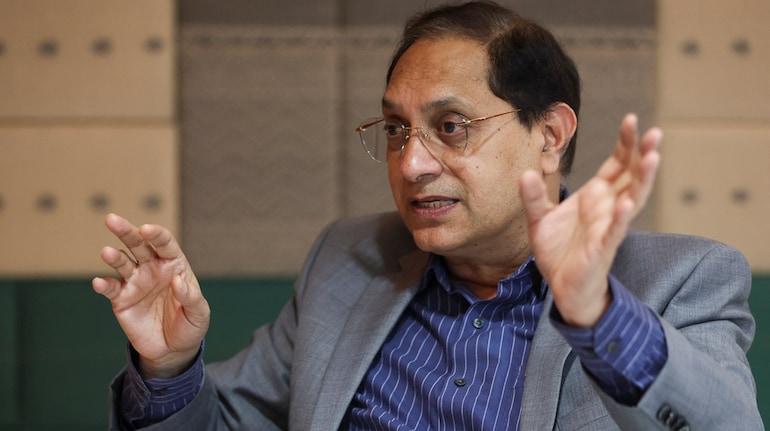

The Securities and Exchange Board of India's (SEBI's) chairman Tuhin Kanta Pandey on Thursday said management discussion should explain internal and external drivers of performance, noting that due diligence by companies in offer documents is not always "independent".
“The management discussion and analysis should move beyond narration and explain the internal and external drivers of performance. Our inspections show that due diligence is not always independent and at times relies on issuer undertakings,” the capital market regulator's chief said, flagging persistent shortcomings in IPO disclosures and merchant banker practices.
Speaking at the 14th AIBI Annual Convention, Pandey said the market regulator continues to observe recurring disclosure gaps in offer documents, which reduce transparency and investor understanding and lengthen fund-raising timelines through repeated regulatory queries.
“SEBI continues to observe recurring disclosure gaps that reduce transparency and investor understanding,” Pandey said.
The SEBI chief pointed out that disclosures need to be sharper in four key areas — risk factors, valuation rationale, objects of the issue and use of proceeds.
He also underlined the need for clearer explanations of capital structure, particularly when changes occur close to a public issue.
“Disclosures on capital structure must clearly explain past capital raisings, preferential allotments and changes in control, especially close to the IPO,” Pandey said.
Describing merchant bankers as the “gatekeepers of transparency” in the IPO process, Pandey said they sit at the centre of disclosure integrity, ensuring that offer documents are clear, complete and verifiable across business, risks, governance and use of funds.
Pandey said projections disclosed in offer documents, particularly those related to working capital and capital expenditure, must be independently verified, with proper documentation maintained. He emphasized that even basic verification processes require on-ground evidence.
“Projections, especially for working capital and capex, must be independently verified, with backup papers maintained for all material statements. Basic checks, such as site visits, must be evidenced with complete reports, photographs with geotagging and timestamps, reflecting SEBI’s expectation of thorough physical verification by merchant bankers,” he said.
Referring to industry-led initiatives, Pandey cited Association of Investment Bankers of India (AIBI’s Key Standard Observations of SETI** and the **AIBI SME District Handbook**, saying these can serve as practical reference points for issuers, merchant bankers and intermediaries.
“In this context, AIBI’s initiatives… can serve as a practical reference,” he said.
Pandey said SEBI has recently revamped merchant banking regulations as part of ease-of-doing-business measures and issued operational guidelines to provide glide paths for compliance.
Reiterating the regulator’s stance, Pandey said SEBI would intervene wherever there is serious misrepresentation or a clear breach of regulatory requirements.
“We will intervene whenever there is a serious misrepresentation or clear breach of regulatory requirements,” he said.
Discover the latest Business News, Sensex, and Nifty updates. Obtain Personal Finance insights, tax queries, and expert opinions on Moneycontrol or download the Moneycontrol App to stay updated!
Find the best of Al News in one place, specially curated for you every weekend.
Stay on top of the latest tech trends and biggest startup news.





