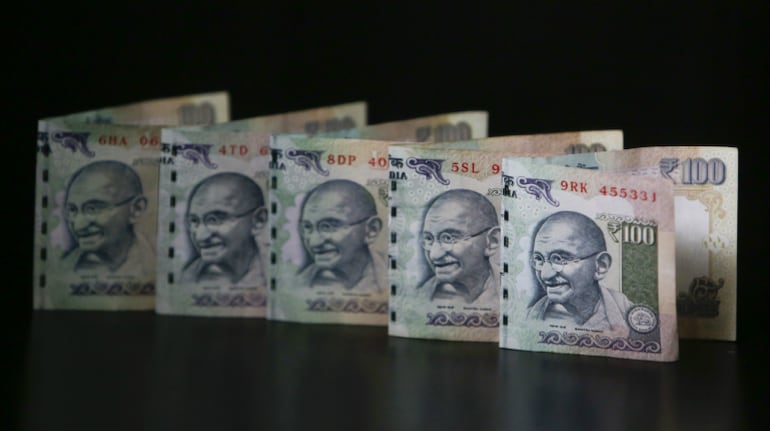
As the Indian currency witnesses a sharp depreciating trend, comparisons are being made to the 2013-scenario.
The Indian rupee, in 2013, was bracketed as being part of the ‘Fragile’ Five’ economies. The fragile five coined then were Brazil, South Africa, Indonesia, Turkey and India.
Fragile as these were countries which ran the highest current account deficits (imports more than exports) which in a scenario of global risk-off sentiment found it difficult to attract the capital inflows to fund the current account deficit.
These countries thus had to allow their currencies to depreciate rapidly and then increase interest rates to attract capital.
India did that in 2013 with the INR moving from around Rs 54/USD in April 2013 to Rs 68/USD in August 2013. In the meantime, in July 2013, the RBI raised interest rates by 200 bps to support the rupee and draw in capital inflows.
The Indian currency breached the Rs 70/USD mark for the first time and has now depreciated close to 10 percent in the year 2018 against the US Dollar.
Rising oil prices, India’s biggest macro risk, has played a big part in this depreciation. Foreign investor outflows, especially in the Indian bond market, has also added to some pressure on the Indian rupee.
Despite the 10% depreciation, the Indian currency is still relatively over-valued to some of its other emerging markets (EMs).
But with this also being an election year and election years are known to bring its own idiosyncratic risks.
Add to that the risk of global oil prices, rising global interest rates and the risk of US economic and geopolitical policies under President Trump suggests that emerging market countries in general and INR will remain under pressure and volatile in the months to come.
But, India is not in a crisis.
Current Account Deficits are lower than in 2013, interest rates, both nominal and real, are sufficiently higher than they were in 2013. Inflation and fiscal deficit are under control. Forex Reserves are higher.
Disclaimer: The author is Head - Fixed Income & Alternatives, Quantum Advisors. The views and investment tips expressed by investment expert on Moneycontrol are his own and not that of the website or its management. Moneycontrol advises users to check with certified experts before taking any investment decisions.

Discover the latest Business News, Sensex, and Nifty updates. Obtain Personal Finance insights, tax queries, and expert opinions on Moneycontrol or download the Moneycontrol App to stay updated!
Find the best of Al News in one place, specially curated for you every weekend.
Stay on top of the latest tech trends and biggest startup news.