






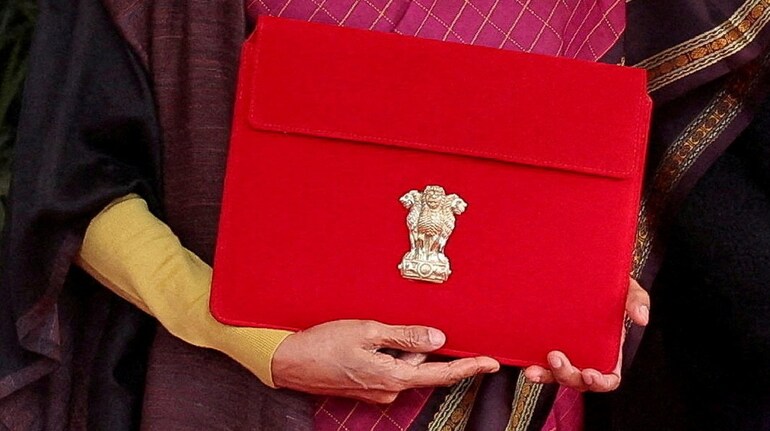

The finance minister delivered a Budget that broadly matched market expectations — except on one sore point: a sharp hike in securities transaction tax (STT) on futures and options, which promptly triggered a sell-off. Beyond that unpleasant surprise, the government stuck to its fiscal consolidation roadmap while continuing its growth push through higher capital spending and targeted support for emerging sectors.
Still, let’s be honest. There are no big levers in this Budget that materially accelerate earnings in the next two or three quarters. But then again, there were never meant to be. With fiscal constraints tightening and global uncertainty looming large, there was limited room for dramatic policy experiments. This was a Budget of discipline, not fireworks.
When sentiment takes a hit
The increase in STT on futures and options to 0.05% from 0.02% landed like a cold shower on an already nervous market. Derivatives volumes are already estimated to be nearly 30% lower than the 2024 peak, and higher transaction costs are unlikely to help revive trading appetite.
In the near term, this move is more about sentiment than fundamentals. Traders will complain, volumes may dip further, and volatility could remain elevated. Whether this ultimately curbs excessive speculation — or simply pushes activity elsewhere — is a debate that will continue well after the Budget headlines fade.
Capex story: Industrials stay in the game
On the positive side, the government raised capital expenditure by 9% to Rs 12.2 lakh crore, keeping the infrastructure and industrial engine running, albeit at a more measured pace. The focus on defence and railways, both of which saw meaningful allocation increases of 15% and 19%, is particularly positive. For the entire engineering pack, capital goods and EPC companies included, earnings visibility could be strong.
Yet, this does not mean cruising in top gear like in the first three years of Covid, when we were witnessing a strong industrial recovery, but more mid-gear cruising — steady enough to sustain the investment cycle.
Seeds are sown, but trees don’t grow overnight
The Budget also planted seeds across a wide spectrum of future-facing sectors — semiconductors, rare earth minerals, biosimilars, carbon capture, data centres, electronics manufacturing and medical tourism. All these buzzwords got highlighted in the budget for policy support.
At a time when foreign investors have been lukewarm on Indian equities — often arguing that India lacks a marquee global theme like artificial intelligence — this policy pivot attempts to redefine the narrative. Unsurprisingly, stocks linked to some of these segments popped on Budget day.
But let’s temper expectations. These are multi-year stories, not next-quarter earnings boosters, and investors can latch on to in order to ride the next wave.
Fiscal math: Discipline holds, bonds flinch
If there is one area where the finance minister has been unwavering, it is fiscal management. The government stuck to the FY26 deficit target of 4.4% of GDP and laid out a 4.3% target for FY27, reinforcing credibility at a time when growth pressures and global trade tensions are rising.
That said, bond markets were less thrilled by the gross borrowing figure of ₹17.2 lakh crore, which came in slightly above expectations and pushed yields higher. Add to that a hawkish Federal Reserve, and suddenly rate cuts no longer look like a guaranteed free lunch. For equity markets, that is not the most comforting backdrop.
Bits, pieces and policy plumbing
Several smaller measures — from duty rationalisation to credit guarantees and ease-of-doing-business steps — will take time to be fully decoded. None, however, appear powerful enough to dramatically alter market mood on their own.
One notable tax change from a market perspective was the overhaul of buyback taxation. Share buyback proceeds will now be taxed as capital gains, with effective rates of about 22% for corporate promoters and 30% for non-corporate investors. This is a meaningful improvement over the 2024 framework, where buyback income was treated as dividend income and taxed at marginal rates. This is more a tax relief for promoters, but won’t impact corporate actions in any significant way.
The FM also steered clear of the long-pending ask to waiver capital gains tax on FPIs in line with global norms; that did not come through but the Budget sis raise equity investment limits for persons residing outside India (PROIs). Individual caps were doubled to 10% from 5%, while the aggregate limit was raised to 24% from 10%. It’s a welcome measure, but again, unlikely to change the foreign flow equation.
Not flashy, but that may be the point
For commentators, the mild disappointment comes from the fact that this Budget tried to address almost everything — and therefore did not dramatically champion any single theme.
But perhaps that reflects reality.
Should the government prioritise tariff-hit sectors or futuristic AI-driven manufacturing? Both.
Should it boost consumption or invest in infrastructure? Both.
Should it cater to domestic investors or attract foreign capital? Again, both.
Markets face similar dilemmas. Should you buy industrials or consumers? Banks or IT? Growth or value? The uncomfortable answer is the same — portfolio balance beats binary bets.
At current market levels, the era of easy multibaggers is done and over with. Now, it’s time to “score singles” and the formula for that is stocks that be selective with stocks, pick only the ones that show steady earnings delivery, and have patience.
And perhaps that is the real message of this Budget too: not about chasing adrenaline highs, but about staying the course.
Discover the latest Business News, Sensex, and Nifty updates. Obtain Personal Finance insights, tax queries, and expert opinions on Moneycontrol or download the Moneycontrol App to stay updated!
Find the best of Al News in one place, specially curated for you every weekend.
Stay on top of the latest tech trends and biggest startup news.





