






Dear Reader,
What is the connection between Donald Trump’s eyeing Greenland and seeking regime change in Iran with India’s Union Budget, the US opting out of the global solar alliance and the criminal investigation against US Fed chief Jerome Powell?
Let’s connect the dots.
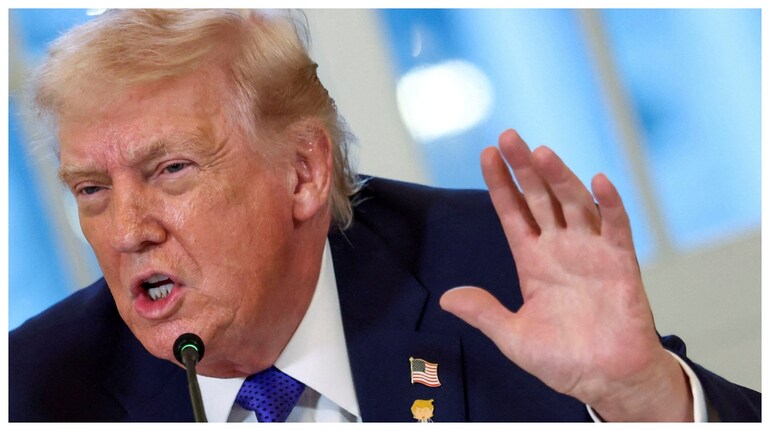
Put simply, Donald Trump’s message to the rest of the world, even to Europe, is contained in this Taylor Swift song:
‘We are never, ever, ever getting back together
We are never, ever, ever getting back together
You go talk to your friends, talk to my friends, talk to me
But we are never, ever, ever, ever getting back together
Like, ever.’
More seriously, we’ve been banging on in this newsletter about the unravelling of the integrated economic order that has defined the past three decades and the shift from a unified global market to a geopolitical marketplace is redefining everything from climate policy to your portfolio. This week, we wrote about Trump’s Greenland gambit and what it means for critical minerals, shipping routes, great power competition in the Arctic, and NATO. We pointed out that the US is looking for a suitable leader who can replace Khamenei in Iran. These are not just political stories. They are stark illustrations of the new playbook: using economic access and resource control as tools of statecraft. Control over rare earths, lithium, and energy is deemed essential for dominance in green tech, AI, and defence — the pillars of 21st-century economic power. Indeed, as this FT article, free to read for Moneycontrol Pro subscribers, says, the world has started stockpiling food again.
The US move to withdraw from the International Solar Alliance may not affect the alliance much, but the withdrawal from climate change initiatives has a deeper objective. Seen through the lens of competition between nations, it is a strategic calculation. Ceding multilateral ground forces rivals to bear higher transition costs alone, while preserving domestic fossil capital and manoeuvring room. Climate vulnerability is thus weaponised within economic rivalry.
How does this tie up with Trump’s move against Powell? Well, he wants to ensure that the stock markets do well—He has often rated himself by how the market is doing. And to ensure the markets do well, he wants to lower interest rates, which will help offset the fallout from his adventures in tariff land. This FT article asks, “Do markets care about Fed independence?” and answers, “They will eventually”. And this story has, as one of the eight tail risks for 2026, a pliant Federal Reserve chair that lets inflation rip. But that’s one side of the story -- when inflation is driven by strategic stockpiling and supply chain rewiring (forms of economic warfare), monetary policy becomes a tool of national economic resilience. Central banks now have to contend with a fragmented global system where their tools cannot address geopolitically-induced scarcity.
How is the Indian budget affected by all this? Could it be a tool to navigate this new landscape? There are plenty of reasons for scepticism. We pointed out that interest on past loans now accounts for a quarter of budgeted spending. We wrote that the budget is unlikely to displease the markets, but nor is it going to be a game changer. We said that budget days are usually much ado about nothing for markets. And we pointed to elevated bond yields in spite of lower policy rates, due to a demand-supply mismatch.
But in these times, there’s another, more long-term way of looking at the Budget. For instance, for the auto sector and EVs, incentives are a subsidy in the global race for EV supply chain dominance. For the cement sector, a national infra push is the physical bedrock of a competitive economy. For banks, it’s all about mobilising domestic savings to reduce external vulnerability. In this light, every line item in the Budget is recast as a strategic move.
The Indian market, too, is a strategic asset. The relentless flow of Indian retail capital into equities is more than faith; it’s a fortification of domestic capital markets against volatile global flows. This has become one of India’s key structural strengths.
That said, India is not insulated. Market participants continue to track global risks closely — from oil market developments that could derail equities, to weather disruptions and their implications, including how stocks may react in the event of an El Niño.
Against this backdrop, Budget 2026 assumes greater importance. It is not just an accounting exercise, but a signal of strategic priorities. We said unequivocally that the Budget must focus on national security and accelerate the nation's momentum in strategic autonomy to secure long-term economic and political resilience. The much-derided Military-Industrial Complex might be exactly what we need.
We wrote that food security is of utmost importance for the Viksit Bharat goal.
As an investor, you may well ask yourself, with Talking Heads, how did I get here? And you may ask yourself, "How do I work this?" Well, we do have some ideas for you—see the ‘Stocks’ section below. And of course, we said Midhani and Solar Industries will benefit from the focus on defence.
Geopolitics must now inform investment strategy, but the problem is politics is messy and rarely makes for clear-cut takeaways. As Groucho Marx is reported to have said, “Politics is the art of looking for trouble, finding it everywhere, diagnosing it incorrectly and applying the wrong remedies.”
In the end, it’s the same old contest dressed in 21st-century costumes: control the critical minerals, the sea lanes, the interest rates, and the grain silos, and you control the board. The rest of us watch the moves, adjust portfolios, and hope the next round of geopolitical chess doesn’t turn into a crisis.
Budget day in Delhi, tariff tweets from Mar-a-Lago, Fed rates — they’re all pieces of the same puzzle now.
Welcome to the new normal.
Cheers,
Manas Chakravarty
In case you missed them, here are some of the other stories and insights we published this week, apart from our technical picks in the equity, commodity, and forex markets:
Stocks
Weekly Tactical Pick: Why this midcap IT player merits a look, Lemon Tree Hotels, 360 ONE Wealth, L&T Technology Services, Bikaji Foods, Infosys, ICICI Lombard, HCL Tech, TCS, Solar Industries, D-Mart
Financial Times
Fiscal threats lurk in the undergrowth for Japan
Budget Snapshot
Fiscal goals need the hand of the states
Real estate sector eyes Budget 2026 push on affordability, GST relief and faster approvals
Budget 2026: Fixing the loose connections in India’s clean power circuit
Companies & Sectors
Labour codes cast accounting shadow on earnings
Life insurance’s next big growth is in a distribution makeover
Economy & Policy
For fixed income investors, the forex market matters more now than the Budget does
December data show rural jobs hold firm as urban labour market cools
A quiet inflation print, and loud signals for policy
India’s New Investment Framework: Growth without crisis
Tech & Startups
TCS voluntary exits outside restructuring tops 22,000 in 2 quarters on slower pace of hiring
Others
India’s quick commerce sector has boomed without help – but it’s time for sensible intervention
BJP states see higher SIR deletions than Opposition territory
Personal Finance: No crystal ball for 2026

Discover the latest Business News, Sensex, and Nifty updates. Obtain Personal Finance insights, tax queries, and expert opinions on Moneycontrol or download the Moneycontrol App to stay updated!
Find the best of Al News in one place, specially curated for you every weekend.
Stay on top of the latest tech trends and biggest startup news.




