






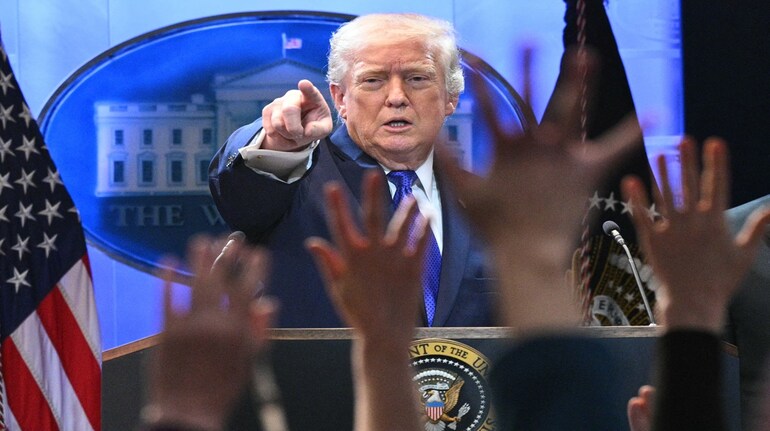
US President Donald Trump’s 15 percent uniform global tariff on all imports, effective February 24, is set to reshape global trade flows, benefiting Brazil and China the most, while delivering the largest blow to long-standing US allies including the UK, the European Union and Japan, according to a Financial Times report citing data from Global Trade Alert.
According to the independent trade monitoring body Global Trade Alert, Brazil will enjoy the biggest reduction in average tariff rates, with duties falling by 13.6 percentage points, followed by China, which will see a 7.1 percentage point reduction. The sharp tariff relief is expected to boost export competitiveness for both countries.
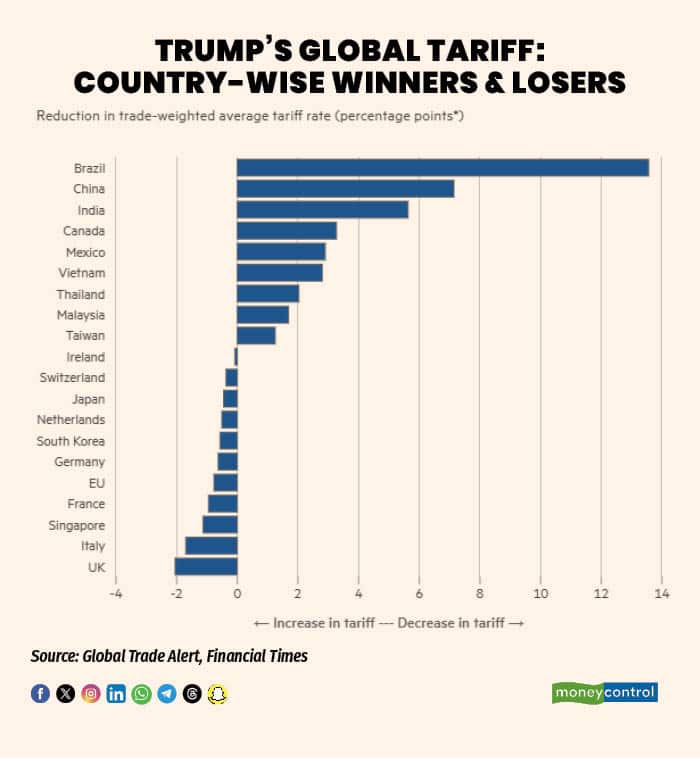
In contrast, traditional US allies will face the steepest tariff shock, as their previously lower negotiated tariff rates will now be raised to a flat 15 percent, resulting in a net increase in import duties. The UK, which had secured a 10 percent tariff on many goods, will now see its average tariff rate rise by 2.1 percentage points.
The European Union, which had negotiated a 15 percent tariff rate in its trade deal with Washington, will face an overall 0.8 percentage point increase, with Italy and France emerging as the most exposed once nearly 1,100 previously exempted product categories are factored into the calculations.
Japan, another key US ally, is also expected to take a significant hit, as its exports are heavily concentrated in automobiles, auto components, steel and aluminium — sectors that remain covered by separate tariffs still in force even after Friday’s Supreme Court ruling, according to the report.
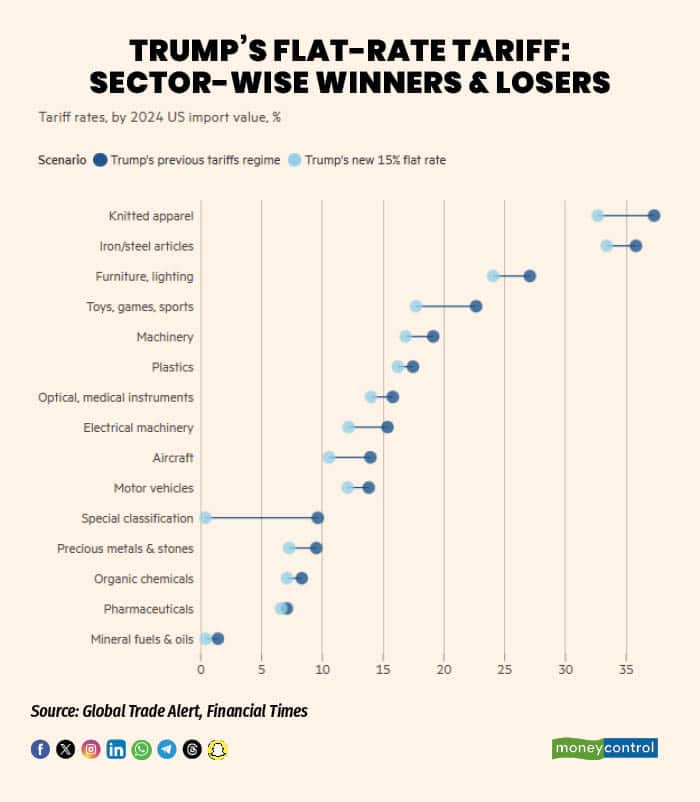
The new regime is expected to hit allied economies harder because their export baskets are dominated by capital-intensive and metal-linked industries, which continue to face higher sector-specific duties, compounding the overall tariff burden.
On the other hand, Asian manufacturing hubs such as Vietnam, Thailand and Malaysia are set to benefit disproportionately, despite being frequent targets of Trump’s criticism for running large trade surpluses with the US. Their export mix, dominated by labour-intensive products such as clothing, furniture, toys and plastics stands to gain from the levelling of tariffs, enhancing price competitiveness in the US market.
Analysts said the uniform tariff structure could accelerate the ongoing shift in global supply chains, strengthening Asia’s position in consumer goods manufacturing, while weakening Europe’s and Japan’s foothold in industrial exports, potentially triggering fresh trade negotiations.
(with inputs from Financial Times)Discover the latest Business News, Sensex, and Nifty updates. Obtain Personal Finance insights, tax queries, and expert opinions on Moneycontrol or download the Moneycontrol App to stay updated!
Find the best of Al News in one place, specially curated for you every weekend.
Stay on top of the latest tech trends and biggest startup news.




