








Derivative trading volumes have declined sharply following a series of tighter regulatory measures, and the recent increase in securities transaction tax (STT) is expected to add further pressure on market activity, experts said.
Over the past year, the derivatives segment has seen multiple interventions aimed at curbing speculative trading and reducing excessive retail participation. These included fewer weekly expiries, higher lot sizes, stricter margin requirements and the removal of certain spread benefits, significantly impacting turnover-intensive trading strategies.
According to data, derivative volumes on the National Stock Exchange have fallen nearly 40 percent from their peak levels recorded in June 2024. In contrast, derivative turnover on the BSE initially declined but later began improving and has nearly doubled so far this year.
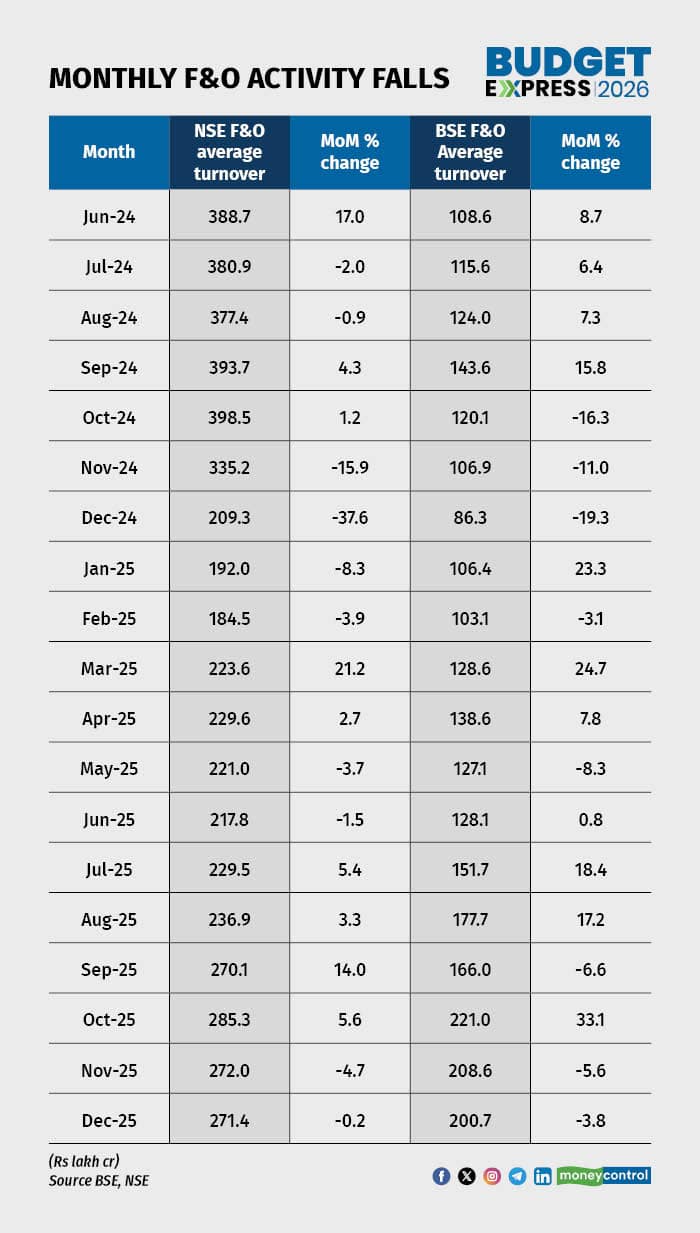
Market participants noted that while BSE’s derivative volumes remain significantly lower than NSE in absolute terms, the growth appears sharper in percentage terms due to the smaller base from which the exchange started.
The regulatory measures introduced by the Securities and Exchange Board of India in June 2024 were primarily targeted at high-frequency and speculative options trading. These changes reduced the viability of intraday strategies dependent on large volumes and thin margins.
Market participants said high-frequency traders and algorithmic participants primarily operate in the futures and options segment through low-risk, low-return strategies that rely on frequent trades. The rise in transaction costs has increased pressure on such models, forcing traders to either alter strategies or reduce exposure.
Rajesh Palvia, Head of Equity Strategy at Axis Securities, said the impact of the cost increase is likely to be most pronounced for large trading books involved in continuous trading and structured products.
He said these participants are expected to face the greatest pressure, which could lead to a contraction in overall market volumes. While the intent behind the STT hike is to curb excessive speculation and protect retail investors, Palvia noted that small traders may not be materially affected as the absolute cost impact on their trades is relatively limited.
In contrast, market makers and high-volume participants are likely to bear the brunt of the changes, potentially leading to reduced liquidity in the derivatives segment.
Meanwhile, Deepak Jasani said the recent improvement in BSE derivatives turnover has been driven largely by increased participation from foreign institutional investors, supported by differences in settlement cycles between exchanges. He said the shift in activity has aided BSE volumes, although any further changes in settlement structures or market parameters could influence participation. Otherwise, derivatives activity will remain closely linked to overall market direction.
Jasani added that futures and options volumes typically require a trending market—particularly an upward trend—to sustain retail participation. If markets remain weak or range-bound, derivatives volumes are unlikely to recover meaningfully and could remain under pressure following the STT increase.
Experts said while higher STT raises trading costs, market participation will ultimately depend on investors’ perception of profit opportunities, with volumes likely to remain subdued until market conditions improve.
Discover the latest Business News, Sensex, and Nifty updates. Obtain Personal Finance insights, tax queries, and expert opinions on Moneycontrol or download the Moneycontrol App to stay updated!
Find the best of Al News in one place, specially curated for you every weekend.
Stay on top of the latest tech trends and biggest startup news.





