






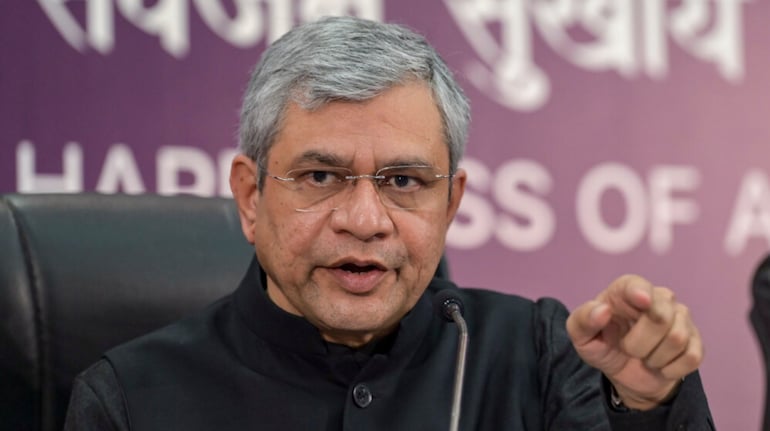

India is preparing to enter commercial-scale memory chip production even as the global artificial intelligence (AI) boom strains supplies of high-bandwidth memory (HBM), Union IT and Electronics Minister Ashwini Vaishnaw said, signalling a strategic push to reduce dependence on imports.
“Very soon, we’ll be starting the commercial production in a very large facility which is going to produce memory chips,” Vaishnaw said.
The comments come at a time when surging AI workloads are driving unprecedented demand for advanced memory, particularly High Bandwidth Memory (HBM) — a critical component used alongside GPUs in AI training and inference systems. Global supply remains concentrated among a handful of players, leading to tight capacity and rising prices.
Vaishnaw indicated that India’s semiconductor ambitions are expanding beyond assembly and packaging into deeper technology layers.
“There are many more people who want to invest in memory manufacturing in India,” he said, hinting at growing investor interest amid the government’s semiconductor incentive push.
India’s semiconductor strategy has so far focused on fabrication, packaging, and compound semiconductors. A successful entry into memory production — particularly advanced variants — would mark a significant leap in capability, as memory manufacturing is capital-intensive and technologically complex.
The minister also revealed that the government is initiating a research project under the proposed “Semicon 2.0” framework to build intellectual property around next-generation high-bandwidth memory chips.
“We are also picking up a research project as part of our Semicon 2.0 where we can develop some IP around latest high bandwidth memory chips,” he said, adding that early engagement with leading researchers has been “very encouraging.”
The push into memory comes amid mounting concerns globally over AI-driven supply constraints. As countries race to build sovereign AI infrastructure, access to advanced memory has become as critical as access to GPUs.



Discover the latest Business News, Sensex, and Nifty updates. Obtain Personal Finance insights, tax queries, and expert opinions on Moneycontrol or download the Moneycontrol App to stay updated!
Find the best of Al News in one place, specially curated for you every weekend.
Stay on top of the latest tech trends and biggest startup news.







