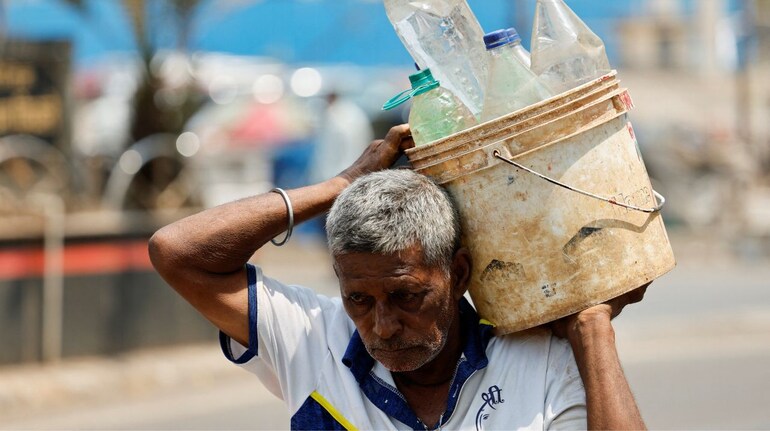
In April, India set benchmarks in two key metrics – an-all time high goods and services tax (GST) collection at Rs 2.10 lakh crore, and the hottest summer ever in parts of the country.
And, interestingly, lofty GST collections garnered in the past couple of months can be tied to record-high temperatures in several parts of the country as citizens look to beat the heat by purchasing air conditioners (ACs) and refrigerators or by taking that long-pending trip to a cooler destination, thereby boosting consumer spending.
Take for example, Godrej Appliance’s recent sales with AC purchases hitting a century on-year last month in what the company terms as the best April in more than a decade.
“The summer season this year had a great start with more consumers spending on categories like ACs and refrigerators. In this summer season ACs overall witnessed a growth of 80 percent in sales during March and April versus the same period last year,” says Kamal Nandi, Business Head and Executive Vice President, Godrej Appliances.
How the blistering heat in India is giving a boost to the government’s GST coffers this year is quite visible from the average collections seen in the relatively cooler months of January and February at Rs 1.71 lakh crore, whereas the hotter periods of March and April witnessed a mop-up of Rs 1.94 lakh crore, which is nearly 14 percent higher.
Also read: India likely to see above normal maximum temperatures in May: IMD
A state like Bengal that witnessed the worst of the ongoing heat wave with its Kalaikunda district recording a maximum temperature of 47.2 degrees Celsius, the highest ever in April anywhere in the country, also saw a whopping 33 percent rise in its GST collections last month versus March.
To be sure, typically GST collections for April is traditionally higher since it reflects the economic activity in March, the last month of a fiscal year. But, a never-seen-before milestone in mop-up is indicative of stronger consumer spending and experts believe the ongoing heat wave could be more than responsible.
“It is possible that the impending heatwave boosted sales of items such as ACs, contributing to the double-digit expansion in GST collections,” ICRA’s Chief Economist, Aditi Nayar, told Moneycontrol.
A boom in AC sales is good news for revenues, given that the cooling product falls under the highest GST slab of 28 percent.
Sanjay Chhabria, Senior Director, Indirect Tax at Nexdigm agrees. The record high GST collections for April can be connected to the various demands arising from hotter summers. “The significant rise in domestic transactions can be attributed to consumer spending being focussed on beating the heat, with purchases like air conditioners, beverages, as well as increased travel during the long vacations from schools and colleges,” he added.
There is already a 3-percent-increase with 4,70,571 local passengers opting for domestic air travel as on April 21, said Nishant Pitti, CEO and Co-Founder, EaseMyTrip.
Also read: IMD fears this could be the warmest year ever as heat wave spreads across India
He concurred there has been a surge of 60 percent in searches for summer travel this year as the current heatwave prompted travellers to seek leisure in cooler destinations.
And, how does Indians taking vacations help revenue collections? While, tours and travels face a GST rate of 5-18 percent, air travel attracts a levy of 5-12 percent. And accommodation in a hotel includes a duty of anywhere between 12-18 percent.
There is 5 percent GST on both inbound and outbound tour packages, said Rajiv Mehra, President, Indian Association of Tour Operators (IATO).
"Non-luxury hotel accommodations (charging Rs 7,500 per unit per day) are taxed at 12 percent whereas luxury hotel accommodations attract GST at the rate of 18 percent. In some cases, the lower rate of tax comes with a condition of non-availability of input tax credit, which also leads to effectively higher GST impact,” said Gunjan Prabhakaran Partner & Leader, Indirect tax, BDO India.
Chhabria explains it is plausible to expect that the tourism sector could contribute more to GST collections since higher spending on accommodations, transportation and dining, among others, boosts revenues. This coupled with the fact that several states have granted extended holidays this year due to the heat is also encouraging longer travel plans, he added.
Pitti too noted the same.
“There has been a notable surge in demand for travel, with individuals booking trips to explore new destinations and this upward trend has contributed to the rise in GST collections within the travel sector this year,” said the CEO and Co-Founder of EaseMyTrip.
As domestic tourism grows 10-15 percent every year, a similar growth contribution is expected in GST collections from the sector, said P P Khanna, Member Board, Federation of Associations in Indian Tourism and Hospitality (FAITH).
The middle-class messiah
For both Pitti and Nandi, the exceptional response from the middle class this year has been key to the rise in consumer spending, which is then possibly amplifying the government’s GST revenues.
Taxed as a luxury item under GST, ACs in India hasve a low penetration, but Godrej’s Nandi says that even as products in the premium range have been the focus for the industry so far, rising temperatures this summer are contributing to a strong pickup in mass segments like single door refrigerators and air coolers.
The story runs the same for travel and tourism.
EaseMyTrip’s Pitti highlights that the substantial rise in income among the Indian middle class has generated a surplus, resulting in increased expenditures across various sectors.
“With more disposable income, individuals are allocating more funds towards leisure pursuits, with travel being significant to this. As travellers increase their spending on travel-related expenses, GST collections in this domain have also witnessed an uptick,” Pitti added.
Hard data supports the plausibility of India's middle class loosening their purse strings more than before.
Consumer confidence in India soared to its highest level since mid-2019, showed the bi-monthly survey by the Reserve Bank of India (RBI) tracking the period from March 2 to March 11, 2024.
Consumers also expect a better income situation compared to a year ago as well as a further rise in earnings in the year ahead, the survey revealed.
Weighing in on the uptick in sales of mass segment cooling products, Godrej’s Nandi said that with temperatures rising above 40 degree Celsius in many cities, ACs are certainly becoming a necessity. And given this situation he called for a reduction in the GST rate to 18 percent to make the product more affordable for the average Indian.
Sizzling heat waves in large parts of the country is never good news for the economy given that it could keep food inflation sticky for longer, impact crops and thereby affecting rural demand, and also potentially push back the timing for interest rate cuts by India’s central bank.
But, for the government’s GST collections, an indirect tax system that is less than a decade old, hotter-than-usual temperatures across the country, expected to continue until June, is proving to be more than profitable.
Discover the latest Business News, Sensex, and Nifty updates. Obtain Personal Finance insights, tax queries, and expert opinions on Moneycontrol or download the Moneycontrol App to stay updated!
Find the best of Al News in one place, specially curated for you every weekend.
Stay on top of the latest tech trends and biggest startup news.