






India will gradually cut tariffs on cars from 110 percent to as low as 10 percent under its free trade agreement with the European Union and fully abolish duties on car parts within five to ten years, the European Commission said in a statement.
The tariff cut on cars will come with a quota of 250,000 vehicles a year.
India's commerce ministry said that cars priced below €15,000 have been excluded from the deal, with the threshold applying across internal combustion engine, electric and hybrid vehicles.
Only cars priced above €15,000 will be granted tariff concessions, and these have been divided into three segments, each subject to a separate import quota.
"On automobiles, calibrated and carefully crafted quota based auto liberalisation package will not only allow EU auto makers to introduce their models in India in higher price bands but also open the possibilities for Make in India and exports from India in future," the commerce ministry said.
The reciprocal market access in EU will also open up opportunities for India made automobiles to access their market, the ministry said.
For eligible vehicles, import tariffs will fall to around 30–35 percent from the date of implementation of the trade deal, depending on the segment, and will then be phased down over five years to 10 percent.
Electric vehicle quotas will apply only from the fifth year of the agreement, and there will be no duty reductions for imports beyond the quota, even if the market expands in the future.
Completely knocked down (CKD) units are excluded, with no tariff reductions offered under the agreement.
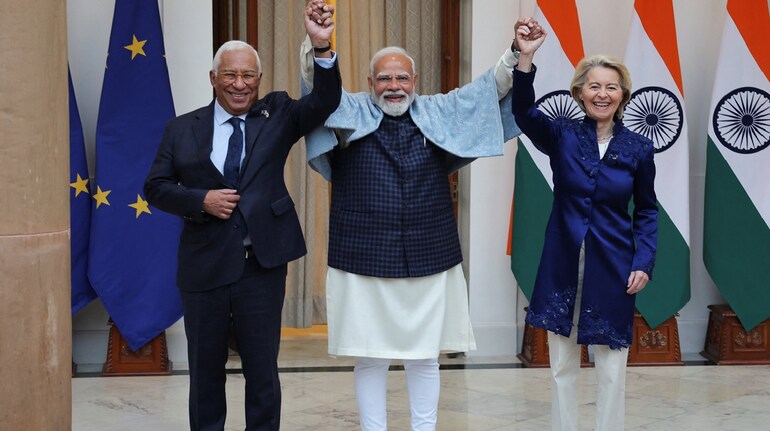
India and the European Union announced on January 27 that they had concluded talks for a free trade agreement.
Currently, the import duty levied by India on completely built-up (CBU) passenger vehicles is 110 percent for cars costing over $40,000, and 70 percent for cars costing up to $40,000.
Tariffs on machinery, chemicals, and pharmaceuticals will also be mostly eliminated under the agreement, according to the European Commission.
Once the trade deal kicks in, machinery and electrical equipment, which accounted for €16.3 billion in exports to India in 2024, will see tariffs of up to 44 percent removed for almost all products, largely within seven years.
Aircraft and spacecraft exports worth €6.4 billion will become largely tariff-free within five years, while optical, medical and surgical equipment valued at €3.4 billion will see duties of up to 27.5 percent eliminated on 90 percent of products, mostly at entry into force or within seven years.
Plastics exports of €2.2 billion will also see duties of up to 16.5 percent removed, mostly within seven years.
Tariffs on chemicals, which accounted for €3.2 billion in exports, will be eliminated for almost all products, largely at entry into force, while iron and steel exports worth €1.5 billion will see duties of up to 22 percent removed over five to seven years.
Pharmaceutical exports of €1.1 billion will also become largely tariff-free within five to seven years.
The EU and India trade over €180 billion worth of goods and services per year.
This deal is expected to double EU goods exports to India by 2032 by eliminating or reducing tariffs in value of 96.6 percent of the bloc’s merchandise shipments to India.
Overall, the tariff reductions will save around €4 billion per year in duties on European products, the Commission said.
In February 2025, India and the EU decided to ramp up talks for the proposed free trade agreement, targeting to initially close it by the end of 2025 to tide over ongoing disruptions from volatile trade policies.
Discover the latest Business News, Sensex, and Nifty updates. Obtain Personal Finance insights, tax queries, and expert opinions on Moneycontrol or download the Moneycontrol App to stay updated!
Find the best of Al News in one place, specially curated for you every weekend.
Stay on top of the latest tech trends and biggest startup news.




