







As India advances towards new trade agreements, its push to clean up the customs tariff structure is also correcting the mismatch between headline and applied duties that had earlier drawn international attention, including criticism from US President Donald Trump. Central Board of Indirect Taxes and Customs (CBIC) chairman Vivek Chaturvedi said tariffisation and exemption rationalisation are designed to improve certainty for trade while supporting domestic manufacturing.
Chaturvedi said trade agreements were inevitable and would naturally lower import duties on finished goods. “Going ahead, we are going to have trade deals. It is a fact of life. Trade deals will naturally translate into lower tariffs for finished products entering the country,” he said in an interview with Moneycontrol. The government’s approach, he added, is to provide relief on inputs so that domestic industry “becomes resilient enough to withstand competition and also expand exports”.
He stressed that these reforms were not undertaken with any specific free trade agreement in mind. “FTAs have their own dynamics, and duty concessions will be based strictly on the terms of each agreement,” Chaturvedi said. The broader objective, he added, is to make domestic industry more resilient and competitive, while retaining the ability to use tools such as anti-dumping measures where required.
Tariffisation to reflect actual duties
Explaining the rationale behind tariffisation, Chaturvedi said that under the Customs Tariff Act, every commodity has a tariff rate specified in the schedule, but effective rates paid at ports often differed due to exemption notifications. “Suppose a product carries a tariff rate of 30 percent. Based on industry representation and the need to provide relief, the government may allow that product to be imported at an effective rate of 10 percent through an exemption notification,” he said.
While the tariff schedule would continue to show 30 percent, the duty actually paid would be 10 percent. According to Chaturvedi, the CBIC reviewed all such cases where concessional rates under exemption notifications were being used almost universally across ports. “Wherever we found near-100 percent usage of the lower rate, we have consciously done away with the exemption notification and incorporated the lower effective rate directly into the tariff schedule,” he said.
“This process is known as tariffisation. It means that the lower, effective rate now appears in the tariff itself, and there is no longer a need to rely on exemption notifications,” he added.
Global optics and trade certainty
Chaturvedi said embedding effective rates directly into the tariff schedule improves transparency and predictability for importers. “For trade, this brings predictability and certainty. Importers no longer have to search through multiple notifications and tables; they can simply open the tariff schedule and see the applicable rate,” he said.
From a global optics perspective, he said the change was equally significant. “Earlier, the tariff schedule would show a higher rate even though the effective rate was lower. After tariffisation, the tariff reflects the actual rate at which goods are being imported,” Chaturvedi said, helping narrow the gap that had previously attracted scrutiny from trading partners.
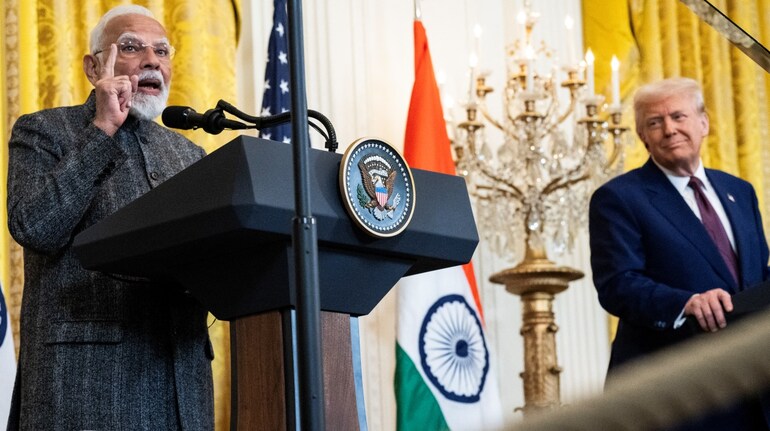
US President Donald Trump had earlier criticised India’s tariff regime, repeatedly referring to the country as a high-tariff market and arguing that import duties on several products were too steep.
Reducing disputes through clearer classifications
Another major focus of the reform has been to reduce classification disputes at ports, a frequent source of litigation. Chaturvedi cited cases where the same product was interpreted differently by importers and customs officers. “The product is the same, but interpretations differ, leading to disputes and litigation,” he said.
To address this, the CBIC identified commodities with repeated disputes and created around 140 new tariff lines. These new lines allow for clearer product identification and are directly linked to the applicable concessional rate, reducing scope for differing interpretations.
Review and sunset of exemptions
The CBIC also undertook a comprehensive review of exemption notifications. “In several cases, imports were no longer happening, the tariff rate and exemption rate were identical, or the notification had become redundant,” Chaturvedi said. Where there was no longer a need, such notifications were allowed to lapse.
About 100 exemption notifications continue, as reflected in papers laid before Parliament, but these now have a defined time frame. “They will be reviewed again after two years. At that stage, they will either be tariffised, continued, or withdrawn, as appropriate,” he said.
Advance rulings and trade remedies
Chaturvedi said the advance ruling mechanism has also been strengthened to give businesses greater certainty. Importers uncertain about classification can approach the authority for an advance ruling, which is binding on customs. The validity of such rulings has been extended from three years to five years, allowing firms to plan imports with greater confidence.


Discover the latest Business News, Sensex, and Nifty updates. Obtain Personal Finance insights, tax queries, and expert opinions on Moneycontrol or download the Moneycontrol App to stay updated!
Find the best of Al News in one place, specially curated for you every weekend.
Stay on top of the latest tech trends and biggest startup news.





