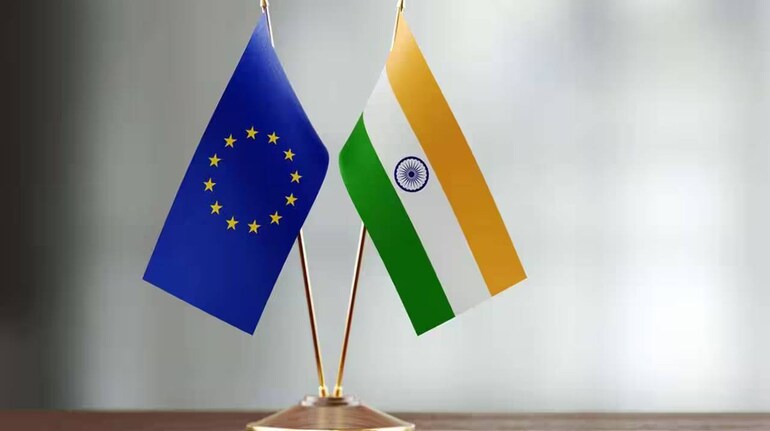

Indian and European pharmaceutical companies will be eagerly waiting for the fine print with India and European Union set to conclude a landmark free trade agreement (FTA) on January 27.
While New Delhi has sought to preserve intellectual property right (IPR) flexibilities offered under Trade-Related Aspects of Intellectual Property Rights (TRIPS) agreement, EU has been pushing for TRIPS-plus protections, including stronger enforcement, longer data exclusivity for pharmaceuticals and tighter patent rules, sources said.
According to sources, India has warned that such provisions would raise the cost of medicines and weaken its generic drug industry, a key supplier of affordable medicines globally.
Europe accounted for roughly 19-21 percent of India's pharmaceutical exports, estimated at approximately $5.8 billion in FY25, commerce ministry data shows. Generic drug formulations and biosimilars account for 75–80 percent of exports, followed by bulk drugs (APIs) and vaccines."
EU primarily exports high-value patented drugs, biologics and specialised medical apparatus.
The exports may look modest but the Indian industry relies heavily on Europe for manufacturing and testing equipment, reagents, active pharmaceutical ingredients (APIs), and specialty solvents.
TRIPS flexibilities allow India to tailor its IPR laws to prioritise public health, primarily through compulsory licensing, parallel imports (bringing genuine, trademarked goods into a country without the IP owner's permission in that territory), and strict patentability criteria (Section 3(d)).
These provisions enable the production of generic, affordable medicines, combating "evergreening" of patents and ensuring access to healthcare.
The duty divide
The pharma tariff landscape has for long been lopsided.
At present, Indian drugmakers enjoy a near-frictionless entry into the 27-nation bloc, facing import duties of 0 percent or near 0 percent.
European life sciences giants such as Sanofi and Bayer face steep tariffs in India, where duties on chemicals and pharmaceuticals average 9.9 percent and these can go up to 28 percent for certain medical devices.
India has cut duties on several cancer and rare drug medications to zero in recent times.
Under the FTA, India is expected to phase out these duties over the next decade, lowering the entry barrier for high-end European biologics and specialty drugs.
Data exclusivity tension
Data exclusivity (DE) was one of the challenging part of the negotiations, which have been on for over 10 years.
The EU pushed for a six to 10 years’ data exclusivity period, which would bar Indian regulators from using an innovator's clinical trial data to approve generic equivalents, sources said.
For Brussels, DE is a necessary protection for the billions spent on R&D. For New Delhi, it is a "backdoor monopoly". If granted, DE would prevent Indian generic players from launching affordable versions of drugs even after a patent expires, unless they repeated costly and "unethical" clinical trials.
India’s negotiators remained unyielding, viewing DE as an existential threat to its role as the "Pharmacy of the Global South", source said. This stance was bolstered by a critical precedent: the India-UK Comprehensive Economic and Trade Agreement (CETA) signed in August 2025.
EU would likely not have pushed hard on DE and IPR but could seek “minor tweaks”, sources said. Also, there is India-UK FTA template.
The UK template
In the India-UK deal, signed in July, London dropped its demands for data exclusivity and patent term extensions, opting instead for a "balanced" IPR framework.
By protecting Section 3(d) of the Indian Patents Act, which prevents companies from "evergreening" patents through minor tweaks, the deal provided the shield India needed for the EU talks.
Major Indian generic exporters are now eyeing the EU’s $2 billion market for biosimilars and complex generics with renewed certainty. While the EU will gain easier access to India’s affluent urban patient base.

Discover the latest Business News, Sensex, and Nifty updates. Obtain Personal Finance insights, tax queries, and expert opinions on Moneycontrol or download the Moneycontrol App to stay updated!
Find the best of Al News in one place, specially curated for you every weekend.
Stay on top of the latest tech trends and biggest startup news.