






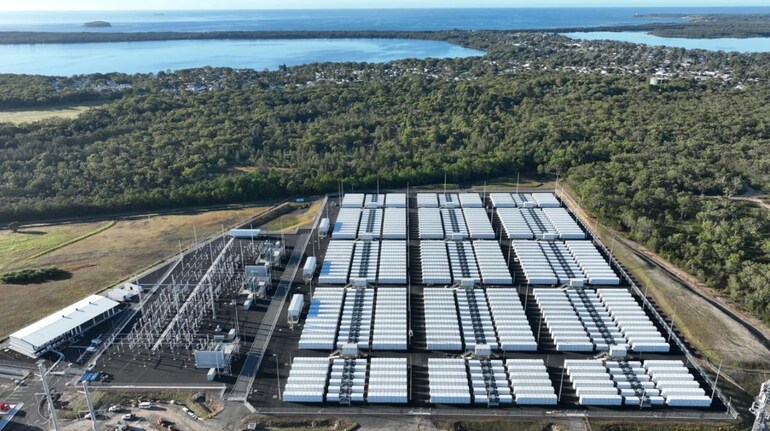

The Union government is weighing a proposal that would require wind and solar power projects feeding electricity into the grid, as well as standalone energy storage projects, to install battery storage systems with a minimum share of domestically manufactured components, Mint reported, citing people familiar with the discussions.
The idea is aimed at reducing India's dependence on imports, though it could marginally push up power costs at a crucial stage of the country's clean energy transition, Mint said.
Under the plan being examined, at least 50% local content may be mandated for components such as battery and energy management systems, containers and inverters used in Battery Energy Storage Systems (BESS), while excluding battery cells, Mint reported. The government is also considering introducing an approved manufacturers and models list for BESS, similar to the Approved List of Models and Manufacturers already used in the solar sector, Mint added.
Mint said the power ministry recently held consultations with executives from state-owned companies including NTPC and Solar Energy Corporation of India, as well as private firms such as JSW Energy, Engie and Avaada Electro. These discussions focused on industry readiness and possible timelines for indigenisation, with officials stressing that deliberations are still at an early stage and no final decision has been taken, Mint reported.
The push comes as India targets 47 GW of battery storage capacity by 2032, involving investments of around Rs 3.5 trillion, Mint noted. Non-cell components that may be covered by localisation norms account for roughly 35% of the cost of large-scale battery systems that are critical for balancing intermittent renewable energy generation.
Mint reported that grid security is another key driver behind the move. Officials have flagged cyber risks linked to imported power electronics, especially equipment sourced from China. With dozens of cyber-attack attempts reported daily on the national grid, localisation and vendor whitelisting are increasingly being viewed as national security measures, Mint said.
While former power secretary Alok Kumar cautioned, as cited by Mint, that aggressive mandates could raise tariffs and slow adoption in the short term, other analysts argued that gradual implementation with adequate lead time may limit cost pressures. Mint noted that the proposal builds on an earlier mandate requiring 20% localisation for storage projects under the viability gap funding scheme, signalling a phased approach to building a domestic BESS supply chain.
Discover the latest Business News, Sensex, and Nifty updates. Obtain Personal Finance insights, tax queries, and expert opinions on Moneycontrol or download the Moneycontrol App to stay updated!
Find the best of Al News in one place, specially curated for you every weekend.
Stay on top of the latest tech trends and biggest startup news.





