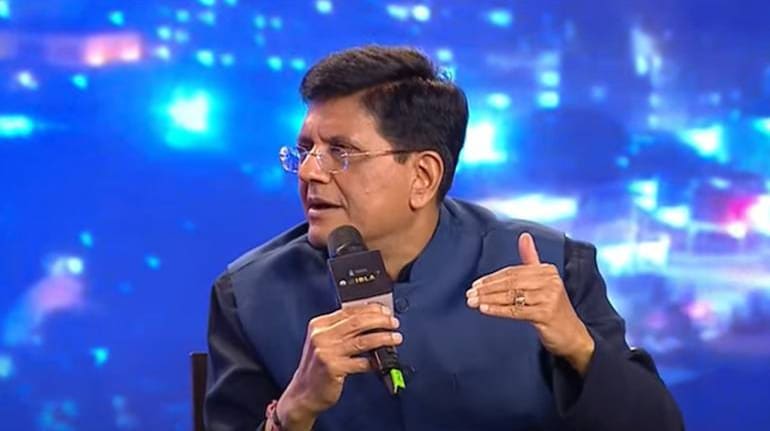
India does not rush to conclude trade negotiations anymore because Free Trade Agreements (FTAs) impact the country for several years, Union Commerce Minister Piyush Goyal said on February 23
The government follows a careful and calibrated approach when negotiating for FTAs to ensure that the trade deal is "fair, equitable and balanced", Goyal said during an interaction at the Raisina Dialogue 2024.
"Sometimes trade negotiations take time because the other side takes time to understand the India story and some because they live in a colonial mindset of the past. It takes more time for the other side to get that ground realities have changed. What is on offer on their side is not comparable to what we (India) are offering to the world. Unless it is a balanced, equitable and fair deal, India does not rush into trade agreements anymore," Goyal said.
India has been aiming to conclude talks for three key trade deals — United Kingdom (UK), Oman and the European Free Trade Association comprising Iceland, Liechtenstein, Norway and Switzerland, before general elections in the country, scheduled around April, May 2024.
On the upcoming World Trade Organization (WTO) Ministerial Conference 13 (MC13) to be held next week in the United Arab Emirates, Goyal said that India will try to ensure that the guiding principle of WTO is adhered to given that there are attempts to include issues that are beyond the ambit of the global organisation.
Moneycontrol reported on February 7 citing government officials that India is likely to oppose any discussions on what the country considers non-trade issues, including on environment.
On the Carbon Border Adjustment Mechanism (CBAM) Goyal on February 23 said that India is concerned by the tax imposed by the European Union and will flag the same in WTO as well as bilaterally.
India has engaged in bilateral talks on the EU's Carbon Border Adjustment Mechanism (CBAM) in a bid to ease the implementation process for the domestic industry. This carbon tax requires importers, as of 2026, to purchase certificates equivalent to the weekly EU carbon price.
The CBAM initially applies to imports in five emissions-intensive sectors deemed at greater risk of carbon leakage: cement, iron and steel, aluminium, fertilisers, and electricity. The CBAM charge covers imports of these goods from all third countries other than those included in the ETS (Emissions Trading System) or a linked mechanism.
The WTO's 13th Ministerial Conference (MC13) will take place from February 26 to 29, 2024, in Abu Dhabi, UAE. Ministers from across the world will attend to review the functioning of the multilateral trading system and to take action on the future work of the WTO. The conference will be chaired by Dr Thani bin Ahmed Al Zeyoudi, UAE's minister of state for foreign trade.
Discover the latest Business News, Sensex, and Nifty updates. Obtain Personal Finance insights, tax queries, and expert opinions on Moneycontrol or download the Moneycontrol App to stay updated!
Find the best of Al News in one place, specially curated for you every weekend.
Stay on top of the latest tech trends and biggest startup news.