




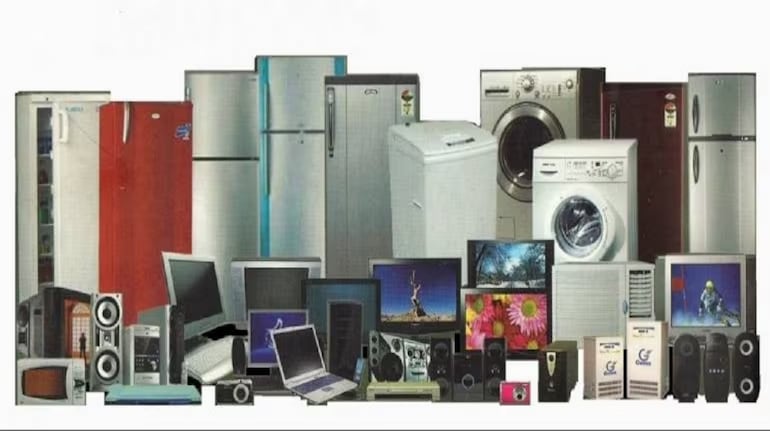
A softer rupee is expected to bite appliance makers, weighing heavily on the makers of air conditioners and refrigerators, who are on a spree to cut down the unsold inventory built up amid erratic weather patterns during the year.
Products such as televisions, audio systems, refrigerators and washing machines are likely to feel the strongest impact because panels, compressors, chipsets and power components are heavily sourced from global suppliers, according to Pawan Kumar, chief executive officer of electronics brand Elista. He flagged that import-linked components account for nearly 20% to 60% of material costs across categories.
A weakening rupee, which slipped past Rs 90 last week, is likely to push up costs by as much as 8 percent, according to industry executives. Companies now face a choice between absorbing the hit or passing it on to consumers, just as dealers have begun to report a pick-up in demand after the GST rate cuts and the festive-season surge.
"Durables industry is getting affected by sustained currency depreciation as well as adverse commodity costs and scheduled energy regime changeover, which cumulatively will lead to a significant cost increase in cooling categories, with ACs being most impacted. In the immediate context, energy regime changeover linked price hike to the tune of 5-7% for ACs and 3-5% for refrigerators looks likely. We will aim to hold off the commodity linked price hike and monitor the impact over next quarter," said Kamal Nandi, Business Head & EVP at Appliances Business of Godrej Enterprises Group.
As of now, room air conditioner (RAC) demand has been muted post Diwali and for the month of November dealers are experiencing flattish to marginal de-growth. Lower demand was on back of early start to the winter season. Dealers are expecting December to be muted as well as consumers will wait till the summer season arrives, according to Elara Securities.
"This cost pressure will reflect on pricing in the coming financial year. While brands will try to absorb part of the increase, it won’t be possible to completely hold the line at current levels. We expect price adjustments in the range of 4% to 7%. Entry-level and mass segments may experience a higher pass-through since margins there are already stretched and the scope to absorb cost hikes is limited," Kumar said. Elista expects some moderation in demand in the short run as customers reassess budgets for discretionary purchases.
A more definite round of price hikes is expected from television makers, where import dependence is as high as 75–78 percent, making the segment far more vulnerable to the currency slide.
"The pricing will be impacted, and we expect about 7 to 10% price increase. Besides dollar increase, there is a global memory shortage that has driven memory component costs up by more than 500%. Therefore, it is a double impact, and for products that are dependent on memory, there will be a huge spike and a price increase because of the memory crisis due to AI products and the rupee becoming weaker. So both have impacted, and whatever goodness we saw in GST will be neutralized," said Avneet Singh Marwah, CEO, SPPL - the exclusive brand licensee for Kodak and Blaupunkt in India.
Marwah said the advantage of the 10% GST benefit will be nullified, and therefore, there will be a 2 to 3% post-GST price increase because of the double impact of the dollar and hike in memory component costs.
Discover the latest Business News, Sensex, and Nifty updates. Obtain Personal Finance insights, tax queries, and expert opinions on Moneycontrol or download the Moneycontrol App to stay updated!
Find the best of Al News in one place, specially curated for you every weekend.
Stay on top of the latest tech trends and biggest startup news.