






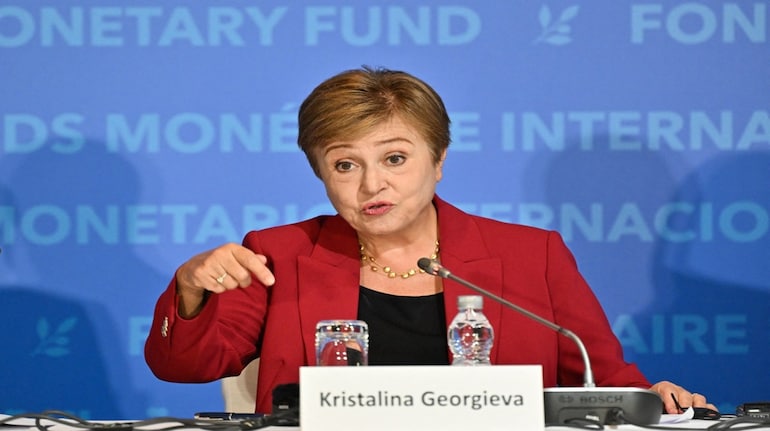

The widening geopolitical conflict in West Asia could push up global inflation and test the resilience of the world economy, warned International Monetary Fund (IMF) Managing Director Kristalina Georgieva, as surging oil prices ripple through global markets.
Speaking at a symposium hosted by Japan’s finance ministry on Monday, Georgieva said that a sustained rise in oil prices could quickly feed into higher inflation worldwide. A 10% increase in oil prices lasting through most of the year could raise global inflation by about 40 basis points, she said.
“We are seeing resilience tested again by the new conflict in the Middle East,” Georgieva said.
“My advice to policymakers in this new global environment is think of the unthinkable and prepare for it,” she added.
Oil markets have already reacted sharply to the escalating confrontation involving the US, Israel and Iran. Brent crude prices briefly surged above $119 a barrel, their highest level since 2022, as the conflict entered its second week, before easing slightly in volatile trading.
The surge has been driven in part by fears of disruptions around the strategically vital Strait of Hormuz, a narrow shipping route between Iran and Oman through which roughly 20% of the world’s oil supply passes.
Iranian strikes on vessels transiting the waterway and attacks on regional energy infrastructure have raised concerns about a potential supply shock in global oil markets.
Georgieva had earlier warned that a prolonged conflict could have far-reaching economic consequences. Speaking at the “Asia in 2050” conference in Bangkok, she said the war could affect “global energy prices, market sentiment, growth and inflation, and place new demands on the shoulders of policymakers everywhere.”
“We are in a world of more frequent, more unexpected shocks and we have been warning our membership for quite some time that uncertainty is now the new normal,” she said.
“We are potentially in a prolonged period of flux,” Georgieva added, noting that energy security is particularly important for Asian economies dependent on imported fuel.
“Energy security is at stake,” she said, adding that markets have fluctuated “like a roller coaster over the last couple of days.”
“So the sooner we see the end of calamity, the better for the whole world,” she said.
The IMF has also said it is closely monitoring developments in the region, noting that the crisis has already triggered disruptions to trade and economic activity, spikes in energy prices and volatility in financial markets.
“The situation remains highly fluid and adds to an already uncertain global economic environment,” the Fund said in a statement, adding that it is still too early to assess the full economic impact of the conflict.
At the same time, in India, the Centre has said it is closely watching developments in the region but remains confident about energy security.
Union Petroleum and Natural Gas Minister Hardeep Singh Puri said India is “fully prepared” to deal with any short-term disruptions arising from the Middle East crisis. The country has adequate stocks of crude oil and petroleum products, including petrol, diesel, and aviation turbine fuel, he said, adding that India’s inventories, including strategic reserves, are sufficient to meet demand for several weeks.
According to government officials, only about 40% of India’s crude oil imports transit through the Strait of Hormuz, while the rest come through alternative routes and diversified supply sources.
The petroleum ministry has set up a 24×7 control room to monitor the availability and distribution of fuel across the country, with authorities saying they are prepared to take additional measures if the situation deteriorates further.
Analysts warn that any prolonged disruption in Gulf oil shipments could trigger wider inflationary pressures globally, underscoring the economic risks posed by the escalating conflict in the region.
Discover the latest Business News, Sensex, and Nifty updates. Obtain Personal Finance insights, tax queries, and expert opinions on Moneycontrol or download the Moneycontrol App to stay updated!
Find the best of Al News in one place, specially curated for you every weekend.
Stay on top of the latest tech trends and biggest startup news.





