






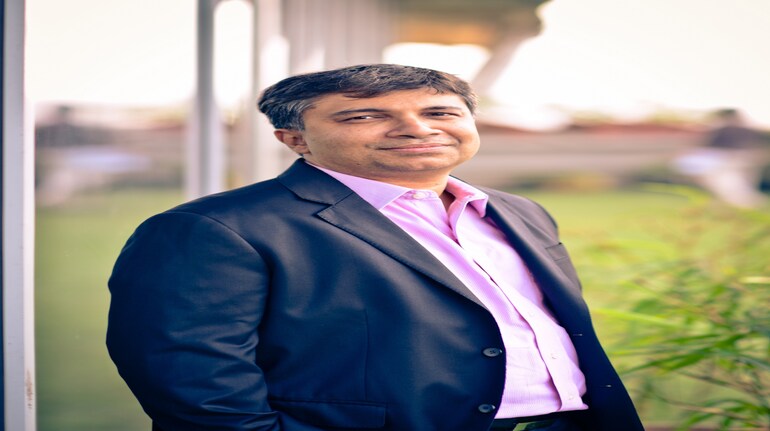
FMCG major Marico will continue to bet on premiumisation and volume growth as it believes that the sector is benefitting from the ongoing shift from unbranded to branded products, especially in the foods portfolio, amid renewed affordability after GST revisions, managing director and chief executive officer Saugata Gupta told Moneycontrol in an interview recently.
Gupta said diversification, global expansion and digital transformation will be key priorities for the company over the rest of the decade, as Marico runs its core business in parallel with what it calls “Marico Engine 2”, a full-fledged consumer digital company.
He spoke on topics ranging from inflation trends, Direct-to-Consumer (D2C) brand penetration, influence of aritificial intelligence (AI) in the FMCG business and top priorities of the company towards the end of this decade. Edited excerpts:
Q: What are the early signals you are getting on the revival of urban demand and rural recovery?
A: Rural demand began recovering a couple of quarters ago, supported by favourable government policies and a reasonably good monsoon. As a result, rural markets appear steady. Urban markets saw two favourable tailwinds, one where food inflation declined, and, second, where GST reduction significantly enhanced affordability, especially for foods and mass personal care items. The packaged food penetration in India is quite low. Boost in food items is expected to positively impact urban consumption as consumers increasingly prefer hygienic and convenient packaged food options.
Overall, the outlook is promising and there's a huge opportunity. The sector is now lapping a lower base. The second half should be much better, and the growth momentum should continue into the next financial year.
Q: With inflation easing sharply in recent months, how are you seeing demand shape up in your high-frequency data, especially when you factor in improved affordability from the GST cut, a potential shift from unbranded to branded products, and the continued strain on spending among lower-income consumers?
A: The most significant change has been affordability. The GST cut to 5 percent from 18 or 12 percent is a significant price drop, making products far more accessible and affordable. People are aspirational for brands. The biggest impact is on food—most packaged food now falls under the 5 percent GST slab.
The food segment forms a significant part of the consumption basket for the bottom of the pyramid, so they may shift from unbranded to branded products. We are now seeing some gradual improvement. This reduces the gap between unbranded and branded products, which helps organise the market and supports the growth of branded players. Overall, the trend is positive.
Q: If you look at the large, listed consumer companies, many are still growing in single digits. Isn’t that a disappointing trend for a sector that should ideally be delivering stronger, double-digit growth?
A: It depends on the portfolio. In mass consumption, personal care (portfolio) penetration is very high. Therefore, the only driver of growth is premiumisation and increasing the frequency of consumption. Brands must continuously innovate and create new needs or tap unmet needs.
Q: What do you think about the balance between volume-led growth and premiumisation?
A: In an emerging market, growth has to be voluminous and should also gain market share. We check every quarter as to how much percentage of our brands have gained penetration, which means you are acquiring more consumers and how much percentage of your business has been protected or have gained market share. This dual focus forms the fundamental approach for sustained growth. Therefore, a fundamental, volume-led growth, either by driving category growth or gaining market share, is far more sustainable than growing the top line through pricing and bottom line through cost cuts.
Q: You’re working towards a Rs 20,000-crore top line by 2030, and Parachute still makes up about 36 percent of your revenue. As you push harder into foods and nutraceuticals, do you expect Parachute’s share of the portfolio to shift meaningfully, or does it remain the anchor even as newer segments scale?
A: Our digital, foods and premium personal care business has grown significantly from around 6 percent in 2020 to 22 percent today. We expect it to reach ~25 percent by FY27. Last quarter, we implemented a 60 percent price increase in Parachute, and this led to a slight decline in volumes, but overall, we still delivered 7 percent volume growth. We are trying to premiumise the business and de-risk the business concentration. This is the same direction we are pursuing -- both in India and internationally.
Q: What has been the influence of AI in your business so far?
A: We are experimenting with AI, especially in the digital world, across content creation, packaging design, and consumer insights. We believe that it actually drives far more productivity. There is immense potential for AI, especially in consumer-facing applications, particularly in assisted selling. AI-based selling enables us to leverage store profiles and sales history to make smarter decisions.
Q: What are the two or three big priorities for Marico till the end of the decade?
A: Diversification remains a big focus for us, along with continued globalisation. A third critical priority is digital transformation. For us, it is imperative to ensure that an incumbent can be equally successful with digital brands. This is what we call the Marico Engine 2 – a full-fledged consumer digital company. The business model is completely different and running both models in parallel positions us strongly for the future. And lastly, as we continue to scale, a key challenge is maintaining the founders’ mentality or entrepreneurial mindset.
Discover the latest Business News, Sensex, and Nifty updates. Obtain Personal Finance insights, tax queries, and expert opinions on Moneycontrol or download the Moneycontrol App to stay updated!
Find the best of Al News in one place, specially curated for you every weekend.
Stay on top of the latest tech trends and biggest startup news.




