






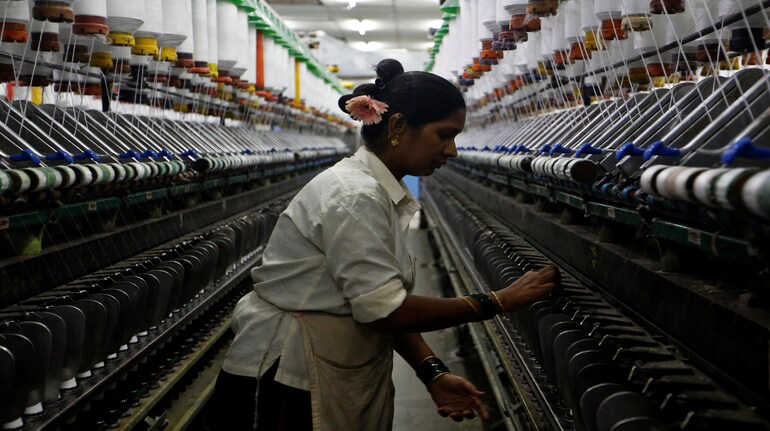

The landmark free trade agreement with the European Union bring cheers to the Indian textiles sector, which is seeing a subdued exports business amid U.S. tariffs. The trade deal announced on January 27, will bring the tariff to nil from the earlier 12 per cent, making the Indian apparel exports more competitive in the EU market.
Zero duty makes Indian garments and textiles meaningfully cheaper on European shelves, which can quickly translate into bigger buyer contracts, longer production runs, and steadier factory utilisation. According to industry estimates, the FTA opens India’s path to the $263.5 -billion EU textile market for imports, where current exports stand at just $7.2 billion.
Key beneficiaries include Tiruppur in Tamil Nadu, Ichalkaranji in Maharashtra, Surat in Gujarat, Ludhiana in Punjab, and Hyderabad - Warangal in Telangana, where easier access can translate into larger EU orders and more factory jobs across spinning, weaving, processing and stitching.
Historically, India’s apparel exports have operated at a disadvantage in the EU market due to tariff-free access enjoyed by competing countries, while Indian exports were subject to duties of 9.96% under the GSP regime and, following its withdrawal, approximately 12%. This differential has impacted India’s price competitiveness despite strong capabilities in quality and compliance.
"Textiles, gems & jewellery, leather, pharma, and high-tech engineering will surge, and is expected to double to $136 billion in bilateral trade by 2032, amid the ongoing US tariff disruptions, while easing professional mobility and data-secure status for India's services edge," said Munjal Almoula, Managing Partner - Tax & Regulatory Advisory, BDO India.
Among the major players that serve the EU markets include Zara and Gap supplier Pearl Global. The company derives 20 per cent of its revenue from EU.
"The proposed removal of this tariff under the India–EU FTA would be a significant positive step, helping level the playing field for Indian manufacturers. It is expected to catalyse fresh investments in advanced synthetic raw materials, modern processing technologies and capacity expansion across the textile and apparel value chain. Over the medium term, this would strengthen India’s position as a reliable, compliant and scalable supplier to the European market," said Pallab Banerjee, Managing Director, Pearl Global.
However, Europe’s apparel market is among the most demanding globally on environmental and social compliance. Even if tariffs fall to zero, orders will increasingly gravitate only towards suppliers that can prove end-to-end traceability, responsible chemical use, water stewardship and credible labour practices, analysts say.
Discover the latest Business News, Sensex, and Nifty updates. Obtain Personal Finance insights, tax queries, and expert opinions on Moneycontrol or download the Moneycontrol App to stay updated!
Find the best of Al News in one place, specially curated for you every weekend.
Stay on top of the latest tech trends and biggest startup news.





