






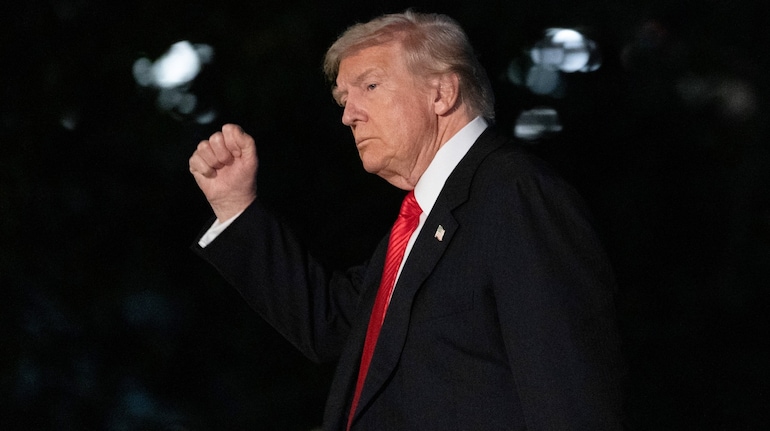

President Donald Trump moved swiftly to deploy an alternative trade tool after the Supreme Court of the United States struck down his use of the International Emergency Economic Powers Act (IEEPA) to impose sweeping tariffs.
Within hours of the ruling, Trump signalled he would invoke Section 122 of the Trade Act of 1974 - a rarely discussed provision that allows temporary tariffs in response to balance-of-payments concerns.
The shift suggests the administration's broader tariff strategy may continue, albeit under a different legal framework. Trump said he would sign an executive order imposing a 10% tariff on imports from all nations, replacing part of the duties invalidated by the court. He also indicated that other trade statutes remain under consideration, underscoring that the Supreme Court ruling targeted a specific legal pathway rather than tariffs themselves.
What is Section 122 of the Trade Act of 1974?
Section 122 authorises the US president to impose temporary tariffs of up to 15% for a maximum of 150 days to address what the law describes as "large and serious" US balance-of-payments deficits - situations where imports significantly exceed exports.
The provision was enacted during a period of economic instability in the 1970s, when policymakers were concerned about trade imbalances and pressure on the US dollar. Congress granted the president emergency authority to respond quickly to protect the country's external financial position.
Unlike several other trade laws, Section 122 does not require a formal investigation before tariffs are imposed, allowing rapid action.
How long can tariffs under Section 122 remain in place?
Tariffs imposed under Section 122 automatically expire after 150 days unless Congress votes to extend them. While the time limit is explicit, trade experts note that a president could allow the measures to lapse and potentially reintroduce them by declaring a fresh balance-of-payments emergency.
How is Section 122 different from IEEPA?
IEEPA, enacted in 1977, is designed to give the president authority during a declared national emergency involving unusual and extraordinary foreign threats. Historically, it has been used to impose sanctions, freeze foreign assets and restrict financial transactions - not as a conventional tariff mechanism.
The Supreme Court ruled that IEEPA does not authorise the president to levy tariffs. Section 122, by contrast, explicitly permits temporary import surcharges, though within strict limits on duration and rate.
What other trade tools are available to the administration?
Section 301 (country-specific action):
Also part of the Trade Act of 1974, this provision allows the US Trade Representative to investigate unfair trade practices by specific countries and impose retaliatory tariffs. Trump relied on Section 301 during his first term to place duties on Chinese imports, many of which remain in force.
Section 232 (national security grounds):
Under the Trade Expansion Act of 1962, Section 232 permits tariffs or import restrictions if a Commerce Department investigation determines that certain imports threaten national security. This authority underpinned tariffs on steel and aluminium.
Section 338 (discriminatory trade practices):
A provision of the Tariff Act of 1930, Section 338 allows tariffs against countries that discriminate against US commerce, though it has rarely been used in modern times.
What does this mean for US trade policy?
While IEEPA offered broad and flexible emergency powers, Section 122 is more constrained. Still, by pairing it with other statutory authorities, the administration could maintain significant tariff pressure. The Supreme Court's ruling limits one route - but does not eliminate the president's broader trade arsenal.
The bottom line: Trump's tariff agenda may face legal guardrails, but multiple legislative pathways remain available to sustain import levies, at least in the near term.
Discover the latest Business News, Sensex, and Nifty updates. Obtain Personal Finance insights, tax queries, and expert opinions on Moneycontrol or download the Moneycontrol App to stay updated!
Find the best of Al News in one place, specially curated for you every weekend.
Stay on top of the latest tech trends and biggest startup news.





