




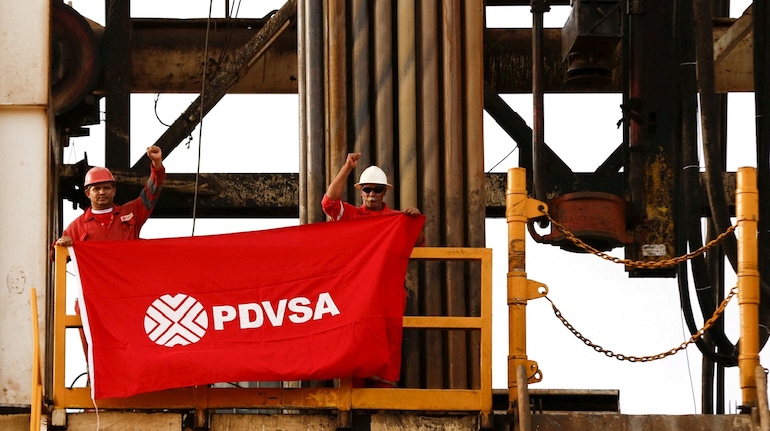

Venezuela holds the largest proven oil reserves in the world, estimated at about 300 billion barrels, accounting for 18.2 percent of global reserves—more than Saudi Arabia or Canada. In the early 1960s, the country was an oil superpowers it accounted for 18 percent of global oil trade and roughly 11 percent of world oil output.
That structural advantage, however, has not translated into sustained production. Despite sitting atop the world’s richest hydrocarbon endowment, Venezuela’s ability to extract, refine and export oil has steadily eroded.
At its peak in the mid-1960s, Venezuela produced around 3.5–3.7 million barrels per day, contributing more than 25 percent of OPEC output and about 11 percent of global production. This dominance began to fade well before the current crisis, but the decline accelerated after major political and institutional shifts.
As Venezuela’s access to Western markets narrowed, China steadily increased its presence. In 2003, China accounted for barely 0.5 percent of Venezuela’s oil exports, while OECD countries—and especially the United States—dominated shipments.
By 2016, China’s share had risen above 21 percent, and by 2019, it touched 30.6 percent, nearly matching the US share, which had collapsed to under 10 percent. Over the same period, OECD countries’ combined share fell from above 90 percent in the early 2000s to just 21 percent by 2019. This realignment underscored Beijing’s growing strategic leverage in Venezuela’s energy sector, often through oil-for-loans arrangements.
Discover the latest Business News, Sensex, and Nifty updates. Obtain Personal Finance insights, tax queries, and expert opinions on Moneycontrol or download the Moneycontrol App to stay updated!
Find the best of Al News in one place, specially curated for you every weekend.
Stay on top of the latest tech trends and biggest startup news.




