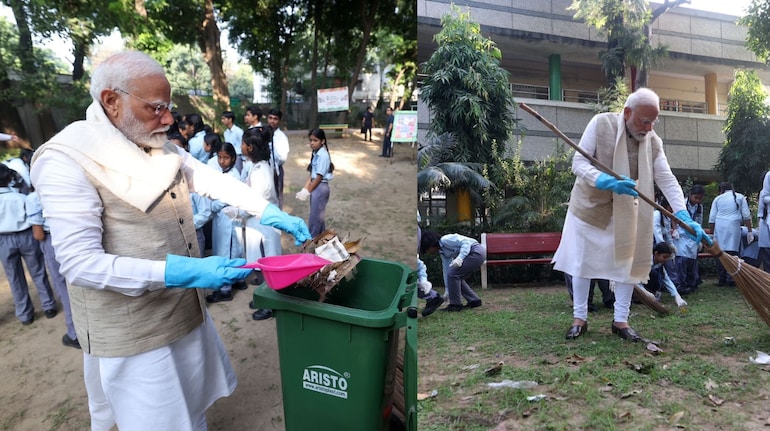
India’s flagship rural sanitation programme is nearing the end of its second phase, but budgetary support is plateauing even as states continue to lag in key areas such as solid and liquid waste management and conversion of villages into higher Open Defecation Free (ODF) Plus categories, a Moneycontrol analysis shows.
Budget allocations for Swachh Bharat Mission-Grameen (SBM-G) have remained unchanged for four consecutive years at Rs 7,192 crore, after falling sharply from the pandemic-era highs.
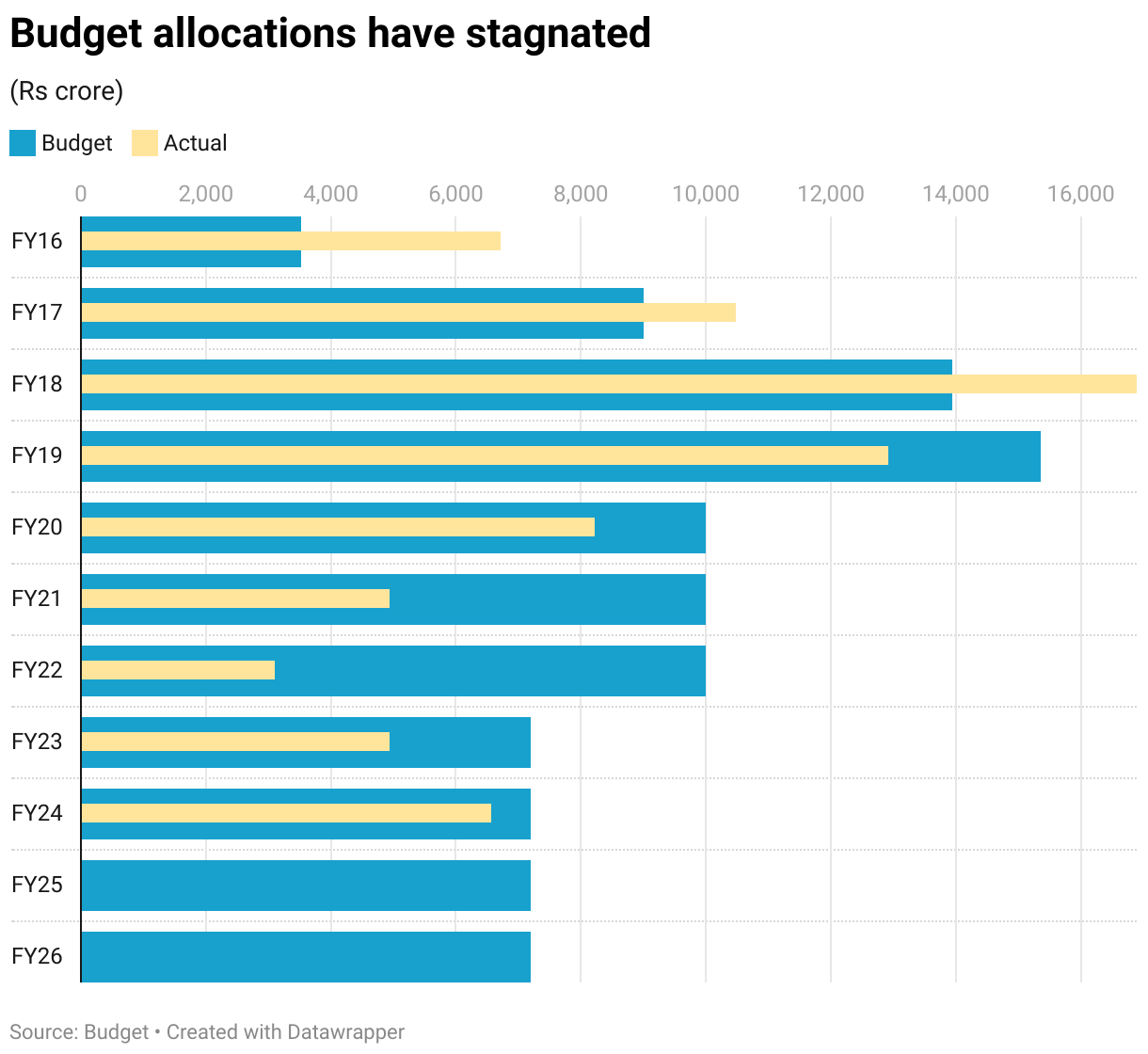
Expenditure has also been subdued. In FY24, actual spending stood at Rs 6,546 crore, significantly below the peak of Rs 16,888 crore in FY18. The stagnation marks a shift from the rapid scale-up witnessed during the first phase of the scheme, when rural India constructed over 10 crore toilets and all states declared themselves Open Defecation Free in 2019, according to the rural development ministry.
Phase II of SBM-G, launched in 2020 with a mandate to sustain ODF status and ensure comprehensive solid and liquid waste management, now appears constrained by funding pressures. While allocations fell during FY21–FY23 and have since levelled off, the targets of converting villages into ODF Plus categories—Aspiring, Rising and Model—remain unevenly achieved across states. ODF Plus Model villages are those “where a village which is sustaining its ODF status and has arrangements for both Solid Waste Management and Liquid Waste Management; observes visual cleanliness, i.e., minimal litter, minimal stagnant wastewater, no plastic waste dump in public places; and displays ODF Plus Information, Education & Communication (IEC) messages.”
The Budget 2026 is likely to see a shift in the mission's deadline, given that it is ending in 2025-26.
The national data highlights that only 83 percent of India’s villages are currently classified as ODF Plus (Model), with significant variation in progress. Southern and western states dominate the list of strong performers. Tamil Nadu, Rajasthan, Telangana and Uttar Pradesh have converted over 97 percent of their villages into ODF Plus Model. In the most advanced category—ODF Plus Model—nearly 4.9 lakh villages have made the transition.
However, large states such as Punjab, Andhra Pradesh and several northeastern states lag sharply. Punjab has converted only 18.7 percent of its villages into ODF Plus Model status.
In Andhra Pradesh, despite strong progress on household toilets, only 65 percent of villages fall in the Model category, reflecting gaps in waste management systems. The northeastern region remains the weakest block, with Arunachal Pradesh at 21 percent, Meghalaya at 7.6 percent, Manipur at 1 percent and Nagaland at 43 percent Model coverage.
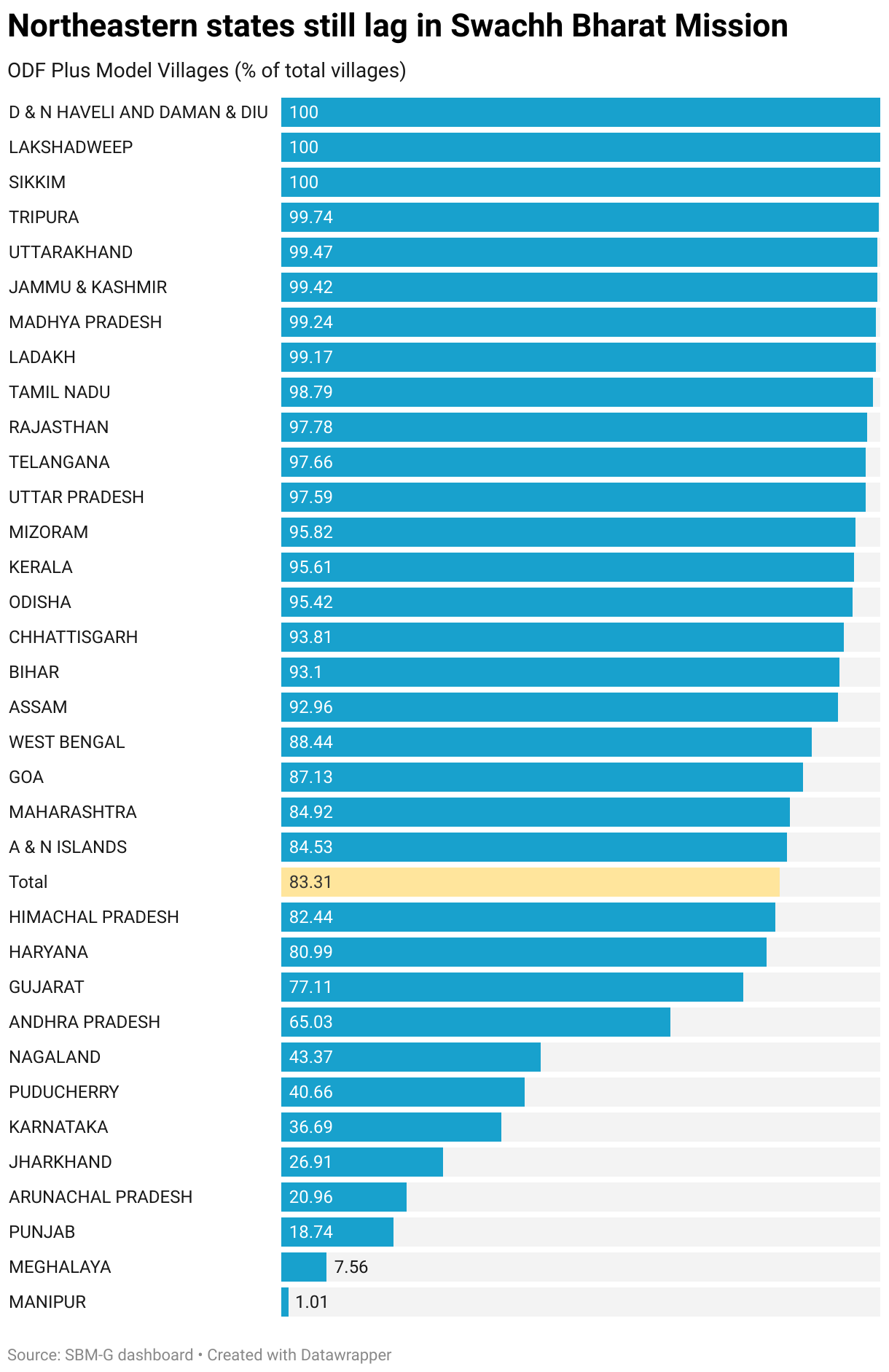
The divergence highlights a broader concern: while toilet access is nearly universal, the operational infrastructure required for safe waste disposal, greywater treatment, and plastic waste management remains incomplete in many districts.
Phase II was intended to fund these assets, but the slowdown in expenditure coincides with a period where village-level solid and liquid waste systems need the most financial push.
Discover the latest Business News, Sensex, and Nifty updates. Obtain Personal Finance insights, tax queries, and expert opinions on Moneycontrol or download the Moneycontrol App to stay updated!
Find the best of Al News in one place, specially curated for you every weekend.
Stay on top of the latest tech trends and biggest startup news.