







Around $5 billion worth of Indian exports to the US could receive partial tariff relief under Section 232 of US trade law, a national-security provision that typically remains outside formal trade agreements and is eased only through narrow exemptions or quota-based arrangements.
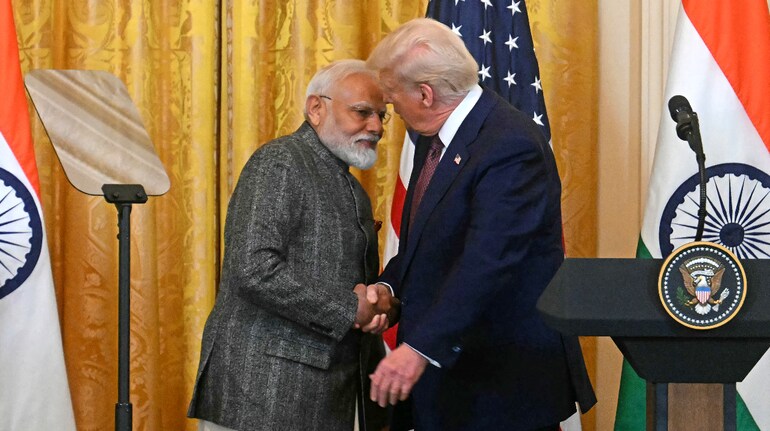
The relief forms part of the joint statement announced by India and the US on February 7 ahead of a broader bilateral trade agreement. The framework provides exemptions for aircraft and aircraft parts from Section 232 tariffs linked to steel, aluminium and copper, while auto components are expected to receive preferential tariff-rate quotas allowing limited shipments to enter the US at reduced duties.
In 2024, more than $8 billion worth of Indian exports were subject to Section 232 tariffs, which range between 25 percent and 50 percent depending on product categories. Nearly $4 billion of this exposure came from automobiles and auto components, and most of this — about $3.9 billion — could now qualify for relief under the interim arrangement.
At present, Section 232 tariffs on steel, aluminium and copper imports are roughly 50 percent where products are deemed sensitive to national security. Duties on automobiles and several auto components remain around 25 percent.
“Some auto-components will attract zero duty, others will continue to attract higher rates,” Indian commerce and industry minister Piyush Goyal said on February 7.
In aerospace products, exemptions are likely to be more limited. Based on precedents from US agreements with partners such as Japan, the United Kingdom and the European Union, exemptions have typically been restricted to civil aircraft categories. If a similar template applies to India, roughly $1 billion of the nearly $3 billion trade could benefit from tariff relief.
Historically, US trading partners have secured narrow carve-outs under Section 232. The European Union, Japan, South Korea and the UK, for instance, obtained targeted exemptions largely focused on civil aviation products rather than broad-based industrial goods.
For auto exports, many partner countries have faced duties of about 15 per cent under quota-based arrangements, a US Customs report released on January 14 said.
The interim deal is a precursor to a full bilateral trade agreement expected to reduce reciprocal tariffs further from 18 percent.
“Nearly half of India’s $44 billion worth of exports are expected to get duty-free,” Goyal noted at the press conference.
The amount includes categories like smartphones, which at present, also enjoy exemption from reciprocal duties first imposed by the US on April 2, 2025.
Discover the latest Business News, Sensex, and Nifty updates. Obtain Personal Finance insights, tax queries, and expert opinions on Moneycontrol or download the Moneycontrol App to stay updated!
Find the best of Al News in one place, specially curated for you every weekend.
Stay on top of the latest tech trends and biggest startup news.





