






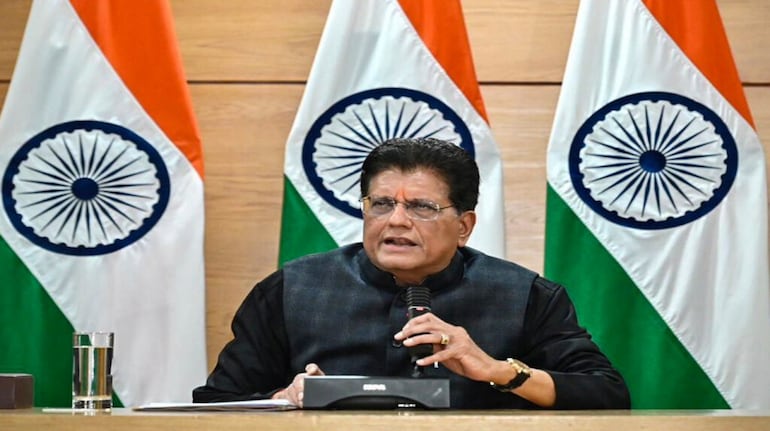

The United States is expected to slash tariffs on Indian exports within days through an executive order by President Donald Trump, even before the interim India-US trade agreement is formally signed, Commerce and Industry Minister Piyush Goyal told CNBC-TV18 in an exclusive interview.
The move could immediately reset tariffs on Indian goods to as low as 18 percent from the current peak of 50 percent, sharply improving market access for exporters and delivering early gains for labour-intensive sectors, MSMEs and farmers.
Goyal said the executive order is likely to come into force in four to five days, allowing exporters to benefit from the revised tariff regime ahead of the signing of the legal trade document, which both sides are targeting for mid-March.
Zero duty for nearly half of exports
According to Goyal, around 50 percent of India’s exports to the US will attract zero duty under the new framework, while roughly 35 percent will face a reduced tariff of about 18 percent. Another 10–15 percent, including steel and aluminium, will continue to be subject to US Section 232 sectoral tariffs of up to 50 percent.
“The signed deal will be a complete legal document including zero duty concessions,” Goyal told CNBC-TV18, adding that India would continue to press Washington on easing Section 232 tariffs as part of broader negotiations.
The tariff reset follows last week’s breakthrough in talks, including the removal of a 25 percent penalty linked to India’s Russian crude imports. Since August 2025, Indian exports had faced duties of up to 50 percent, the highest imposed by the US on any major trading partner.
Markets responded positively, with the Nifty 50 ending the week up 3.38 percent.
Boost for MSMEs, exporters and farm sector
Goyal said the agreement would deliver immediate benefits to sectors such as textiles, machine parts, auto components, leather, footwear, sports goods, furniture, handicrafts and handloom products.
Farm and marine exports are projected to nearly double from $54 billion to $100 billion, he said, as several product categories, including tea, coffee, spices, fruits and seafood, gain zero-duty or sharply reduced tariff access to the US market.
The minister stressed that all sensitive agricultural items have been kept completely outside the deal. These include dairy, poultry, meat, rice, wheat, sugar, soya, corn, millets, pulses, bananas and all genetically modified products.
“Farmers are completely protected in all core and sensitive areas,” Goyal told CNBC-TV18, responding to calls for protests by farmer groups on February 12.
Apples, DDGS and safeguards
Addressing concerns over imports of soybean oil and distillers dried grains with solubles (DDGS), Goyal said India already imports large quantities of soybean oil and has opened only a limited quota for DDGS to meet rising animal feed demand.
On apples, he said India imports around 5.5 lakh tonnes annually due to a demand-supply gap. US apples will face a minimum import price of Rs 80 per kg and a duty of Rs 20, creating a floor price roughly 33 percent higher than apples imported from other countries, effectively protecting domestic growers.
Chips, motorcycles and cars in the mix
India is also seeking relaxations in supplies of GPUs and Nvidia chips as part of the wider trade negotiations, Goyal said, highlighting India’s need for advanced ICT equipment to support data centres, AI and emerging technologies.
Sources told CNBC-TV18 that the deal would also reduce tariffs on American motorcycles in the 800cc–1,600cc segment to zero, a category currently dominated by Harley-Davidson, with no Indian manufacturers operating in that range.
Tariffs on large petrol cars above 3,000cc and diesel cars above 2,500cc will be cut to 50 percent initially and gradually reduced to 30% over 10 years, a move officials say will not hurt domestic automakers.
Signing by mid-March
Goyal confirmed that India has invited US Trade Representative Jamieson Greer to New Delhi for the signing of the interim deal, with both sides working on a legally binding document incorporating the agreed tariff concessions.
Exporters will be able to avail the revised tariff regime from the date the US executive order comes into effect, even as negotiations continue to expand the scope of the agreement.
Discover the latest Business News, Sensex, and Nifty updates. Obtain Personal Finance insights, tax queries, and expert opinions on Moneycontrol or download the Moneycontrol App to stay updated!
Find the best of Al News in one place, specially curated for you every weekend.
Stay on top of the latest tech trends and biggest startup news.





