






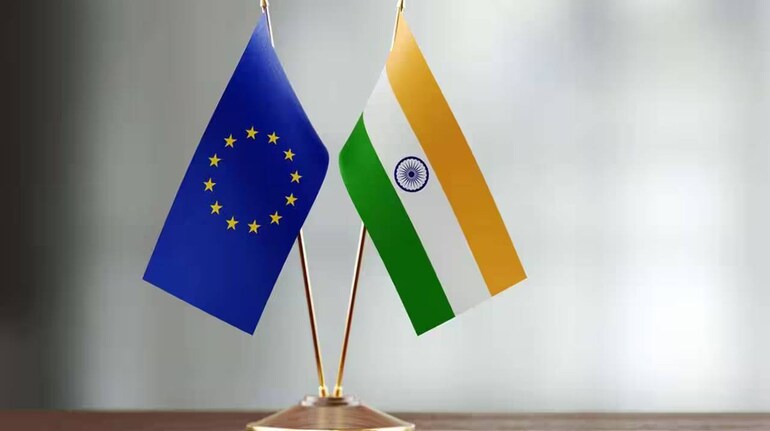

As India and the European Union (EU) move closer to finalising their long-pending free trade agreement (FTA), the proposed deal is emerging as a potential growth opportunity for Indian micro, small and medium enterprises (MSMEs).
This is so particularly in export-oriented sectors, such as engineering goods, auto components, textiles, leather, chemicals and processed foods, experts said.
Lower tariffs in the EU market, coupled with streamlined customs procedures and regulatory cooperation, could help small firms regain lost competitiveness in one of the world’s most premium markets.
However, trade experts caution that the eventual impact on MSMEs will depend heavily on how the agreement is sequenced and implemented, especially in relation to non-tariff barriers, climate-linked measures and competition rules.
Without adequate safeguards and transition periods, the same deal that opens market access could also expose small firms to compliance costs and competitive pressures they are ill-equipped to handle, they said.
Whether the India–EU FTA ultimately strengthens Indian MSMEs or leaves some segments squeezed out will hinge on how effectively tariff gains are matched with safeguards, CBAM (Carbon Border Adjustment Mechanism) relief and capacity-building support to help small firms adjust to EU competition.
MSME sectors that stand to gain
The agreement is expected to deliver its strongest benefits to MSME- and labour-intensive sectors where European tariffs remain relatively high and India has established manufacturing depth.
They include textiles and clothing, leather and footwear, auto parts, light engineering goods and certain segments of pharmaceuticals and chemicals, where tariff elimination could restore parity with competitors such as Bangladesh and Vietnam.
The EU currently imposes import tariffs of roughly 12–16 percent on Indian textiles and apparel, with similar duty ranges applying to other labour-intensive goods such as leather and footwear. Exporters previously enjoyed GSP (Generalised System of Preferences) rates that reduced these tariffs; with GSP withdrawal, the full tariffs now apply. The expectation under the India–EU FTA is that duties on these categories would be substantially lowered or eliminated.
Beyond traditional labour-intensive sectors, experts see medium-term opportunities in electronics sub-assemblies, machinery components and specialty chemicals as European firms look to diversify supply chains away from China.
“Electronics sub-assemblies, machinery components and specialty chemicals may also gain over the medium term as EU firms seek India as an alternative sourcing base,” Manoj Mishra, partner at Grant Thornton Bharat, told Moneycontrol.
This is driven by India’s growing manufacturing depth, improving quality standards, and the ability of Indian suppliers to offer cost-competitive production, alongside scale and geopolitical diversification.
However, the gains are unlikely to be evenly distributed. MSMEs operating in segments where European imports enjoy technological or brand dominance could face short-term pressure unless tariff reductions are carefully sequenced.
“MSMEs that are heavily dependent on the domestic market and operate in segments where EU imports enjoy technological or brand dominance could face short-term pressure due to increased competition,” Sarvadnya Kulkarni, CEO of manufacturer and engineering solution provider General Instruments Consortium, told Moneycontrol.
They include areas such as high-end industrial machinery and electrical equipment, where European producers account for a large share of exports to India as well as specialised medical devices and precision tools — segments where India remains heavily import-dependent on foreign suppliers for advanced technologies.
FTA seen to regain lost ground after GSP withdrawal
Experts say the India–EU FTA is critical for MSMEs as it could help restore competitiveness lost after the EU withdrew GSP benefits for India, which eroded a 6–10 percent tariff advantage in several labour-intensive sectors.
The loss of preferential access gradually pushed Indian MSMEs out of key segments of the EU market, particularly where competitors, such as Bangladesh and Vietnam, continued to enjoy duty-free entry.
“India competed in labour-intensive MSME sectors in the EU with countries like Bangladesh and Vietnam, but once the GSP benefits were withdrawn for India, we were slowly elbowed out as the 6–10 percent tariff advantage was lost in textiles and garments, leather, footwear, auto components and engineering goods,” Anil Bhardwaj, secretary general of the Federation of Indian Micro and Small & Medium Enterprises (FISME), told Moneycontrol. The proposed FTA, he added, offers tangible gains for MSMEs by restoring lost competitiveness in the EU market.
Tariff relief and value-chain opportunities
Industry specialists argue that the FTA could help MSMEs move beyond low-margin, cost-driven exports towards higher-value manufacturing and longer-term supplier relationships with European buyers. Reduced tariffs and clearer regulatory pathways could lower entry barriers for firms that are already globally competitive on cost and quality but struggle with EU compliance requirements.
“The India–EU FTA can be net positive for Indian MSMEs, provided it is implemented with adequate safeguards and transition periods,” Kulkarni said. Improved access to European machinery, technology and intermediate goods at lower tariffs would help MSMEs upgrade productivity and quality consistency, allowing them to move up the value chain rather than focus only on volume growth.
CBAM and non-tariff barriers loom large
At the same time, experts warn that the biggest challenge for MSMEs is unlikely to come from tariffs alone. The EU’s increasingly stringent regulatory regime, including sustainability standards, certification requirements and climate-linked instruments, could erode the benefits of tariff liberalisation.
“The biggest challenge from FTAs with the EU is likely to be in the realm of non-tariff barriers and standards,” Bhardwaj said. The CBAM, in particular, poses a serious risk by imposing complex reporting and compliance requirements that small firms may struggle to meet, potentially neutralising tariff gains.
Subsidy, competition rules add layer of risk
Beyond environmental measures, concerns have also been raised about competition provisions that could constrain government support for small firms.
“The EU FTA would include strict rules on any form of state subsidies granted to enterprises,” Biswajit Dhar, trade expert and former professor at Jawaharlal Nehru University, told Moneycontrol.
Support measures for Indian MSMEs, including incentives under schemes such as production-linked incentives, could be challenged under subsidy and competition disciplines, creating fresh uncertainty for small manufacturers.
MSME-focused design
Despite these risks, experts say the agreement can still be MSME-positive if it embeds targeted support, phased liberalisation and strong regulatory cooperation. While MSME exports to the EU currently account for a small share of India’s total exports, a well-crafted trade deal could help small firms integrate into high-value European supply chains, said Manoj Mishra, partner at Grant Thornton Bharat.
At the same time, he warned that stringent sustainability, labour, product safety and digital traceability requirements could impose a disproportionate burden on smaller firms unless MSME enablement is consciously placed at the core of the agreement. “The agreement must move beyond aggregate trade numbers to ensure growth that is durable and widely shared,” Mishra said.

Discover the latest Business News, Sensex, and Nifty updates. Obtain Personal Finance insights, tax queries, and expert opinions on Moneycontrol or download the Moneycontrol App to stay updated!
Find the best of Al News in one place, specially curated for you every weekend.
Stay on top of the latest tech trends and biggest startup news.





