




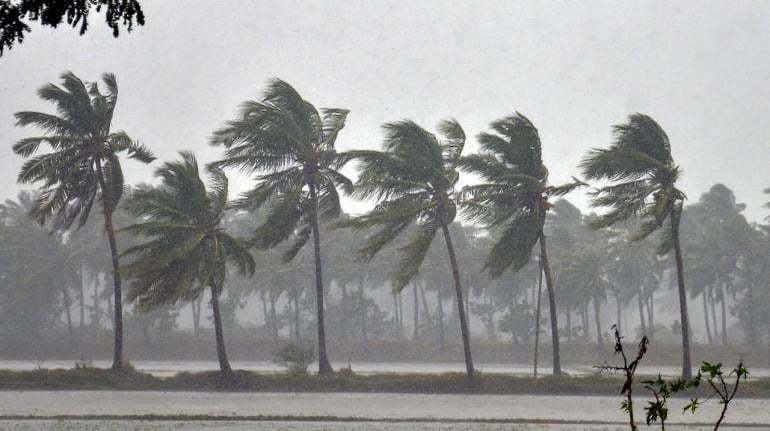
The India Meteorological Department (IMD) predicted a normal monsoon this year, with the impact of El Niño likely in September, the last month of the four-month rainy season. Here is a look at some key terms and their relevance in India’s southwest monsoon.
El Niño: El Niño is a climate pattern marked by the unusual warming of the surface waters in the Pacific Ocean and is associated with rainfall deficit and drought in India and its neighbourhood. It means Little Boy in Spanish.
La Niña: La Niña is the opposite of El Niño. It is an oceanic and atmospheric phenomenon that is the colder counterpart of El Niño.
Long-period average: The IMD uses the long-period average to determine whether rainfall is normal, below normal or above normal. It refers to the rainfall recorded over a particular region for a given duration – a month or a season – averaged over a 30- or 50-year period. The long-period average rainfall over India, based on data for 1971-2020, is 87 cm.
Normal monsoon: Rainfall in the range of 96-104 percent of the long-period average of 87 cm for the monsoon season beginning in June is considered average or normal.
Indian Ocean Dipole: The IMD said the latest climate model forecast indicated that positive Indian Ocean Dipole conditions are likely to develop during the southwest monsoon season.
The Indian Ocean Dipole (IOD) is the difference in sea surface temperatures between two areas or poles – hence a dipole. It is also known as the Indian Niño.
IOD is an irregular oscillation of sea surface temperatures in which the western Indian Ocean becomes alternately warmer (positive) and then colder than the eastern part of the ocean. A positive IOD is good for the southwest monsoon over India.
Meteorological sub-divisions: These refer to six region-wise classifications.
Northwest India: Western Himalayan Region (Jammu-Kashmir-Ladakh-Gilgit-Baltistan-Muzaffarabad, Himachal Pradesh and Uttarakhand); Punjab, Haryana-Chandigarh-Delhi; West Uttar Pradesh, East Uttar Pradesh, West Rajasthan and East Rajasthan.
Central India: West Madhya Pradesh, East Madhya Pradesh, Vidarbha and Chhattisgarh.
East India: Bihar, Jharkhand, Sub-Himalaya West Bengal and Sikkim; Gangetic West Bengal, Odisha and Andaman & Nicobar Islands.
Northeast India: Arunachal Pradesh, Assam, Meghalaya, Nagaland, Manipur, Mizoram and Tripura.
West India: Gujarat Region, Saurashtra & Kutch, Konkan and Goa, Madhya Maharashtra and Marathwada.
South India: Coastal Andhra Pradesh & Yanam, Telangana, Rayalaseema, Coastal Karnataka, North Interior Karnataka, South Interior Karnataka, Kerala & Mahe, Tamil Nadu, Puducherry and Karaikal and Lakshadweep.
Climatological probabilities: The average odds of El Niño, La Niña, and neutral conditions based on how frequently they've occurred over a long historical record.
Snow cover over the Northern Hemisphere and Eurasia: This refers to the blanket of snow on the ground in the Northern Hemisphere and Eurasia.
The Northern Hemisphere snow cover areas during February and March 2023 were observed to be below normal, the IMD said. The extent of winter and spring snow cover over the Northern Hemisphere and Eurasia has a tendency of a general inverse relationship with the subsequent summer monsoon rainfall.
El Niño-Southern Oscillation: This is a naturally occurring phenomenon involving fluctuating ocean temperatures in the Pacific, coupled with changes in the atmosphere. It is an irregularly periodic variation in winds and sea surface temperatures affecting climate. This oscillating warming and cooling pattern, referred to as the ENSO cycle, affects rainfall distribution and can influence the weather.
El Niño and La Niña are considered the ocean part of ENSO, while the Southern Oscillation is its atmospheric changes.

Discover the latest Business News, Sensex, and Nifty updates. Obtain Personal Finance insights, tax queries, and expert opinions on Moneycontrol or download the Moneycontrol App to stay updated!
Find the best of Al News in one place, specially curated for you every weekend.
Stay on top of the latest tech trends and biggest startup news.