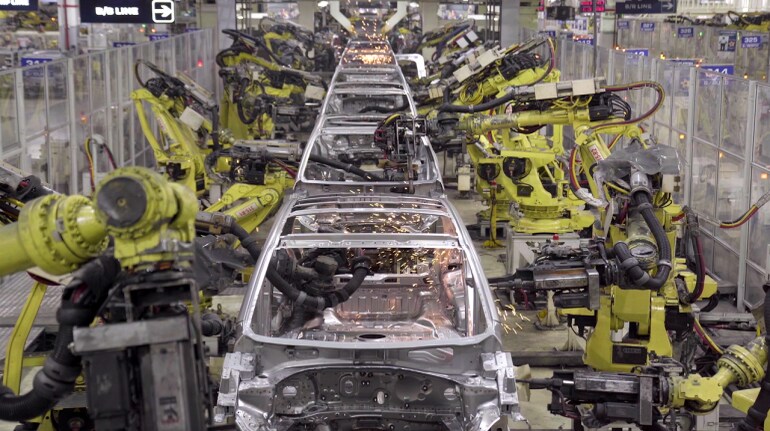
Perhaps the biggest surprise in the July-September gross domestic product data, which was released on November 27, was manufacturing gross value added (GVA).
From crashing by 39.3 percent in the April-June quarter (the quarter of nationwide lockdown), real manufacturing GVA rose 0.6 per cent in the second quarter of FY2020-21. In absolute terms, manufacturing GVA rose nearly 65 percent to Rs 5.79 lakh crore from Rs 3.51 lakh crore in April-June.
More surprisingly though, in absolute terms, manufacturing GVA in the second quarter of 2018-19 (two years ago) was also Rs 5.79 lakh crore, official data by the National Statistical Office shows. In other words, is manufacturing activity and output in the time of Covid-19 pandemic same as what it was two years ago?
One of the most crucial input data points used in GDP and GVA calculations is the Index of Industrial Production (IIP). IIP contracted by 10.4 percent in July year-on-year, by 8 percent in August and expanded by 0.2 per cent in September. So, in a quarter where IIP contracted for two months and barely rose in the month, manufacturing GVA showed positive growth.
“Despite being the worst affected sector in Q1, it is quite puzzling how manufacturing turned itself around. The IIP manufacturing and Manufacturing GVA growth are highly correlated (almost more than 0.90) and this correlation collapsed in Q2 when IIP manufacturing declined by 6.7 per cent while manufacturing GVA grew by 0.6 per cent,” says Soumya Kanti Ghosh, Chief Economic Advisor, State Bank of India
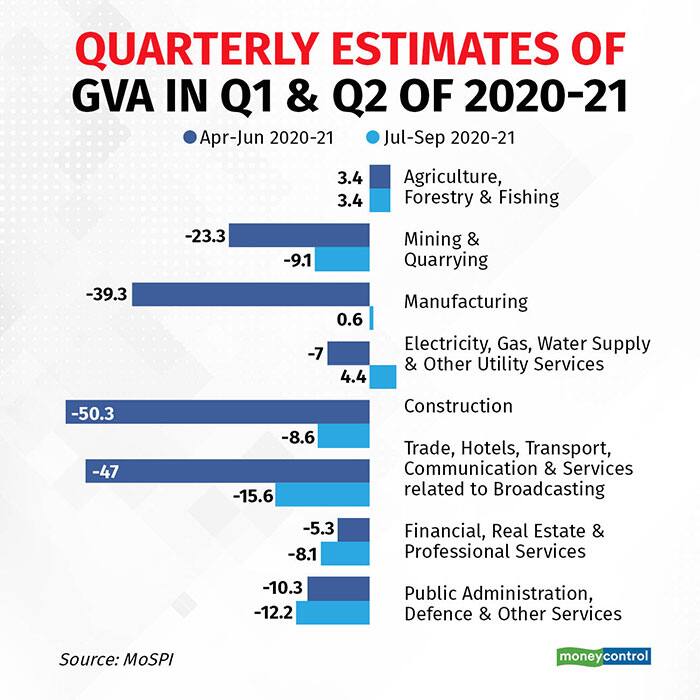
Another indicator, which while it is not used as in input to calculate GDP, is a reliable barometer for sentiments in the manufacturing sector is the Purchasing Managers Index (PMI-Manufacturing). It tends to precede changes in the trend in major estimates of economic activity and output.
PMI contracted in July faster than June, rose in August for the first time since the lockdown, but then shot up to its highest level in September, since 2012.
That still does not explain the strong showing by the manufacturing sector in Q2. Production had still not come online fully, capacity was still not being fully utilised and all the manufacturing jobs lost in the lockdown had still not come back 100 per cent.
Perhaps that is only what explains the positive manufacturing numbers. The pandemic gave companies a chance to slash costs and build up an inventory of products which could not be sold during the lockdown.
Ghosh said that one possible reason for encouraging manufacturing GVA data could be a “massive purge in costs. Further, we observed small companies, with a turnover of up to Rs 500 crore, are more aggressive in cutting cost, displaying a reduction in employee cost by 10-12 per cent. This could turn a potential headwind in future in terms of a drag on consumption. Additionally, there is evidence of inventory build-up that could act as a drag on future manufacturing growth.”
However, analysts also warned that in subsequent GDP revisions, manufacturing numbers could be altered as well.
“While manufacturing volumes had continued to contract, the GVA of this sector posted a marginal growth on the back of aggressive cost-cutting measures, a pared-down wage bill and benign raw material costs. Nevertheless, the extent of the recovery in the performance of the informal sectors in Q2 FY2021 remains unclear, and we caution that trends in the same may not get fully reflected in the GDP data, given the lack of adequate proxies to evaluate the less formal sectors,” said Aditi Nayar, Principal Economist at ICRA.
This does seem clear. Manufacturing GVA went into positive territory in July-September more because of factors like cost cuts and inventory build-up than because of a substantial increase in the activity.
Discover the latest Business News, Sensex, and Nifty updates. Obtain Personal Finance insights, tax queries, and expert opinions on Moneycontrol or download the Moneycontrol App to stay updated!
Find the best of Al News in one place, specially curated for you every weekend.
Stay on top of the latest tech trends and biggest startup news.