






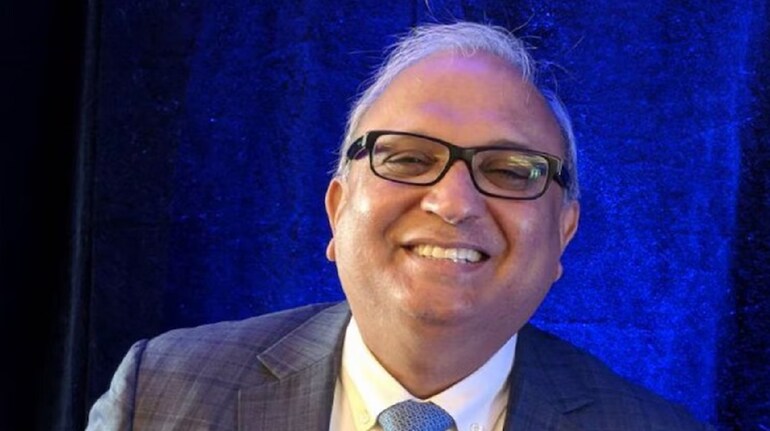

Sharp swings in the rupee are amplifying negative sentiment in Indian equities, even as optimism around India’s trade engagements with the UK and European Union provides limited near-term relief, Helios Capital founder Samir Arora said in an exclusive interview with Moneycontrol’s N Mahalakshmi.
Arora said abrupt currency moves were creating a psychological drag on markets. “When the rupee weakens sharply on days when global currencies are strengthening against the dollar, it creates the perception that something is fundamentally wrong. That sets the tone for equities as well,” he told Moneycontrol.
He said while some currency depreciation may be policy-driven to support exports, the pace of the recent moves has unsettled investors. “If depreciation is required, it should be gradual. When it happens suddenly, it damages confidence and adds to market nervousness,” he said.
Global markets pulling capital away from India
Arora said the primary reason foreign investors have stayed away from Indian equities is strong performance in overseas markets, particularly technology-led rallies. “Other markets are doing well, so global investors do not yet have a compelling reason to rotate capital back into India,” he said.
However, he added that such divergence rarely lasts for extended periods. “It is very unusual for India to keep falling while the rest of the world keeps rising. Over time, either valuations adjust or earnings catch up,” he said.
India is too small to keep funding global rallies
Could the trend of foreign selling then reverse anytime soon? Arora said persistent foreign selling in Indian equities is structurally unsustainable because India forms only a small portion of global and emerging market portfolios.
“India is barely a fraction of global allocations. It does not make sense that India keeps getting sold every day to fund rallies in the rest of the world,” he said.
He added that even within emerging market portfolios, it is unrealistic to assume India must continuously supply capital for outperforming markets such as Korea, Taiwan or other technology-heavy regions.
“When 85–90% of global markets are performing well, it is not logical that the remaining 10–15% keeps acting as the source of funds. At some point, relative performance gaps become too wide and rebalancing flows start coming back,” Arora said.
He noted that such reversals typically do not require major triggers. “Often it only takes one or two small catalysts for money to start returning because positioning becomes extreme,” he said.
Trade optimism lifts sentiment but not stock strategy
While recent developments around India’s trade negotiations with the EU and the UK have improved sentiment, Arora cautioned against using such macro headlines as direct stock-picking triggers.
“These are big-picture developments that support economic stability and export diversification, but you don’t buy individual stocks based on trade headlines. Actual implementation takes time,” he said.
He noted that global buyers continue to increase sourcing from India despite tariff uncertainties, driven by long-term efforts to diversify supply chains away from China. “Even with tariffs, large retailers are continuing orders from India because the strategic shift is structural,” he said.
Budget risks limited after market correction
Arora said the sharp market correction has reduced the probability of further heavy downside unless policy shocks emerge. He warned that any indication of higher equity capital gains tax in the Budget would be negative for sentiment.
“Equity flows are critical for capital formation and private investment exits. Any signal that equity taxation will be tightened further would hurt confidence,” he said.
Quick commerce, fintech remain core bets
Despite near-term volatility, Arora said his firm remains focused on structural growth sectors. “Our top ideas right now are quick commerce and digital payments or fintech platforms. These businesses are scaling rapidly, have strong user adoption and are positioned for long-term growth,” he said.
He added that while portfolios include multiple themes across mandates, these sectors remain among Helios Capital’s highest-conviction positions for long-term investors.
Discover the latest Business News, Sensex, and Nifty updates. Obtain Personal Finance insights, tax queries, and expert opinions on Moneycontrol or download the Moneycontrol App to stay updated!
Find the best of Al News in one place, specially curated for you every weekend.
Stay on top of the latest tech trends and biggest startup news.





