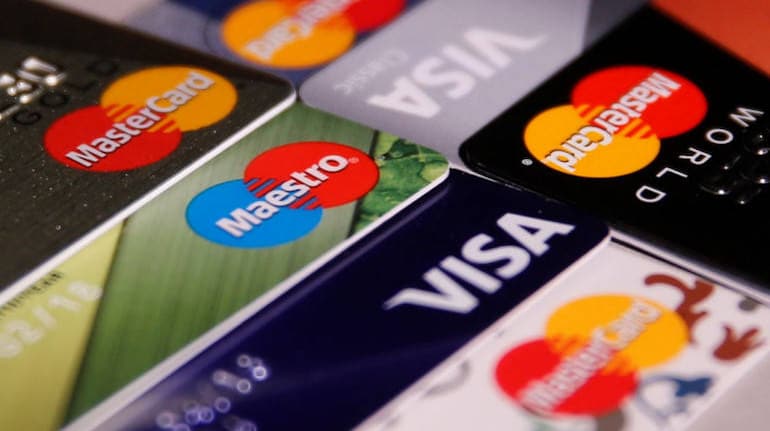
A debit card is an electronic card provided by banks when you open a savings or current account. This card gives you instant and easy access to your savings and current accounts. You can use debit cards to withdraw money from ATM or to pay for your purchases on online shopping websites or at merchant retail stores. If you have an international debit card, you can perform similar transactions across the world. Banks issue a CHIP based debit card which stores your account details.
Debit card eligibility is linked to your savings account. In order to obtain a debit card, you need to open an account with a bank. In order to do that, you need to meet the eligibility for opening a bank account. These conditions are:
# You should be a citizen of India.
# You should be 18 years and above.
# In the case of minors, the parents or legal guardian of the minor can open the account on their behalf.
# The applicant is required to have valid identity and address proof that is government approved.
#You will need to make an initial deposit - the minimum balance requirement of a particular savings account varies depending on the bank.
Debit cards are linked to the account in the bank. Once you fulfil the criteria to open a bank account, you can receive a debit card. There are no standalone criteria to be met to be eligible for a debit card. Unlike credit cards, debit cards do not require any credit score. Certain banks offer different types of debit cards; there are categories such as platinum, silver, gold etc. The type of card issued to you depends on the balance maintained in your account. If you have a premium debit card, you get access to concierge services, gain reward points through your transactions, and have access to a host of other benefits.
As stated above, there are no separate requirements to be fulfilled to be eligible for a debit card. Once you have an account with a bank, you automatically become eligible for a debit card. However, you must fulfil the conditions to open a bank account. Once you do so, the debit card eligibility is also met. To check if you are eligible for a debit card, see below
# You must have an account with a bank. It can be a savings account or a current account
# You must be 18 years or above
# You must have submitted all the necessary documentation required for KYC. As per the guidelines of RBI, KYC is a must for account opening. If you have incomplete documentation, you may not be able to open an account or have a debit card issued to your name.
# You must maintain the minimum balance requirement of the bank for a savings account.
# You must be willing to pay the annual maintenance charges for the issue of a debit card.
The documents required for a debit card are similar to the documents for opening an account. Typically, you don’t have to submit additional documents for a debit card. As debit card is linked to a bank account, the bank already has the necessary information. The objective behind obtaining these documents is to perform a thorough check on the customer. As per the present guidelines of RBI, KYC is a must. If the banks fail to do so, they are liable to pay penalties.
Some banks may require documents for verification. Here is a list of documents required for a debit card:
# Proof of identity: Any of the following: Passport, Driving license, Voter’s ID card
# Proof of address: Any of the following: Passport, Driving license, Voter’s ID card
# PAN card
# Form 16 (only if PAN card is not available)
# 2 latest passport size photographs
This is a standard list of documents. Check with your bank if any additional documents are required.
Yes, it is possible to link multiple accounts to a single debit card. However, this facility may not be offered by all banks. Check with your issuing bank if this is allowed.
Every debit card has a unique PIN. You can use the debit card at an ATM and input the PIN. You can then punch in the amount you want to withdraw and the cash will be dispensed accordingly.
You may be eligible for overdraft facility on the savings account linked to your debit card. However this depends upon your bank and the kind of account held by you. This facility is not available for all debit card holders.
Banks typically charge you some nominal fees for using your debit cards. This includes card issuance fees, annual maintenance fees as well as ATM charges for exceeding the limited free monthly ATM transactions as provided by your bank.
Other than the annual fee, ATM withdrawal fee, and the issuance fee, the bank will not charge you anything for not using your debit card.
You simply need a bank account to get a debit card. Credit score is not relevant; it is only required for credit cards.
Yes. When you fill the debit card request form, you can choose from the various payment systems associated with the bank. In case you travel internationally, you must opt for Visa or MasterCard debit cards. These cards are accepted globally. In case you only conduct domestic transactions, the RuPay debit card could be a good fit for you.
Merchant Discount Rate or MDR is the charge to a merchant for payment processing services using a debit. Effective January 1, 2018, RBI has amended the regulations on Merchant Discount Rate or MDR. MDRs are determined on the basis of the merchant or company’s turnover. Additionally, MDR is now applicable for all kinds of transactions; whether they are online transactions, Point of Sales transactions (PoS) or even QR- based transactions.
All merchants will be charged MDRs depending upon their yearly turnover, which are divided into two categories i.e. merchants with a turnover up to INR 20 lakh and those with a turnover over INR 20 lakh. Merchants with an annual turnover of up to INR 20 lakh in the previous financial year will be charged INR 200 or 0.40 percent for online and PoS transactions. MDR for QR- based transactions will be capped to INR 200 or a maximum of 0.30 percent. On the other hand, merchants making an annual turnover of over INR 20 lakh in the previous financial year will be charged an MDR of INR 1000 or 0.90 percent for online and PoS terminals, whereas the MDR for QR-based transactions will be capped at 0.80 percent. Debit
Discover the latest Business News, Sensex, and Nifty updates. Obtain Personal Finance insights, tax queries, and expert opinions on Moneycontrol or download the Moneycontrol App to stay updated!
Find the best of Al News in one place, specially curated for you every weekend.
Stay on top of the latest tech trends and biggest startup news.