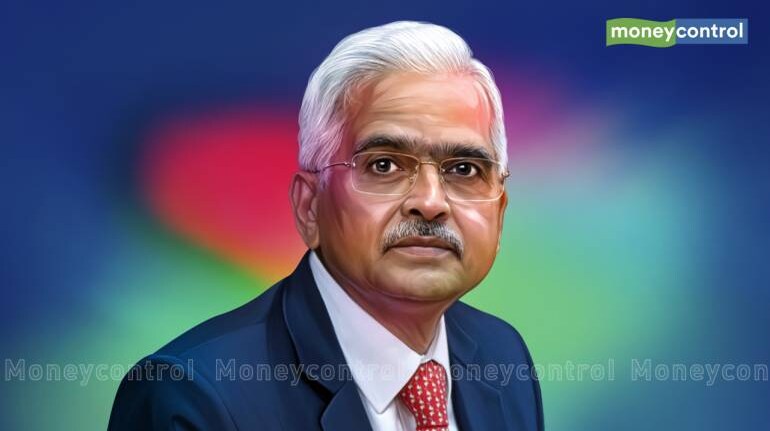
The debate over the Reserve Bank of India (RBI) being behind the curve in tightening monetary policy was over and “is no longer there”, central bank governor Shaktikanta Das said on November 2.
Speaking at the annual banking conference jointly organised by the Federation of Indian Chambers of Commerce and Industry (FICCI) and the Indian Banks' Association (IBA), Das defended the central bank’s monetary policy actions while emphasising the need to ensure a soft landing for the Indian economy.
“If we had started the process of tightening earlier, what would have been the counterfactual scenario? What you prevent in the process does not get the kind of appreciation that it should get. We prevented a complete downturn of the economy,” Das said.
Also read: MC Explains | Five questions answered ahead of RBI's unscheduled meeting tomorrow“We did not want to upset the process of recovery; we wanted the economy to safely land in the turbulent waters through which economy had been sailing through the period of COVID,” added Das. “We wanted the economy to safely reach the shores, and thereafter try and pull down inflation.”
The RBI’s rate-setting Monetary Policy Committee is walking a tight rope to balance growth-inflation dynamics in the country. An out-of-turn meeting has been called on November 3 as the MPC failed to stick to its mandate of keeping inflation between 2 percent and 6 percent for three quarters in a row. The MPC will explain to the government its failure and the corrective steps taken by it.
The MPC has been tightening monetary policy for more than half a year now amid the Russia-Ukraine war, accelerating inflation and aggressive rate hikes by global central banks.
On April 8, the central bank announced the introduction of the standing deposit facility (SDF) to absorb excess banking system liquidity. This uncollateralised facility came with an interest rate of 3.75 percent, which immediately helped lift overnight rates.
The policy repo rate— rate at which the RBI lends funds to banks—has also been hiked by 190 basis points since then to 5.9 percent. One basis point equals one-hundredth of a percentage point.
Inflation in India, however, has consistently stayed above the RBI’s target. Inflation averaged 6.3 percent in January-March, 7.3 percent in April-June, and 7 percent in July-September. This is the definition of failure under the flexible inflation targeting framework. The RBI targets inflation at 4 percent within a tolerance band of two percentage points on either side of the target.
Das acknowledged on November 2 that there has been a slippage in maintaining the inflation target. However, if the MPC would have tightened policy earlier, the country would have paid a “high cost” for it, he said.
India’s growth momentum has sustained and inflation is expected to moderate, the governor said. Banks, non-banks, financial sector is stable and resilient, while balance sheets of lenders are looking very robust, he added.
Discover the latest Business News, Sensex, and Nifty updates. Obtain Personal Finance insights, tax queries, and expert opinions on Moneycontrol or download the Moneycontrol App to stay updated!
Find the best of Al News in one place, specially curated for you every weekend.
Stay on top of the latest tech trends and biggest startup news.