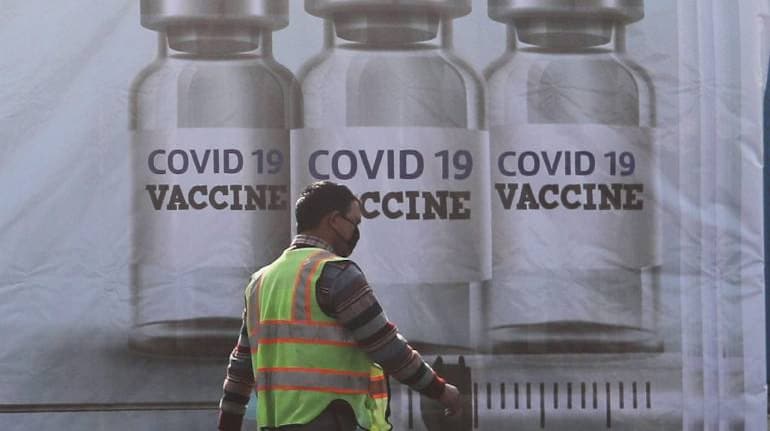
The Subject Expert Committee (SEC) of the Central Drugs Standard Control Organization (CDSCO) that reviewed the restricted emergency use authorisation (EUA) application of Bharat Biotech's COVID -19 vaccine, Covaxin, has granted approval without phase-3 efficacy data, and on the hypothesis that the vaccine works on the mutant strains, revealed the minutes of the SEC meeting held on December 30 and January 1.
The minutes showed that the SEC had asked Bharat Biotech to expedite the recruitment for phase-3 trials and perform interim efficacy analysis, even as it recommended the restricted emergency use of Covaxin on January 1.
The SEC, which met on December 30, recommended Bharat Biotech to update and present immunogenicity, safety, and efficacy data for consideration of its application.
The SEC meeting noted that the Covaxin based on inactivated whole virion platform has the potential to target mutated coronavirus strains.
In addition, the minutes showed, the data generated by Bharat Biotech Covaxin demonstrates a strong immune response (both antibody as well as T cell) and invitro viral neutralization.
"The ongoing clinical trial is a large trial on 25,800 Indian subjects in which already 22,000 subjects have been enrolled including subjects with comorbid conditions as well which has demonstrated safety till date," the SEC minutes said.
According to the minutes, Bharat Biotech submitted safety and immunogenicity data like geometric mean titre (GMT), geometric mean fold rise (GMFR), including serious adverse event (SAE) data from the Phase I & Phase II clinical trial along with the data from the ongoing Phase III clinical trial in the country.
The DCGI based on SEC recommendation approved Bharat Biotech's Covaxin in public interest as an abundant precaution, in “clinical trial mode”, to have more options for vaccinations, especially in cases of infection by mutant strains.
"A reading of the minutes published today demonstrates the process through which the SEC deliberated on and reviewed evidence for COVAXIN between 30 December and 2 January. Over the course of meetings over three days, the hesitation of the SEC in granting REU approval in the absence of any efficacy data has been documented," said All India Drug Action Network (AIDAN) in a statement.
SEC discussion on Serum Institute of India's (SII) CovishieldOn SII's Covishiled vaccine, the SEC minutes of December 30 showed that SII presented before the expert committee the safety immunogenicity and efficacy data of phase II/III clinical trials of AstraZeneca vaccine carried out in the UK, Brazil, and South Africa along with the safety and immunogenicity data from the ongoing Phase II/III clinical trials of Covishield in India.
SII also presented the draft factsheet and prescribing information of the vaccine. The vaccine maker also mentioned that its partner AstraZeneca had received the EUA for the vaccine in the UK subject to various conditions and restrictions.
The committee discussed the safety, efficacy, and immunogenicity data, draft factsheet and prescribing information and sought more clarifications on various aspects.
On January 1, SII presented the details of the conditions and restrictions under which AstraZeneca was granted the EUA in the UK and the revised factsheet and prescribing information in Indian context as required by the committee for further consideration.

Further, the firm also presented the proposed Summary of Product Characteristics (SmPC) and risk management plan including Pharmacovigilance plan.
The minutes of January 1 showed that the experts committee after going through SII's data, noted that the "safety and immunogenicity data presented by the firm from the Indian study is comparable with that of the overseas clinical trial data".
Following detailed deliberation, the experts committee recommended that the vaccine be given the REU for active immunization to prevent COVID-19 disease in individuals of 18 years of age and above, and it be given in two doses with interval of 4 to 6 weeks.
The committee sought safety, efficacy, and immunogenicity data from the ongoing clinical trials nationally and internationally for review at the earliest, including adverse events. The committee asked SII to submit India specific risk management plan.
Dr Sushant H Meshram didn’t participate in this deliberation. The reason for this isn't disclosed.

Discover the latest Business News, Sensex, and Nifty updates. Obtain Personal Finance insights, tax queries, and expert opinions on Moneycontrol or download the Moneycontrol App to stay updated!
Find the best of Al News in one place, specially curated for you every weekend.
Stay on top of the latest tech trends and biggest startup news.