






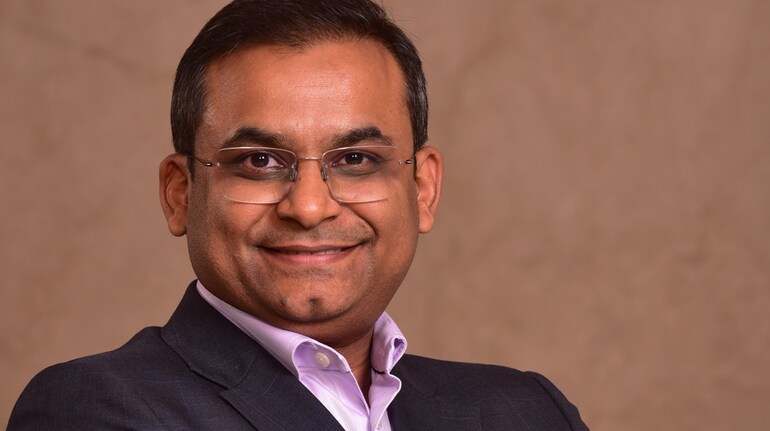
“We will see Japanese and Middle East players looking to diversify into other sectors as well, not just financial services. I think that's something we're seeing actively.”
That’s the word coming in from top dealmaker Rahul Saraf, head (investment banking) at Citi India, following the blitz of inbound M&A from both regions last year.
Saraf is confident that India Inc will continue to pursue mega outbound M&A following big bets by Coforge and Tata Motors and is betting on industrials, financial services, pharma and tech to drive equity capital market deal activity in 2026.
Edited Excerpts:2025 was a truly action-packed year for Citi with your i-banking team acting on several mega M&A’s across segments. Take us through your experience navigating these multi-sectoral, complex deals and looking back, any interesting anecdotes or lessons you can share?
I think for us, the biggest learning is never say never, so the whole never say never or never die kind of attitude. For example, for Yes Bank, it took us 18 months from start to finish, there were lots of stops and starts, to the announcement. There were regulatory approvals, lots of regulatory mindset got evolved and the buyers also had a different view of the world to start with and ended up with a view which made sense for them. Some buyers could not get there in terms of deal constructs, so the perseverance and never say die attitude kind of got the deal done ultimately.
Similarly, I would say, since you asked for anecdotes, JSW was a very interesting one. We had a situation where after the final bids came in, in the last week, the bids got revised thrice. We had two bidders jostling against each other. There was a day, I remember, a Tuesday morning where I sat in the car with one of the potential bidders and I said, this is the price that gets the deal done. By the time we reached their office in the car, it was a 20-minute journey, we shook hands, we said, okay, the deal's done. That same evening around 11 o'clock, the other bidder came in and topped the price, right?
So it happened twice or thrice over and we finally got to the finish line. Again, never say never or it's never done until done, right? I think those were great learnings and we see that across many transactions where perseverance is important, patience is important, and in India generally the deal making takes longer than usual. It takes 8 to 12 months to get a deal closed. We were on the lucky side of both those transactions and many more that you talked about.
Was it a conscious strategy for Citi to prefer sell-side M&A situations rather than advise sponsors and strategics on the buy side? Also, how would you distinguish yourself from competitive global i-banking peers like JP Morgan, Morgan Stanley and Goldman Sachs in India?
I would say we think we are distinguished because of two things. One, it's a great team. It's not one person leading and doing everything. It's a great team. And the consistent advice for the right transaction, right strategic advice to the clients. There were lot of buy-sides that we were on, and we may have advised the clients not to go ahead for the right reasons, be it valuations, be it competitive tension, be it some other situations or wrinkles in the transaction. And those deals will not see the light of the day.
We did WNS. We were working for Capgemini on the buy-side. We also worked with Google when we invested in Flipkart. So we've done our share of buy-sides as well. And buy-sides are also important to us as a firm, depending on the situation, depending on the counterparties, depending on the probability of a transaction on the buy-side versus sell-side. All of these factors get into the math and the algo in the head, and then there's a call in terms of what transaction you pick. But lately, yes, we've done more sell-sides than buy-sides in India.
Last year saw a big inbound push from all major Japanese financial giants, whether it was SMBC for Yes Bank, MUFG for Shriram Finance or Mizuho for Avendus. Do you expect the Japanese and Middle East corridor to be equally active for the FIG segment in 2026 or will this inbound M&A trend spread to European and US majors as well?
I think one wave of investment is behind us from the Japanese and the Middle East. You may have some more. We have of course worked on IHC- Sammaan as well, which is also Middle East coming into India. So one wave is I think behind us. We will see Japanese and Middle East players looking to diversify into other sectors as well, not just financial services. I think that's something which we're seeing actively. The deepening of the sector with all these inbound investments from the Japanese and Middle East is a welcome scenario for the India FIG space. For the Europeans and the US, I think it will be much more on partnerships. You've got Alliance looking to partner with a player in India. You've got BlackRock, which partnered. You already have some of the other European names who partnered on the insurance side. So you'll have some of those partnerships continue and flourish, but not necessarily a full-scale big acquisition that we will see from the European and US players at this point.
The insurance sector has been further liberalized in terms of the FDI cap. A few of the past budgets have focused on that. But we haven’t seen much action. What do you think is holding players back?
Nothing. I think it will happen. It's just that a lot of people were tangled with different partnerships and alliances. Some will take time to untangle and then they'll determine whether they go by themselves or partner with another player. I think some of these will evolve. The win-win is really in a good partnership, in a synergistic partnership between a global player bringing best practices and technology and a local player who has a better understanding on quickly accelerating the growth path in India. Not that the global guys cannot do it by themselves, but acceleration is faster with an Indian partner. So we will see many more of those.
Tata Capital, LG Electronics, ICICI Prudential Asset Management were some of the key IPO’s on which Citi advised last year, not to mention the Swiggy QIP as well. 2026 has been sluggish so far when it comes to the IPO market and overall equity capital market deal activity is also subdued. Investors, both foreign and domestic mutual funds have turned cautious, and one is seeing an impact on valuations and issue sizes as well. What is your assessment of the current scenario and which sectors are you betting on to drive ECM deal momentum?
I am quite bullish on the ECM space this year as well. In the past two years, we've seen the second half has been much, much more active than the first half. And we've seen a lot of transactions got done in the second half of last year. We have a great pipeline, equal to what we had last year at the same time of the year, for this year as well. And there's some transactions which are multi-billion dollar transactions which are yet to get awarded. So that will add to the pipeline.
So I'm quite bullish across sectors, whether it's on the broader industrial space, on the FIG space, on the pharma space, and as well as on the tech space. So across the sectors, we're seeing a lot of activity. The valuations you talked about, yes, there's been some pushback in some situations. And I would say for the right reasons. The FDI or FII is still coming in. We started seeing them to be very positive after the budget and the trade agreement. And we see that trend to continue through the year, this year.
The IPO is also one milestone in the journey of a company. So if the company is looking to IPO for giving exit to secondary investors, or for growth, or for any other reason, it's just one milestone. You are selling between 2.5% to 10% to 15% in a company. The real test is what happens after the IPO. The pop on the IPO day, plus how does it perform in the next six months. Small caps have underperformed for either the reasons of performance or surprises, or more importantly, that a lot of the liquidity went away from the mid-caps, small caps in the last six months. I think that could be one reason why some of them have been more volatile than the big , large caps.
What is your view on startups or new ages firms looking at a listing? In the past, there was talk about a lot of froth in the sector. Many believe that has changed. Are new -age founders turning cautious and ready to leave a lot more on the table, like other issuers?
So for the new age companies, I think what is more important is what does the IPO do for them? Does it give them acquisition currency? Does it clean up the cap table? Does it give them ability to raise more capital and then acquire and be consolidated? Does it give an exit to their investors? So it's a part of the life cycle of those new-age companies. And I think they are quite seasoned to see how the performance has been for some of the other new age companies, how the investor response has been, what is liked and what is not liked.
And we have been also guiding them and advising them as to what will work and what will not work. And accordingly, the evaluation gets triangulated. So every transaction, I think, has the right value and price at which the deal gets done and gets done successfully. And the founders are coming to a point that they understand what it takes to have a sustainable performance in the market, not just in the IPO.
Do you expect big outbound buyouts by India Inc in 2026? Last year saw Coforge acquiring Encora in a $2bn plus mega IT deal while in the auto segment Tata Motors scooped up Iveco for more than $4bn dollars. Reports suggest Sun Pharma is chasing a $10 bn plus buyout now..are these blips on the radar or will there be some sustained, serious outbound shopping?
I would say that it will be sustained for different reasons. One could be an industry reason where people want to diversify to acquire growth and find presence in a particular geography. The other could be because they find the valuations cheap and they think that they can turn around or trigger those target companies and exploit synergies with their home base. The third is that they have under-leveraged balance sheets. Most Indian corporates have under-leveraged balance sheets, and a lot of private equity as well as bank capital chasing them to allow them to pursue growth opportunities.
And fourth, there could be some pressure in some geographies, where there are succession issues or the markets are not performing, they need to look for a transaction, and there is a little bit of a push factor from their side. So with all of those factors, we think the Indian companies which are trading well, have a under-leveraged balance sheet, and confidence level from the regulatory, political point of view along with other geo-political advantages that they have, will continue to be acquisitive.
How busy will diversified Indian conglomerates be in 2026? Do you expect a lot of internal reorgs or non-core asset divestments? What’s your outlook?
I've not seen in my career too many divestments from big conglomerates. There's been much more aggregation. We will see some carve-out IPOs, some partnerships. I see some private equity in some businesses for further growth. But I think conglomerates understand the sum of parts very well. They understand the shareholder value extremely well. And they have the wherewithal to grow much more than most others. They will continue to do well and to reorg in a way that it allows for further growth in each of the verticals.
What is happening as far as the sale of Royal Challengers Bangalore or RCB is concerned? Its a flurry of IPL deals across several franchises, but all eyes seem to be on RCB and it’s fate going ahead.
Well, the only thing I can say is that my phone has not stopped ringing over the weekend, through the weekend. So the process is going on. So I can't say more. But it's a very strong process.
You went to Davos recently and spent some time over there at the World Economic Forum. What's the feedback about India and what are people looking forward to as far as investment opportunities here are concerned?
The reason I went was really because of the interest in India from global corporates, which is significant, both in terms of capital providers as well as strategics. They want to know what's happening in India. They want to know what they can do more. Could they do more partnerships? Could they do more with their existing businesses? Could they invest in XYZ companies or industries?
The Citi hall was on a promenade, and when I stepped out on the promenade, on the right you had Tata's and HCL. In the front you had the India Pavilion, on the left you had Mahindra and others. So you could see India everywhere. And that's also a significant endorsement of the fact that India is extremely visible at Davos. Everybody wants to talk about India at Davos. They want to understand what's happening on the ground.
I think we will see much more, especially after all of these backlogs, I would say, from the tariff issues or the earnings or the budget. All of that has gone behind us. We would see much more focused capital coming in into India and many more strategic partnerships from the global platform are expected to come to India as well.
India was net FDI negative for the fourth month in a row in November 2025, with outflows exceeding inflows by $446 mn as per RBI data. But this data was before the Indo-US trade deal was announced. Now that the deal is done, do you expect FDI to return to the desired extent or will the weakening rupee continue to play spoilsport?
No, I think rupee is fairly stable for us, Ashwin. I think second, in November, if I remember correctly, on a gross basis, there was $6.5 billion which came into the country. And then some money went out because there were some IPOs where people took some money out. And then there were some India outbound transactions which happened where the money went out. But there was money coming in as well. Those three to four months, yes, there was a net outflow. But I would say the interest continues. As I said in Davos also, the flavor was, can we invest more in India, across from SWFs, from strategics, from other large capital providers. And with all of the backlogs, behind us, we would see much more favorable outlook for global investors and global capital towards India. I have no doubt in that.
What would you say were the hits and misses from Budget 2026 and the key signals it sent to India Inc and deal street? It was silent around the controversial Tiger Global Supreme Court verdict which has made global investors jittery…
I think the budget gives two big signals. One, India as a government, as a nation, is very confident of the path that it has chosen. The trajectory remains intact. There is no knee-jerk reaction that is required to be done for anything. Second, I think it allows for predictability in terms of what's likely to come through in this year, next year from the government. That allows for confidence from both global investors, global corporates, and for the Indian corporates and individuals to actually think through and plan their next steps, whether it's investments or disinvestments.
I think it's a very positive framework that the government has laid out. A lot of people said there's no big-bang announcement, right? It doesn't need to be, so long as the trajectory is intact, so long as the fiscal discipline is maintained, so long as capex is going, (Rs 12.2 lakh crores in capex that the government announced), so long as new avenues for looking at foreign investment, the framework, they're opening up. All of those are there, it's just enabling India to then find and discover the right transactions, right deals, right development, right growth. That’s the right way for the government to think about the next growth path.
We have seen bigger M&A, we've seen bigger sized IPOs in the past 12 to 18 months, but correspondingly and proportionately, have the deal fees also increased or there's a lot left to be desired when you compare it to, say, global best practices? I want a candid answer.
I'll give you a candid answer. I think it's still lower than where the globe is on average. Deal activity volume is very high. And at the same time, the complexity of deals is increasing. So the absolute numbers have increased because of the size of the deals. And I think complexity, especially cross-border transactions or other complex reorgs, all of them need a lot of seasoned advice and inputs. People are willing to pay for that complex situation, seasoned inputs. For the run-of-the-mill straight trade, I think the fee could be slightly lower. But our job is to find the right transaction where it marries both relationship and complexity and the attractiveness of the transaction and get the best bang for the buck.
Are you seeing undercutting as far as fees is concerned with so many banks chasing lucrative mandates?
No. There's so many banks chasing, but I think the men are separated from the boys in general, I would say, on the street. And everybody's got enough -- the pie is large enough for everybody to play at. And everybody's hiring, which means they're not resource constrained. And that environment, unless the trend changes significantly, we would continue to see fee to be robust. In the case of lots of transactions in Citi or any of our key competitors, we leave, because the fee is not good enough. And that's the right thing. It's not arrogance. It's not anything else. It's just that our resources are not able to justify those fee levels. And that's fine. Somebody else can do it, and we all will be happy.

Discover the latest Business News, Sensex, and Nifty updates. Obtain Personal Finance insights, tax queries, and expert opinions on Moneycontrol or download the Moneycontrol App to stay updated!
Find the best of Al News in one place, specially curated for you every weekend.
Stay on top of the latest tech trends and biggest startup news.




