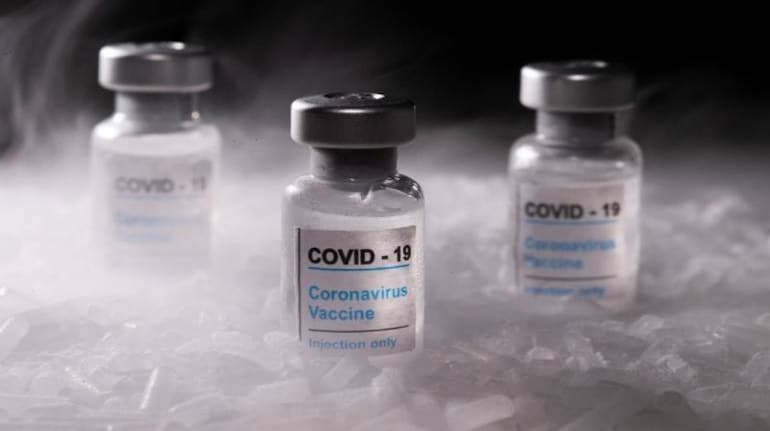
As India prepares to launch mass roll out of COVID-19 vaccination in coming weeks, it is estimated that the country may need 1.3 lakh-1.4 lakh vaccination centers, 1 lakh healthcare professionals as inoculators and 2 lakh volunteers, according to EY-FICCI report.
The report titled "Protecting India: Public Private Partnership for vaccinating against COVID-19" says that to meet
estimated demand of 1.3 lakh-1.4 lakh centres, about 60 percent of the existing public health infrastructure will have to house a vaccination centre.
Against the requirement of 1 lakh inoculators, the public sector can potentially provide 60,000-70,000 inoculators that is 10 percent of the total nurse/ANM capacity available in India.
The government in the initial phase of vaccination drive will prioritise vaccinating 30 crore people who include healthcare and frontline workers, people above 50 years and also people with co-morbidities.
But the report raises concern whether this could lead to a capacity constraint in public healthcare services, that are already overstretched due to COVID-19.
With much of government human resources machinery dedicated to COVID-19 vaccination, there is also worry about what would be the state of child and women immunisation and nutrition programmes.
The states such as Odisha, Bihar, Jharkhand, West Bengal, Uttar Pradesh and Madhya Pradesh, that have limited public health infrastructure may be worst hit.
The report says that the private sector can adequately supplement the physical and human infrastructure supply in key capacity constrained regions, specifically in urban and semi-urban areas, in addition they are assuring government to impart training and credentialing process to meet the requirement of inoculators.
As per a survey carried out by FICCI and EY, in association with NABH, NATHEALTH and other healthcare associations with 264 private healthcare organisations, a high proportion of private healthcare providers said that they are willing to participate in the vaccination drive.
They have a trained pool of 30,000 people available for carrying out inoculation.
About 84 percent of them said they have earmarked inoculation facilities in their hospitals centres and 54 percent have cold storage facilities to store vaccines on site.
More than 88 percent said they have trained inoculators available for vaccination, 70 percent are willing to allocate manpower in semi-urban and rural areas for vaccination and 94 percent are willing to impart training for inoculation.
Private sector expectationsThe private sector is asking the government to permit companies to utilize their Corporate Social Responsibility (CSR) funds for inoculation of their own employees, while also supporting them for inoculation of population in their vicinity, wherever possible.
Earlier Biocon's Chairperson Kiran Mazumdar-Shaw has asked the government to allow corporates to vaccinate their employees, using the Corporate Social Responsibility (CSR) funds.
Her statement has been widely debated on social media. Currently, corporates with a net worth of Rs 500 crore, or revenues exceeding Rs 1,000 crore, or net profit over Rs 5 crore, have to set aside two percent of their average profit over the last three years on CSR programmes.
The private sector is asking the government to finalise the number of vaccination centres for defined catchment area across public and private healthcare setups based on a defined eligibility criteria in terms of minimum physical infrastructure and human resource requirements.
In addition it is asking the government to define the categories of healthcare professionals who can be enlisted for inoculation and are also asking the private sector to provide flexibility on deciding the degree of participation for vaccine administration.
Private sector entities are also asking the government to ensure interoperability of IT systems of private set ups with public sector IT interfaces such as CO-WIN for seamless automation of vaccine traceability and temperature monitoring across stages of storage and transportation, vaccine stock management, and last-mile administration including citizen registration, slot booking, transaction management at vaccine centre, adverse event management and feedback management.

Discover the latest Business News, Sensex, and Nifty updates. Obtain Personal Finance insights, tax queries, and expert opinions on Moneycontrol or download the Moneycontrol App to stay updated!
Find the best of Al News in one place, specially curated for you every weekend.
Stay on top of the latest tech trends and biggest startup news.