






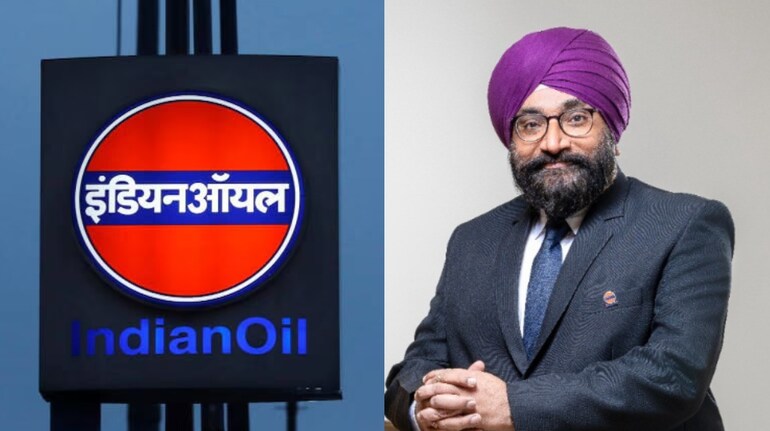

State-run Indian Oil Corporation will continue to purchase crude based on what makes commercial sense rather than discounts or geopolitical considerations, its chairman and managing director, Arvinder Singh Sahney, told Moneycontrol in an interview. The comments come as the country’s largest refiner lays out a strategy to diversify its sourcing base amid a volatile global oil market. The company has further identified land parcels for its nuclear energy projects and is in discussions with various states for the same. For its nuclear foray, the company is on the lookout for global partners to collaborate in the segment.
Edited excerpts:
1) How does the company plan to navigate the current geopolitical situation with US sanctions on Russian oil and a potential stabilisation of Venezuela’s oil sector? Do you plan to increase your sourcing of Venezuelan crude grades?
We procure crude purely on commercial considerations. Whichever grade is commercially beneficial for us, we will go for it. Expanding our crude basket has been a consistent priority: five years ago, we were sourcing from around 27 geographies; today, we source from 41. That effort will continue.
Anyone is welcome if crude is available. Several refineries, across both the private sector and PSUs, are capable of processing a wide range of crude types.
2) There’s a rebalancing underway in oil and gas, and data shows Russian imports have been declining for some refiners. Given the volatility, does IOC also plan to cut Russia sourcing and shift to more stable origins?
We rely on economic models to make those calls. If a crude stream works commercially for us, we take it; if it doesn’t, we don’t. It’s not just about a headline discount. The crude has to run through our refineries, and each grade comes with its own processing cost and yields a different product slate with different realisations.
So the optimisation is end-to-end, crude price, refining costs, product yields, and net margins. We run this through complex, AI-driven modelling, and we follow what the model output tells us is optimal now.
The environment is changing quickly. Crude prices have moved up again. Not long ago, we were looking at around $58 a barrel. In a market like this, decisions have to be dynamic, prudent, and commercially sound.
We will buy crude that makes commercial sense. Discounts matter, but they are only one factor, not the only one.
Kpler data point (context): IOC’s Russian crude imports in the first 23 days of 2026 were about 468 kbd, nearly matching the 470 kbd it averaged over all of 2023, indicating a sharp pickup at the start of this year.
3) The three OMCs have concluded a one-year deal for imports of LPG from the US in 2026. When do you see the supply starting and are there any other regions you are looking to source LNG or LPG from?
LPG is primarily available in these two regions only, either in the US or in the Gulf. We have taken up a conscious decision to diversify to a certain extent. The US LPG supply will start from April. We will always be on the lookout for good deals.
4) Does the company plan to enter the nuclear segment?
We are evaluating it. As you know, we are one of only two companies in the country with a long-standing joint venture with NPCIL. NTPC has already moved ahead with some projects, and we are assessing how we should proceed, including land identification and the facilities required.
With the latest SHANTI Bill and the regulations that will follow, we expect more competitive proposals from foreign technology providers and potential collaborators. We are looking for the right partner.
We have identified a few states for potential nuclear projects and are in discussions with them.
5) What is your capex target for this and the next fiscal?
We have been doing a capex of Rs 35-40,000 crore per year. It will be in the same range for FY27 too.
6) What are your key priority areas in the renewable energy segment? How much RE capacity are you targeting?
In renewables, we’re building across the spectrum, solar, wind, CBG, 3G ethanol, sustainable aviation fuel (SAF), and green hydrogen.
We are setting up what will be India’s largest green hydrogen plant, with capacity of 10,000 tonnes per annum, targeted to be ready by December 2027. We are also the only company in the country with a licence to produce and dispense SAF, and we expect SAF dispensing to begin by June 2026.
Overall, we are targeting 18 GW of renewable energy capacity by 2030.
7) What were the key discussions during the CEO roundtable with the prime minister during the India Energy Week?
Key discussions were that we were encouraged to go for transitional pathways because we have been inculcating that dialogue that we have to work on non-fossil forms of energy. So he has encouraged that. And at the same time, he has said that we have to improve on upstream, we have to look for ways and means where we can, we can increase our in-house production of crude, plus he has encouraged us to work on improving our supply chains. He has given emphasis on the gas economy. He has given emphasis on Make in India and how we can increase production of petrochemicals, chemicals, and gas usage. He emphasised on how we can give more and more emphasis on improving the cost structure of our supply chain.
Discover the latest Business News, Sensex, and Nifty updates. Obtain Personal Finance insights, tax queries, and expert opinions on Moneycontrol or download the Moneycontrol App to stay updated!
Find the best of Al News in one place, specially curated for you every weekend.
Stay on top of the latest tech trends and biggest startup news.





