






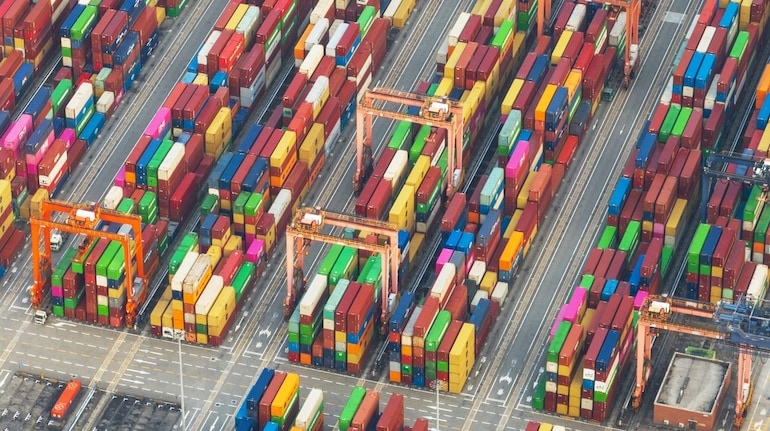

The Strait of Hormuz has slowed to a crawl.
After the latest US-Israel strikes on Iran and Tehran’s retaliation, commercial shipping through the narrow Gulf chokepoint has been severely disrupted. Reuters has reported vessels stranded, tanker movements reduced sharply and insurers pulling or repricing war-risk cover amid explicit threats from Iran’s Revolutionary Guards against ships attempting to transit the strait.
This matters because Hormuz is not just another maritime passage. It is the exit gate for the Persian Gulf, and roughly 20 percent of the world’s oil supply moves through it, according to the US Energy Information Administration (EIA). A large share of global LNG trade also passes the same route.
For India, that chokepoint is not abstract geography. It is embedded in the country’s daily energy math.
So the question now is straightforward: If Hormuz remains too risky, what is India’s Plan B?
The answer is the Cape of Good Hope - A not-so-simple, expensive detour.
First, what exactly is the 'Cape option'?
There is a common misconception that tankers can simply 'go around Hormuz.'
They cannot, at least not if they are loading crude from Iraq, Kuwait, Qatar or much of the UAE. Gulf barrels must physically pass through Hormuz to exit the Gulf.
So when policymakers and traders talk about the Cape of Good Hope, what they really mean is this:
India would buy more oil from suppliers outside the Gulf, such as the US, Brazil, Guyana or West Africa, and bring those barrels around the southern tip of Africa instead of through the Middle East chokepoint.
In other words, the Cape route works only if India changes who it buys from.
It is not a bypass. It is a supply shift.
Why India is exposed
India imports around 85-88 percent of its crude oil requirement, according to official data. A significant portion of that comes from Gulf producers whose shipments rely on Hormuz.
The exposure is not limited to crude.
A large share of India’s LNG imports comes from Qatar and other Gulf suppliers.
LPG cargoes for domestic cooking gas transit the same corridor.
Roughly one-third of global fertiliser trade, including ammonia and sulphur, also moves through Hormuz, according to trade analysts cited by Reuters.
That is why a disruption in Hormuz is not just an oil story. It is a macroeconomic story.
What happens when Hormuz slows or stalls
Freight rates rise: Ships take longer routes, vessels get stranded, and tanker availability tightens globally.
War-risk insurance premiums jump: During previous Gulf tensions, insurers multiplied premiums within days. In the current escalation, Reuters reports war-risk cover being withdrawn or repriced sharply.
Oil prices climb globally: Because 20 percent of global supply passes through Hormuz, markets react instantly. Even if India manages to source crude elsewhere, global benchmark prices still move higher.
This third point is crucial. The Cape route can protect physical supply. It cannot protect price.
How much longer does the Cape route take?
The Cape of Good Hope sits at the southern tip of Africa. Routing crude from Atlantic suppliers to India via the Cape adds significant distance.
Depending on origin, voyages can stretch by roughly 6,000 to 10,000 additional nautical miles.
Large crude tankers typically sail at about 12–15 knots. That translates into roughly two to four extra weeks at sea.
Instead of a delivery cycle measured in days from Gulf suppliers, refiners could face cargoes arriving nearly a month later from Atlantic sources.
That changes everything, scheduling, refinery runs, storage planning and working capital.
The freight cost impact
Shipping costs are calculated per day. So every extra sailing day has a price tag.
VLCC charter rates fluctuate widely. In stable markets, they may sit in the tens of thousands of dollars per day. In stressed markets, they can surge into six figures.
If a tanker spends 15–25 extra days at sea, the additional freight bill per cargo can run into hundreds of thousands to over a million dollars, depending on prevailing rates.
VLCC daily charter rate (illustrative): $30,000–$80,000/day (can spike far higher in shocks)
Extra sailing time: 15–25 days (or more, depending on origin)
Extra freight per cargo:At $30,000/day × 15 days ≈ $450,000
At $80,000/day × 20 days ≈ $1.6 million
Multiply that across dozens of cargoes a month and freight costs alone can climb into tens of millions of dollars annually.
The oil price shock dwarfs everything else
The real financial risk lies in crude prices themselves.
If Brent were to jump sharply because of sustained Hormuz risk, for example, rising by $30–40 per barrel, the impact on India’s import bill would be measured in tens of billions of dollars annually, far exceeding freight and insurance increases.
This is why Hormuz disruptions are feared globally. The chokepoint moves markets before it moves ships.
Insurance: the invisible tax
War-risk insurance is another pressure point.
Insurers price risk as a percentage of vessel value. Even small percentage increases translate into large dollar amounts for supertankers.
In the current escalation, marine insurers have either cancelled or sharply repriced coverage for Gulf voyages, according to Reuters. That alone can add hundreds of thousands of dollars per voyage in extreme scenarios.
Routing via the Cape reduces direct exposure to Hormuz but does not entirely eliminate elevated insurance costs if the broader region is seen as unstable.
LNG: where the Cape is less helpful
For crude oil, India can pivot suppliers. For LNG, the flexibility is narrower.
Qatar is one of the world’s largest LNG exporters, accounting for roughly one-fifth of global supply. Its cargoes must pass through Hormuz.
If LNG shipments slow, India’s gas-fired power plants, city gas networks and fertiliser producers face tighter supply. Reuters has already reported India trimming gas supplies to some industrial users amid disruptions.
Unlike crude, LNG markets can tighten quickly in crises. Spot prices have historically spiked multiple times over in supply shocks.
The Cape solution works better for oil than for gas.
Fertilisers and LPG: the second-order ripple
India’s fertiliser system depends on imports of urea, ammonia and sulphur, much of which moves via Hormuz.
A prolonged disruption would raise input costs for agriculture. That flows into subsidy arithmetic and food inflation, politically sensitive terrain.
LPG shipments from Gulf suppliers are similarly exposed to shipping disruption and insurance spikes.
Energy chokepoints have a way of spilling into household budgets.
What India can cushion and what it cannot
India maintains strategic and commercial petroleum stocks. Those reserves can help bridge short disruptions.
They buy time.
But reserves are not a permanent substitute for supply. If Hormuz remains risky for months, India would need sustained shifts in sourcing, financial buffers, and possibly policy interventions to manage the price fallout.
The trade-off, clearly stated
The Cape of Good Hope offers India continuity, not comfort.
It allows refiners to keep crude flowing by sourcing from the Atlantic basin. It reduces direct exposure to a live conflict zone.
Discover the latest Business News, Sensex, and Nifty updates. Obtain Personal Finance insights, tax queries, and expert opinions on Moneycontrol or download the Moneycontrol App to stay updated!
Find the best of Al News in one place, specially curated for you every weekend.
Stay on top of the latest tech trends and biggest startup news.





