




Dear Reader
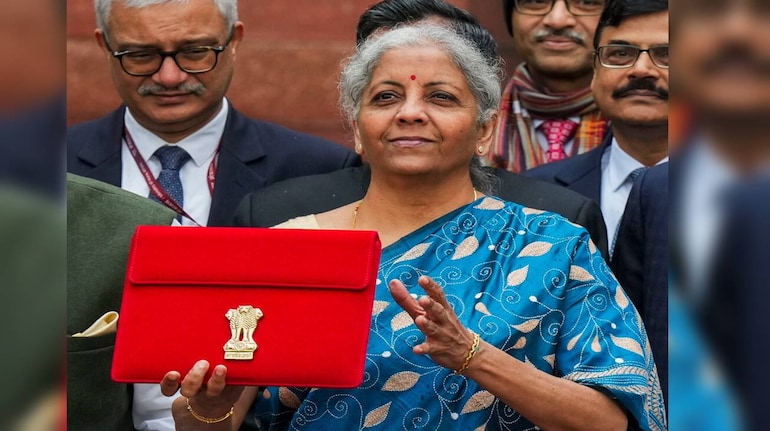
The Panorama newsletter is sent to Moneycontrol Pro subscribers on market days. It offers easy access to stories published on Moneycontrol Pro and gives a little extra by setting out a context or an event or trend that investors should keep track of.With the Union Budget due later this month, analysts, market experts and various lobbyists have stated their wish-list of what the government should be spending on. Unlike previous Budgets where balancing multiple spending imperatives was difficult, the central government is spoilt for choice this time. Thanks to the windfall dividend that the Reserve Bank of India (RBI) has paid, the government can afford to spend more and even reduce the fiscal deficit.
But a problem of plenty is thrusting the government with a different fiscal responsibility: one of finding the best combination of expenditure that can give the desired outcome of boosting economic growth as much as possible. While this seems easy, the compulsions of a coalition government make it trickier than budgeting with limited funds.
The options before the government are the following, but not limited:
To reduce fiscal deficit and keep capital expenditure unchanged.
To increase capex and throw in a good amount of money behind consumption-boosting.
To use the enhanced income a little bit for all three: cut deficit, spend more on capex and consumption.
History shows that the economic benefits of reducing fiscal deficit are immense. When you want to prod India’s manufacturers to set up factories and shops, you make it easier and cheaper for them to borrow. A reduced fiscal deficit has a salutary effect on sovereign bond yields which translates into lower interest cost for firms since all borrowings are priced off risk-free government bonds. But bond yields have hardly risen, and banks are bringing down loan rates by shrinking the spread they charge to cover for credit risk. In essence, Indian firms still have benign borrowing costs which are conducive to boosting capex.
Moreover, the odds of bond yields easing in the coming months have increased simply through demand-supply dynamics. There is more demand for government bonds and the borrowing target set in the interim Budget can be easily absorbed without any effect on yields. Our Budget Snapshot makes this point. Ergo, reducing the fiscal deficit, though desirable, doesn’t really get more bang for the government’s buck.
That brings us to the other factor which inspires Indian firms to spend on capital. Producers are willing to increase output through capex only when they are fairly certain that the demand for their goods will increase. That would require consumption to increase steadily over time. Indian households have not increased their consumption levels, and this is reflected in the underwhelming growth of private consumption in 2023-24. Rural households are in much worse shape with the monsoon so far being less promising. There is a clear need for the government to address the consumption issue, especially rural. That means agriculture cannot be put on the back burner. Radhika Rao from DBS Bank makes a compelling point in her column on why the government must address farm output.
At the same time, broad consumption needs to be addressed. While this can be achieved through tax tweaks that will require forgoing income, targeted spending on social schemes is also prudent. Analysts at Nomura believe that the spending outlay for rural schemes would be increased, especially the flagship housing scheme and rural infrastructure.
What about capital expenditure?
As such, the government’s capex as a percentage of gross domestic product has increased significantly, giving the much-needed multiplier effect on economic growth. Increasing capex further would give another push to Indian companies to bring their own onto the table. Private capex is yet to take off meaningfully and much of India’s aspirational growth targets depend on this variable. No wonder, most economists want the full Budget to enhance capex. This also sits well with the stated medium term vision of the BJP-led government. This leads us finally to the political compulsions stemming from a coalition mandate.
Keeping allies happy would require the central government to fit in a variety of expenses, but the Rs 2.1 trillion dividend and robust tax collections should make this easier. The markets are more interested in how the government will balance coalition politics rather than spending imperatives. This explains why benchmark indices have not lost steam yet, but are nearing a phase of caution. Ananya Roy, in her column, states that investors can use the opportunities the Budget may give to dip into select stocks known to be fundamentally strong.
As for the government, using the revenue windfall for all three — deficit cut, capex and consumption spending — would be prudent. It takes care of short-term political compulsions without upsetting the long-term vision of the government.
Investing insights from our research team
TCS Q1 FY25 – Why the underperformance should reverse now
Union Budget: Who benefits from a likely push for semiconductors?
Weekly Tactical Pick: Why this affordable housing play deserves attention
What can the Union Budget do to address the woes of Indian agriculture?
What else are we reading?
Union Budget: What will appease investors, what will disappoint
India is systemically prone to high food inflation – but it’s fixable
How tight is the Russia-India trade embrace?
It pays to have a big banking partner for life insurers
Personal Finance : It’s time to start questioning your fund manager
Economists are paying more attention to our inflation fears (republished from the FT)
Bihar Bridge Collapses: Call to improve contract management for infrastructure projects
GenAI calls for a relook at what constitutes anti-competitive practice
SC rules right to maintenance is for all women irrespective of religion, cites Shah Bano verdict
Big banks need a clearer view of their own risks after stress tests
US Election: Joe Biden and Donald Trump ignore fiscal crisis
Telangana CM Revanth Reddy's different approach to governance — challenges and potential rewards
Markets
Personal Finance
How AMFI suggestions for Union Budget can help mutual fund investors
Edelweiss MF launches business cycle fund based on factor investing. Will it work?
Tech and Startups
Invesco reduces valuations of IPO-bound Swiggy, Pine Labs
Technical Picks: Petronet LNG, Asian Paints, HDFC AMC and Cochin Shipyard(These are published every trading day before markets open and can be read on the app)
Aparna Iyer Moneycontrol Pro
Discover the latest Business News, Sensex, and Nifty updates. Obtain Personal Finance insights, tax queries, and expert opinions on Moneycontrol or download the Moneycontrol App to stay updated!
Find the best of Al News in one place, specially curated for you every weekend.
Stay on top of the latest tech trends and biggest startup news.