






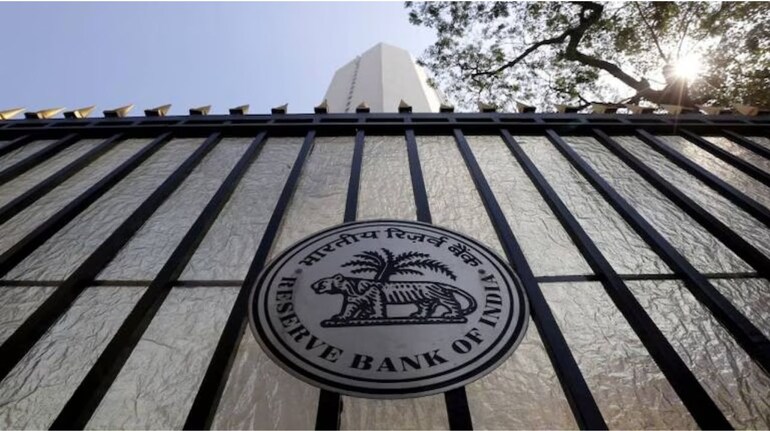

The latest macro stress test has reaffirmed that scheduled commercial banks (SCBs) are likely to remain resilient to adverse macroeconomic shocks over the medium term, according to the Reserve Bank of India’s (RBI) Financial Stability report.
The aggregate capital to risk-weighted assets ratio (CRAR) of 46 major SCBs is projected to moderate from 17.1 percent in September 2025 to 16.8 percent by March 2027 under the baseline scenario, and could decline to 14.5 percent and 14.1 percent under hypothetical adverse scenarios 1 and 2, respectively, report said.
Even under stress, none of the banks is expected to breach the minimum regulatory CRAR requirement of 9 percent, though two banks may need to dip into the capital conservation buffer (CCB) under adverse scenario 1 and four banks under adverse scenario 2, in the absence of fresh capital infusion.
The macro stress test assesses the resilience of SCBs by projecting their capital positions over a one-and-a-half-year horizon under three scenarios, a baseline and two adverse macroeconomic scenarios. The baseline scenario is based on the latest forecasted paths of key macroeconomic variables, while the adverse scenarios are hypothetically stringent and assume sharp deterioration in global and domestic macroeconomic conditions.
Under adverse scenario 1, a gradual slowdown in global growth driven by heightened economic uncertainty and lingering geopolitical conflicts is expected to weigh on domestic economic activity. The scenario assumes a gradual decline in domestic GDP growth accompanied by a moderate rise in inflation over time, with limited monetary policy space available for the central bank to ease interest rates to support growth.
Adverse scenario 2 assumes a more severe external shock, with heightened global trade uncertainties, unfavourable trade deals and a widening trade gap leading to a sharp dent in domestic GDP growth. The scenario further factors in capital outflows, currency depreciation and supply-side disruptions, which could push inflation beyond the tolerance band over time. In this case, the central bank is assumed to respond by tightening monetary policy.
Despite these challenging assumptions, the stress test results suggest that the banking system is expected to maintain adequate capital buffers. While the aggregate CRAR is projected to decline under stress, it remains comfortably above the regulatory minimum across all scenarios. The potential need for some banks to draw down their CCB highlights pockets of vulnerability, particularly in the absence of timely capital infusion by stakeholders.
The stress test also provides insights into the trajectory of core capital. The Common Equity Tier 1 (CET1) capital ratio of the 46 banks is projected to improve marginally from 14.6 percent in September 2025 to 14.8 percent by March 2027 under the baseline scenario. Under adverse scenarios, the CET1 ratio is expected to decline to 12.7 percent under adverse scenario 1 and to 12.3 percent under adverse scenario 2. Nevertheless, all banks are projected to meet the minimum CET1 requirement, including the CCB of 8 percent, even under severe stress.
On the asset quality front, the aggregate gross non-performing assets (GNPA) ratio of the 46 banks is projected to improve under the baseline scenario, declining from 2.1 percent in September 2025 to 1.9 percent by March 2027. However, under stress conditions, asset quality is expected to come under pressure, with the GNPA ratio rising to 3.2 percent under adverse scenario 1 and to 4.2 percent under adverse scenario 2.

Discover the latest Business News, Sensex, and Nifty updates. Obtain Personal Finance insights, tax queries, and expert opinions on Moneycontrol or download the Moneycontrol App to stay updated!
Find the best of Al News in one place, specially curated for you every weekend.
Stay on top of the latest tech trends and biggest startup news.





