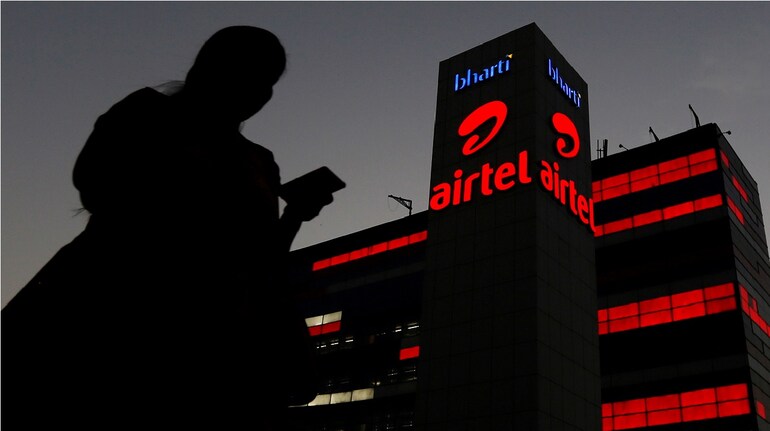
Bharti Airtel said the impact of SIM consolidation due to the July tariff hikes, which led to a 2.9 million subscriber loss, was milder than the telco observed in previous rounds of tariff hikes. The telco said that it is already seeing a reversal trend with customer additions and expects the full benefit of the tariff hike to be reflected in the coming quarter.
"As we've seen in the past, these trends normalise over two quarters and we've already seen that normalisation happen. Through October, we've already seen a trend of reversal with customer additions. We added 4.2 million smartphone customers in the quarter. Postpaid net additions remained steady at about 0.8 million," Gopal Vittal, managing director, Bharti Airtel, said during the Q2 earnings call on October 29.
At the same time, Vittal said the Indian business's ROCE, or return on capital employed, is still very low at 11.2 per cent, adding that the only way to improve this is further tariff repair.
Bharti Airtel's Q2FY25 net profit surged 167 percent to Rs 3,593 crore from Rs 1,341 crore a year earlier, driven by strong performance in its India and Africa businesses.
Despite the substantial growth, the net profit figure missed Street expectations of Rs 4,398 crore, based on Bloomberg's poll of brokerage estimates. The company’s revenue from operations for the July-September quarter rose 12 percent year-on-year to Rs 41,473 crore.
The telco is bullish on its 5G-based Fixed Wireless Access (FWA) broadband service and expects it to drive its home broadband business. "During the quarter, we rapidly expanded our coverage of FWA. This is also driving the addressable market and the expansion of our Wi-Fi services. We are now live in more than 2,000 cities through a combination of FWA and FTTH," he added.
Vittal said the telco's focus is to expand its coverage through FTTH and FWA by entering newer markets and fiber-dark areas to expand the addressable market. The second focus, he said, is to simplify the go-to-market with uniform pricing of our Wi-Fi offering across technologies, activate alternate channels for installation and servicing, strengthen store presence, and scale delivery capacity.
"Having stitched the initial teething issues, our focus is now to drive productivity across the channels. We're seeing strong traction in our customer addition momentum. I do want to reiterate that fibre will always offer a superior experience, and our expansion plan is predicated upon eventually converting our fixed wireless access to fibre once fibre reaches the location. This is driving continued fiberisation," he added.
Airtel now has 33.5 million home subscribers and continues to add over 1.5 million home subscribers every quarter.
Rural expansionThe telco is continuing with its network expansion in rural areas, especially central around five key circles, and has rolled out 39,000 sites already. "Our rural expansion over the last two years has contributed to revenue market share gains across circles," Vittal said.
The executive said that the rural rollout would be completed this year. "...there'll be some little bits and pieces left over in three or four circles where we are behind. But outside of that, a large part of that rollout will be completed."
Capex reductionAirtel is deploying capex in network modernisation, especially transport and core networks. It said its radio or wireless capex is reduced since most of the deployment of 5G radios was done last year. Additionally, it is making investments in data centres and broadband.
"... last year was a peak year of capex. We have said that we will have a lower capex this year. Our capex is going on transport, which has been consistent over the years. The core network has a small component of capex that will continue to get investment as this keeps growing, as traffic keeps growing. There is some B2B side, which is cables and things like that, which will get investment.
"There was a big bump up that we saw in the last few years as we rolled out new spectrum bands where we acquired spectrum in sub-gig band. In some circles. We had a historic amount of rollout of 4G networks across the country that has seen capex, and of course, we've seen 5G rolling out across the country. And all of this has taken substantial capex. So, the rollout is more or less done," he further added.
The executive said that Airtel has stopped investing in 4G capacity and is rolling out 5G in markets where it sees demand for 5G on mobile phones and for FWA. "So, we use a combination of that as an algorithm to say that this is a modest 5G rollout that will continue over the next three to five years," he added.
Airtel will also make new investments in the cloud segment, which it considers a new growth area representing a fast growth opportunity in the B2B segment. "One place that will get some investment is the cloud area, which we've already invested in this year. And we will see how that shapes up over the coming years to continue investments there. It is a fast-growing area and should give us more growth in the B2B segment should that investment materialise," he added.

Discover the latest Business News, Sensex, and Nifty updates. Obtain Personal Finance insights, tax queries, and expert opinions on Moneycontrol or download the Moneycontrol App to stay updated!
Find the best of Al News in one place, specially curated for you every weekend.
Stay on top of the latest tech trends and biggest startup news.