






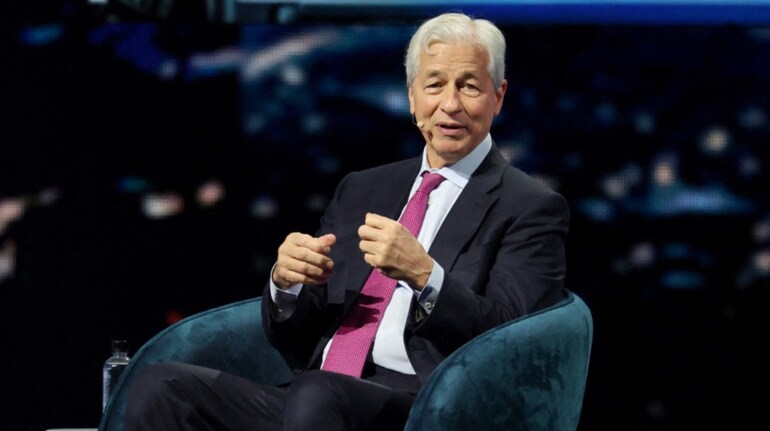

JPMorgan Chase CEO Jamie Dimon said the bank is proactively responding to the workplace impact of artificial intelligence, while also urging policymakers and businesses to prepare for broader societal disruption.
Speaking at an investor meeting on Monday, Dimon detailed internal efforts to move employees into new roles as automation gathers pace. The bank has already displaced some workers through AI adoption but is expanding redeployment initiatives to place affected staff in alternative positions.
"We already have huge redeployment plans for our people," Dimon said, adding that those displaced by AI are being offered other roles within the firm.
The lender - the world's largest by market value - spends nearly $20 billion annually on technology and has laid out plans to become "fundamentally rewired" for the AI era.
While total headcount remained broadly stable at 318,512 over the past year, the composition of its workforce has shifted. Operations staff declined 4% and support roles fell 2%, while client-facing and revenue-generating positions increased 4%.
The bank credited technology investments for improving productivity: operations employees now manage 6% more accounts, fraud-related costs per unit have dropped 11%, and software engineers are about 10% more efficient, according to company data.
Chief Financial Officer Jeremy Barnum said generative AI use cases at the bank have doubled this year, with a focus on customer service and internal technology teams. The firm uses AI models from OpenAI and Anthropic through its internal AI platform.
When asked about the risk of widespread job losses from AI - a concern amplified by recent market volatility tied to rapid advances in the technology - Dimon reiterated that the bank's priority is improving service for customers through AI deployment.
He has previously compared AI's transformative potential to electricity and the printing press. However, Dimon acknowledged that unchecked adoption could displace entire professions.
As an example, he pointed to autonomous trucking. "Would you do it if you put 2 million people on the street?" he asked, warning that replacement jobs might pay significantly less.
Dimon said both companies and governments must begin planning now for potential fallout, including retraining programs and support for displaced workers.
"Society's got to think through what it wants to do if this becomes that kind of problem," he said. "Now is the time to start thinking about it."
Discover the latest Business News, Sensex, and Nifty updates. Obtain Personal Finance insights, tax queries, and expert opinions on Moneycontrol or download the Moneycontrol App to stay updated!
Find the best of Al News in one place, specially curated for you every weekend.
Stay on top of the latest tech trends and biggest startup news.





