




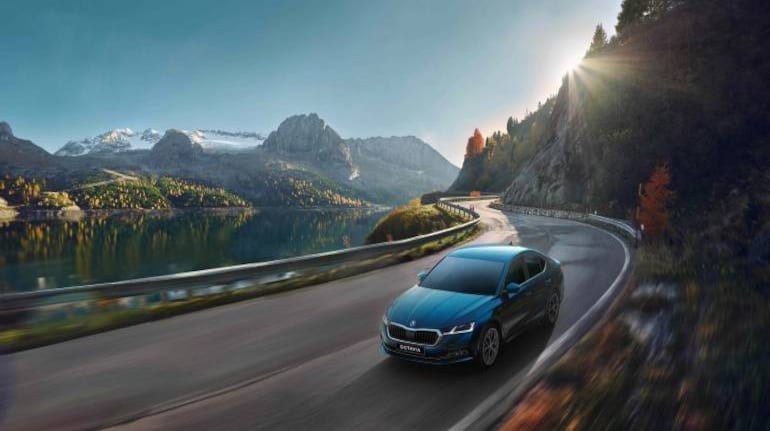
Back in the early 2000s, one of the cars that showed you had ‘arrived’ was the Skoda Octavia. It didn’t have the cachet of a Mercedes-Benz, of course, but it still showed that you were a person of taste, that you knew your cars. It offered a fine mix of performance (especially in its cult RS avatar), European build quality, comfort and features, and it was only Skoda’s rather dodgy after-sales experience that was the principal drawback of purchasing one. Despite this factor, many were still inclined to buy an Octavia, purely because of the car’s numerous plus points. I daresay many Octavia fans still exist today – and I think they’ll like the all-new Octavia, which is the fourth generation of the model.
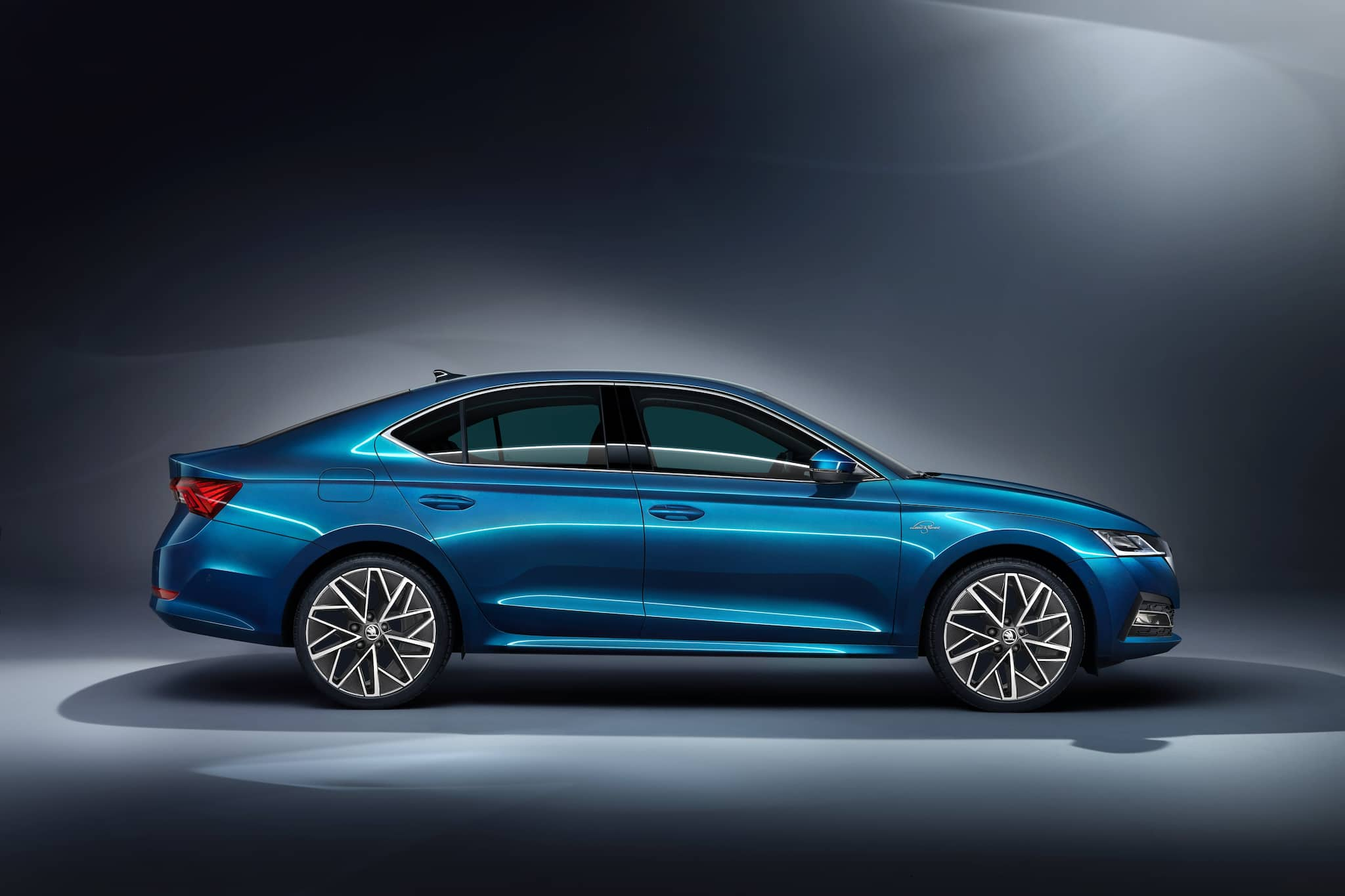
To begin with, it looks very nice indeed. It takes several design cues from the Superb, its elder brother, and as such has lots of sharp, aggressive creases on its exterior as well as a chrome-lined grille. The split-headlight assembly has been done away with and replaced by trapezoidal LED headlights with DRLs. These sit on top of a bumper that has chrome-lined LED fog lamps, which are connected by a chrome strip in the top-spec Laurin & Klement version. The L&K also gets 17-inch alloy wheels in a blacked-out finish, which are a bit hit-and-miss, if you ask me; I’d have liked a cleaner design. However, externally there’s not much that you’ll be able to discern between the L&K and the Style variant that sits below it.
The Octavia manages to look sporty and sophisticated all at once, with a hunkered-down stance and a swooping coupe-like roofline. The LED tail lights have a ‘wraparound’ design (somewhat BMW-like), and the rear bumper sticks out a bit, making the car look wider than it actually is. There’s no doubt that the Octavia has an excellent presence on the road, which is one box ticked off the list.
If you like Octavia’s exterior, you’re going to love its cabin. It has come along leaps and bounds through the generations, to the point where it now looks almost like a luxury car’s interior. The predominant tone is beige, which looks very upper crust but which will also be hard to keep clean, especially the seats. The black, brown and grey elements blend well with this theme, and if you want some extra colour, there’s an ambient lighting system, with red looking particularly fetching. The steering wheel is an all-new unit, and although I don’t much care for its two-spoke design, I have to say that it’s perfectly functional and meaty to hold, with the buttons to control the infotainment, cruise control and whatnot within easy reach. The 10-inch touchscreen infotainment system is top-drawer – it’s bright and responsive and easily accessed by both driver and passenger. The only thing I don’t like about it is the slider function below the screen that lets you control volume – it’s not especially precise, and a good old dial would have been fine.
The instrument cluster is all-digital, as is almost the norm these days. Skoda calls it a Virtual Cockpit, and it has two settings, with one filling the screen with all kinds of information (dials, tyre pressure, a speedo, what gear you’re in and so on) and the other paring everything down to the bare minimum, showing just your speed, distance to empty and infotainment goings-on. I much prefer the simpler one, although both views are very easy to read.
The seats are excellent, all round. The ones in front are powered and have a memory function, with great support in all the right places. The rear seats are even more comfy, with lots of leg and head room for two passengers. A third will fit, of course, but may find themselves a little uncomfortable over long journeys. The rear seats are also powered, and are 60:40 split-folding.
Equipment levels are high on the L&K variant. You get front/rear parking sensors, eight airbags, active parking assist and a rear camera, tyre pressure monitoring, an electronic parking brake, a high quality 11-speaker Canton audio system with a subwoofer, hands-free boot opening and several more. If you want a sunroof, however, you can’t have one. This has become almost a standard feature on cars much further down the pecking order, so its absence is quite glaring. However, Skoda explains this away with two reasons. One is that this car is almost the same as the European-spec one, which doesn't get a sunroof either, and the other is that headroom would have been compromised if one had been fitted.
If you want a diesel engine with your Octavia, you’re clean out of luck as well. It comes with one engine – a 2-litre turbocharged inline four petrol with a rather juicy 188 bhp and 32.6 kgm on tap (a 1.5-litre turbo petrol may come later). This engine is leagues ahead of the 1.8-litre TSI engine that powered the previous generation of the Octavia - it’s more powerful, more refined and much more of an all-rounder. Step on the gas and a satisfying surge of creamy torque catapults the car forward, in an assured and linear way. It performs delightfully at all driving speeds, with not a missed beat in sight, and on an open stretch of road, it invites you to flog it – which I did rather a lot. The engine is paired to a smooth 7-speed dual-clutch automatic gearbox that shifts by wire; essentially, the gear selector and gearbox talk to each other electronically, rather than via mechanical parts. You also get paddle shifters, for an extra touch of sportiness.

Earlier Octavias had exemplary ride quality, and this version is no different. You can barely hear or feel undulations in the road, and the suspension does a brilliant job of ironing the road out. Of course, if you hit a sharp-edged pothole with any kind of speed, you’re going to feel it, but in almost every other circumstance, this car is brilliant. It also handles very well, in a safe, assured manner, and manages to reach an ideal middle ground between comfort and sharpness around corners. The steering gives you ample feedback, and the brakes are also very sharp.
This brings me to the Octavia’s price, which is… interesting. The Style variant costs Rs 25.99 lakh, with the L&K coming in at Rs 28.99 lakh (both ex-showroom), and these aren’t small sums by any stretch of the imagination, especially if you consider that the upper-executive sedan market in India is virtually dead, with the Hyundai Elantra being the only other occupant. That car is almost Rs 5 lakh cheaper, offers a diesel option and will cost less to service as well. On the other hand, the Octavia is a bigger, equally powerful and more comfortable car than the far more expensive entry-level sedans from Mercedes-Benz and BMW, so you could also look at it as a bargain. My view is that it’s worth the money because it’s a lot of car for the price it asks. My other view is that you could wait until next year, when the all-new, flaming hot RS version arrives – now that will be one firecracker of a car.
Discover the latest Business News, Sensex, and Nifty updates. Obtain Personal Finance insights, tax queries, and expert opinions on Moneycontrol or download the Moneycontrol App to stay updated!

Find the best of Al News in one place, specially curated for you every weekend.
Stay on top of the latest tech trends and biggest startup news.




