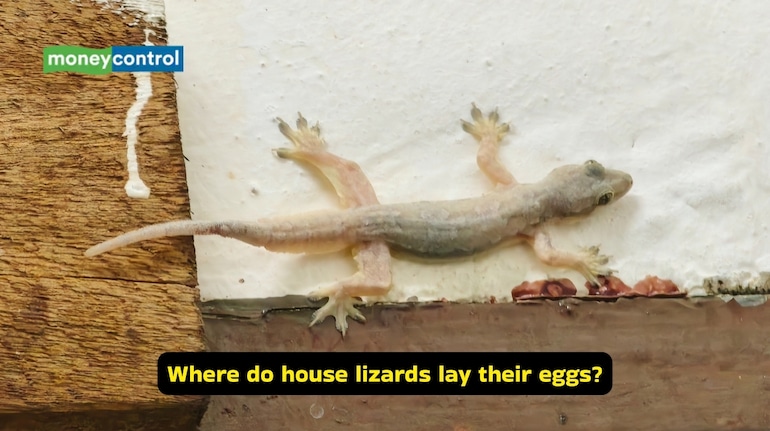

House lizards have long been co-tenants in homes across warm climates. However, only a few people realise that these small reptiles often transform our homes into miniature nurseries. The secret lies in where they hide their eggs.
Remember, a female house gecko does not lay eggs at random. She conducts what could be described as a careful architectural inspection of her surroundings. Studies show that geckos typically lay two eggs per clutch and may produce several clutches during a breeding season, especially in warm climates.
Temperature and security matter. Eggs develop best in warm environments and usually take about 45–70 days to hatch, depending on conditions. Within the homes, the female gecko searches for places you rarely disturb. Dark crevices, warm machinery, and forgotten storage spaces become ideal nurseries.
Also read | 8 easy, effective home remedies to get rid of lizards from your house
The eggs themselves are tiny, pale, and slightly leathery, sometimes sticking gently to surfaces so they remain secure until hatching. For homeowners, the discovery of these eggs can be surprising. But for the lizard, the house simply offers the same conditions as a rocky cliff or tree bark in the wild. shelter, warmth, and safety.
House geckos have evolved to thrive alongside humans, turning your walls, cupboards, and appliances into substitutes for natural rocky shelters.
Check-out the most common places where house lizards leave their eggs indoors:
Warm spaces behind appliances: Refrigerators, washing machines, and ovens release steady warmth. The narrow gap between the appliance and the wall provides both heat and protection, making it a favourite nesting zone.
Also read | Scared of lizards? Simple hacks to catch them in your house
Dark crevices in furniture: Large furniture pieces, wardrobes, bookshelves, and cupboards, often conceal still pockets of space behind them. These hidden cavities mimic the cracks and rock shelters lizards naturally prefer.
Under sinks and damp cabinets: Moist cupboards beneath kitchen or bathroom sinks attract insects, which are the lizard’s primary food source. Where food is plentiful, nesting often follows.
Window corners and curtain rods: Curtains create shaded spaces that are rarely inspected closely. Window frames also draw insects at night, offering a convenient hunting ground beside a potential nest.
Shoe racks and unused footwear: Compact, undisturbed, and occasionally humid, shoe racks can become unexpected egg-laying spots, especially when footwear remains untouched for long periods.
Wall cracks and decorative frames: Even the thin gap behind a painting or photo frame can serve as a secure egg chamber. Geckos instinctively choose crevices where eggs will remain protected from movement.
Under beds and storage clutter: Dusty corners beneath beds or sofas are rarely disturbed. Boxes, bags, and stacked items create natural hideaways perfect for incubation.
Discover the latest Business News, Sensex, and Nifty updates. Obtain Personal Finance insights, tax queries, and expert opinions on Moneycontrol or download the Moneycontrol App to stay updated!
Find the best of Al News in one place, specially curated for you every weekend.
Stay on top of the latest tech trends and biggest startup news.