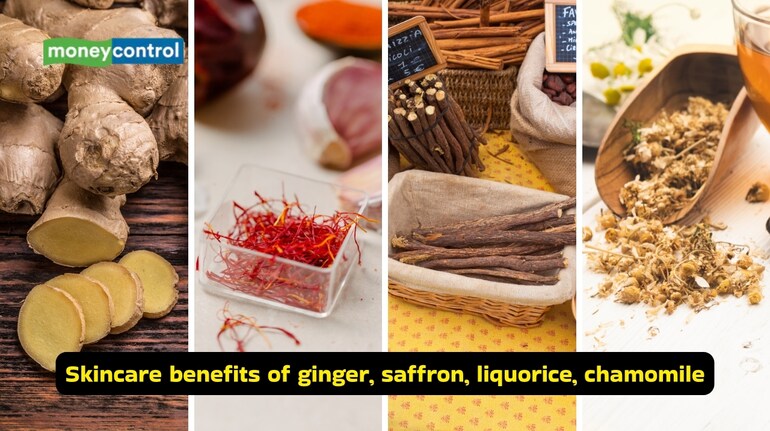
While serums and creams have their place, some of the most powerful remedies are often growing quietly in your backyard or sitting unnoticed in your kitchen. Ginger, chamomile, saffron, and liquorice are four underrated ingredients that offer remarkable benefits, especially for sensitive or winter-stressed skin.
Ginger’s reputationgoes far beyond being a kitchen staple. Its anti-inflammatory and antioxidant properties help reduce redness and irritation, making it an excellent addition to winter skincare. Its protective and soothing nature can make a visible difference, especially for those dealing with sensitivity or chronic inflammation.
Also read | Skincare: 10 home remedies for ageing and dry skin in winter
Aditi Dhawan, Founder of Komyo Wellness, tells Moneycontrol, “Ginger contains several bioactive compounds that help inhibit prostaglandins and cytokines that cause inflammation and reduce vasodilation, which is a major cause of visible redness. Oxidative stress caused by UV exposure, pollution and free radicals weaken the skin barrier. The antioxidants in ginger calm swelling and irritation by neutralising free radicals, strengthens the skin barrier and reduces chronic redness and irritation reducing flare ups from eczema, rosacea etc.”
Chamomile is known as one of the softest, most comforting botanicals — and for good reason. Naturally hypoallergenic and ideal for reactive skin, it has been used for centuries to soothe irritation. Chamomile extract is also widely recommended for eczema and inflammationbecause it helps support barrier repair.
Says Dhawan, “Chamomile contains bisabolol and flavonoids that inhibit inflammatory mediators (such as histamine, prostaglandins, and cytokines) to reduce redness, swelling, and irritation and calm flare-ups triggered by allergens, dryness, or environmental stress. For eczema, which is marked by chronic inflammation, this helps significantly decrease itchiness and discomfort. Bisabolol has natural soothing and mild anesthetic-like properties, decreasing sensory irritation.”
Also read | Dermatologist shares winter skin survival tips for dry, flaky, and dull skin
Chamomile goes beyond calming surface irritation as it strengthens the skin barrier by enhancing fibroblast activity, promoting collagen and elastin synthesis. Rich in polyphenols, it provides antioxidant protection, helping stabilise reactive skin and prevent chronic inflammation. Its mild antimicrobial abilities further protect irritated skin from infection or microbial imbalance, making it a winter essential for those with sensitive or eczema-prone skin.
Dullness and dark spots tend to look more prominent in winter, and this is where saffron shines. Saffron promotes healthy circulation and has mild exfoliating effects, which can reduce dullness and increase radiance. Dhawan recommends, “Saffron contains bioactive compounds that inhibit Tyrosinase activity, the key enzyme responsible for melanin leading to gradual fading of hyperpigmentation for a more even skin tone. Saffron is rich in carotenoids and flavonoids that help neutralise oxidative stress, a major trigger for dark spot formation and prevent UV-induced pigmentation.”
Liquorice root works in parallel, targeting both the prevention and correction of pigmentation. Its brightening power comes from compounds that block melanin pathways and even disperse existing pigment. “Unlike many brighteners, liquorice doesn’t just reduce melanin formation — it can break up and disperse melanin that’s already been deposited leading to fading of existing dark spots, improvement in melasma, sunspots and Post Inflammatory Hyperpigmentation (PIH). The anti-inflammatory action of Liquorice soothes redness that contributes to uneven tone,” notes Dhawan.
Together, saffron and liquorice offer a gentle yet effective way to maintain luminosity through winter while keeping pigmentation concerns in check.
1. Why is ginger beneficial for winter skincare?
Ginger's anti-inflammatory and antioxidant properties reduce redness and irritation. It neutralises free radicals, strengthens the skin barrier, and alleviates flare-ups from conditions like eczema and rosacea.
2. How does chamomile help winter-stressed skin?
Chamomile soothes irritation and supports barrier repair. Its bisabolol and flavonoids reduce redness, swelling, and itchiness while providing antioxidant protection and mild antimicrobial benefits.
3. What are the skincare benefits of saffron during winter?
Saffron reduces dullness and promotes radiance. It inhibits Tyrosinase activity, leading to a more even skin tone by fading hyperpigmentation and neutralising oxidative stress.
4. How does liquorice root improve skin during winter?
Liquorice root prevents and corrects pigmentation. It blocks melanin pathways, disperses existing pigment, and soothes redness, improving conditions like melasma, sunspots, and Post Inflammatory Hyperpigmentation.
5. Can saffron and liquorice be used together for better skin in winter?
Yes, saffron and liquorice together maintain skin luminosity and address pigmentation concerns by promoting healthy circulation, neutralising oxidative stress, and dispersing melanin.
Disclaimer: This article only provides generic information. Don’t treat it as a substitute for qualified medical opinion. Always consult a specialist for specific diagnosis.
Discover the latest Business News, Sensex, and Nifty updates. Obtain Personal Finance insights, tax queries, and expert opinions on Moneycontrol or download the Moneycontrol App to stay updated!
Find the best of Al News in one place, specially curated for you every weekend.
Stay on top of the latest tech trends and biggest startup news.