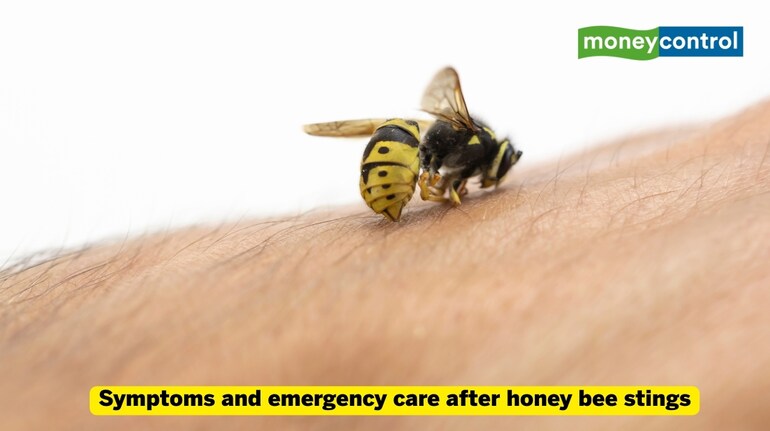

There’s a reason why most people are scared of honey bees. Their sting causes a painful wound and swelling, and can sometimes lead to a severe allergic reaction, requiring immediate medical intervention. Most people, when stung by a bee, don’t know what to do, which is why Dr Sudhir Kumar, a Hyderabad neurologist, explained everything you need to know about a honey bee sting in one of his recent posts on X.
“A bee sting injects venom into the skin, causing immediate pain and inflammation,” Dr Kumar wrote, adding that some of its symptoms include: sudden sharp pain, redness at the site, swelling, burning sensation, and itching.
While most of the symptoms remain harmless and improve with time, there are others that may indicate a severe allergic reaction. Dr Kumar added, “A small percentage of people develop anaphylaxis, which is a medical emergency.”
Also Read: Senior doctor shares food allergy symptoms that you must not ignore
If you experience difficulty breathing or wheezing, swelling of lips, tongue, or throat, hives, widespread rash, dizziness, fainting, vomiting, abdominal pain, or sudden drop in blood pressure, you should seek emergency medical care immediately.
Honey Bee Stings: What Everyone Should Know 🐝1️⃣ What happens when a honey bee stings? A bee sting injects venom into the skin, causing immediate pain and inflammation. Typical symptoms include: • Sudden sharp pain • Redness at the site • Swelling • Burning sensation •… pic.twitter.com/FnOp1oQCm2 — Dr Sudhir Kumar MD DM (@hyderabaddoctor) March 13, 2026
According to Dr Kumar, multiple bee stings can be harmful. When a person is stung many times at once, such as during a swarm attack, the large amount of venom can lead to toxic effects. Those who require urgent medical include the following groups:
Adults with 10 or more stings
Children with 5 or more stings
Anyone stung in the mouth, face, or throat
While most people are well aware a bee sting can be painful, they find themselves confused about what to do after a bee has stung them. Dr Kumar suggested the following first aid steps:
1. Move away from the area quickly (bees release alarm pheromones).
2. Remove the stinger immediately by scraping it out with a fingernail or card.
3. Wash the area with soap and water.
4. Apply a cold pack to reduce swelling.
5. Use pain relief or antihistamines if needed.
6. Do not squeeze the stinger, as it may release more venom.
Also Read: Seasonal allergy symptoms, causes, and how to negate risks of common triggers
Hospital treatment for severe cases includes adrenaline (epinephrine) for anaphylaxis, antihistamines for allergic symptoms, steroids to reduce severe inflammation, and IV fluids and monitoring in severe cases. He added that adrenaline is the first-line life-saving treatment in severe allergic reactions.
Dr Kumar suggested staying away from bee hives or swarms and not disturbing them. You should not throw stone at nests, stay calm and do not move if you spot bees around, avoid strong perfumes or floral scents outdoors.
1. What should I do if I get stung by a honey bee?
Move away from the area, remove the stinger, wash the area with soap and water, apply a cold pack, and use pain relief or antihistamines if needed.
2. What are the symptoms of a honey bee sting?
Symptoms include sudden sharp pain, redness at the site, swelling, burning sensation, and itching.
3. When should I seek emergency medical care after a bee sting?
Seek immediate medical care if you experience difficulty breathing, swelling of lips, tongue, or throat, hives, widespread rash, dizziness, fainting, vomiting, abdominal pain, or a sudden drop in blood pressure.
4. How can I prevent bee stings?
Stay away from bee hives or swarms, do not disturb them, avoid throwing stones at nests, stay calm and still if bees are around, and avoid wearing strong perfumes or floral scents outdoors.
Disclaimer: This article, including health and fitness advice, only provides generic information. Don’t treat it as a substitute for qualified medical opinion. Always consult a specialist for specific health diagnosis.
Discover the latest Business News, Sensex, and Nifty updates. Obtain Personal Finance insights, tax queries, and expert opinions on Moneycontrol or download the Moneycontrol App to stay updated!
Find the best of Al News in one place, specially curated for you every weekend.
Stay on top of the latest tech trends and biggest startup news.