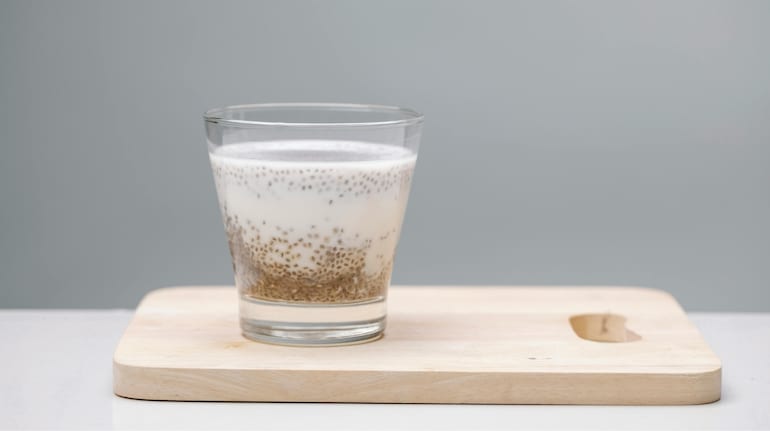

Chia seeds have gained popularity for being a superfood, rich in fibre, protein, omega-3 fatty acids, and antioxidants. They are easy to incorporate into meals, with chia pudding being a much-loved option. However, they may not be suitable for everyone.
In his recent video on Instagram, NHS surgeon Dr Karan Rajan confirmed that adding chia seeds to your diet can cause problems for some people. He said, “If you’re fibre naive, so eating around 10-15 g of fibre per day and then suddenly add 2 tablespoons of chia seeds, your microbes are nowhere near adapted to fermenting that much fibre. They have to work harder, ferment more intensely and produce more gas. It’s not the chia seeds fault, your bacteria just aren’t ready yet.”
Also Read: Symptoms of irritable bowel syndrome (IBS): Listen to the signals your gut is giving out
He added that this adaptation period is normal and that ideally you should begin slowly by adding only one teaspoon of chia seeds per day to your diet, increasing it gradually to two tablespoons over a period of one to two weeks, or possibly longer. This gives your gut bacteria time to adjust to the change.
“Two tablespoons of chia seeds are considered low FODMAP, so they technically should be tolerated by most people with IBS and sensitive guts. But some people with IBS do not tolerate chia seeds well even at low-FODMAP doses,” he explained.
This happens because chia seeds contain soluble fibres that form a gel. “For some IBS sufferers, especially those with IBS-D, the diarrhoea predominant type, or those with visceral hypersensitivity, this gel can increase intestinal distension: the feeling of fullness and bloating and thus can trigger symptoms despite technically being low FODMAP.” Therefore, he advised testing tolerance with small amounts and building up.
Another thing he warned about is skipping water intake. Because chia seeds can absorb ten to twelve times their weight in water, drinking enough water is essential. If you don’t do so, they can pull water from intestinal tissues and make constipation much worse.
Also Read: IBS explained: How to heal your gut with simple diet and lifestyle changes
Finally, he shared his final piece of advise, along with a pro tip. “My rule is for every tablespoon of chia seeds, drink at least 8-10 ounces of water and a pro tip would be grinding the chia seeds to make it even easier for your gut bacteria to ferment.”
Q: Can chia seeds be beneficial for people with IBS?
Yes, chia seeds can be beneficial due to their high fibre content, but they need to be introduced gradually to avoid triggering symptoms.
Q: How should someone with IBS start incorporating chia seeds into their diet?
Start with one teaspoon per day and gradually increase to two tablespoons over one to two weeks to allow your gut bacteria to adjust.
Q: Are chia seeds low FODMAP?
Yes, two tablespoons of chia seeds are considered low FODMAP and should be tolerated by most people with IBS, though individual tolerance may vary.
Q: What should IBS sufferers be cautious about when consuming chia seeds?
They should monitor their symptoms, start with small amounts, ensure adequate water intake, and be mindful of the gel-forming soluble fibres that can cause bloating and fullness in some individuals.
Q: What is a pro tip for consuming chia seeds for people with IBS?
Grinding chia seeds can make them easier for gut bacteria to ferment, potentially reducing digestive discomfort.
Disclaimer: This article, including health and fitness advice, only provides generic information. Don’t treat it as a substitute for qualified medical opinion. Always consult a specialist for specific health diagnosis
Discover the latest Business News, Sensex, and Nifty updates. Obtain Personal Finance insights, tax queries, and expert opinions on Moneycontrol or download the Moneycontrol App to stay updated!
Find the best of Al News in one place, specially curated for you every weekend.
Stay on top of the latest tech trends and biggest startup news.