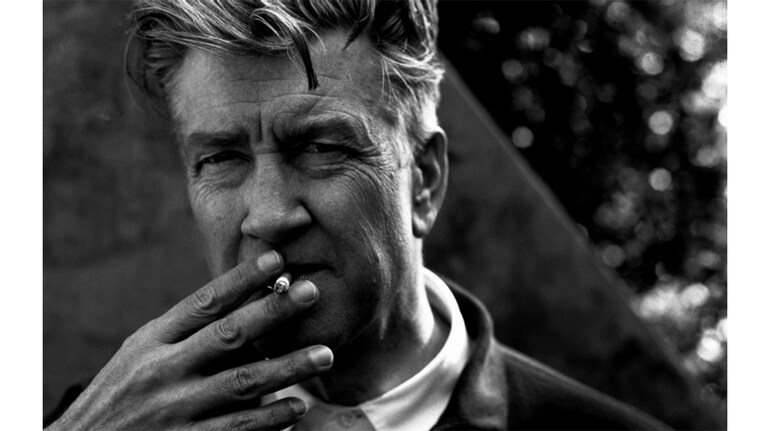
In his obituary to David Lynch this January, The New Yorker’s Richard Brody quotes from the legendary American film critic Pauline Kael’s classic 1969 essay “Trash, Art, and the Movies”: “The world doesn’t work the way the schoolbooks said it did and we are different from what our parents and teachers expected us to be”, and he writes how that remark is reflective of “Lynch’s critical spirit”. Few films are at once revelatory and visionary in the way Lynch’s films are. By probing beneath “disturbed surfaces”, his cinema “sees what’s kept invisible and reveals what’s kept scrupulously hidden, and his visions shatter veneers of respectability to depict, in fantasy form, unbearable realities,” writes Brody.
It is timely, then, that French documentary filmmaker Stéphane Ghez made a non-fiction film on Lynch, David Lynch: Une énigme à Hollywood (or Welcome to Lynchland), which had its world premiere at the recent 78th Cannes Film Festival, in the Cannes Classics section. The late director’s son Riley Lynch, who attended the screening, said, “This festival meant a lot to my dad. It’s a very emotional time.” Lynch’s Wild at Heart (1990) won the Palme d’Or and Mulholland Drive (2001) won him the Best Director, his Twin Peaks: Fire Walk with Me (1992) and The Straight Story (1999) were nominated for Palme d’Or. Ghez’s documentary follows the clues embedded by Lynch in his films and decodes the enigma that was David Lynch. Unlike his films which are all dark, surreal and unsettling, Lynch was a very positive and generous man in person, says his documentarian, “He was not dark at all. As Kyle MacLachlan says in the documentary that Lynch had to show the worst part of the world because there is also the best part of the world that he was confident in, so you have to balance between the two. At the end, he was confident that good will win.”
Lynch’s magic lay in his hands, literally. The master Surrealist did almost everything by himself on a film. Starting with his first feature-length film, “Eraserhead (1977), he made the props, the pictures and the make-up, given a small crew. In Twin Peaks Return, when a woman is shot at, he did the special effects,” says Normandy-based Ghez, 54, after his screening at Cannes. Lynch loved the tactile aspect of creation, like a painter. His passing is “a great loss for everybody. But I think he was such an inspiration for a lot of young filmmakers, showing them that you can be strong in your intention and you have to stick to your ideas. That you can make very experimental things. Just follow your truth,” adds Ghez, “For me, David Lynch was the greatest filmmaker.”
Moneycontrol exclusive interview with documentary filmmaker Stéphane Ghez at the 78th Cannes Film Festival. Excerpts:
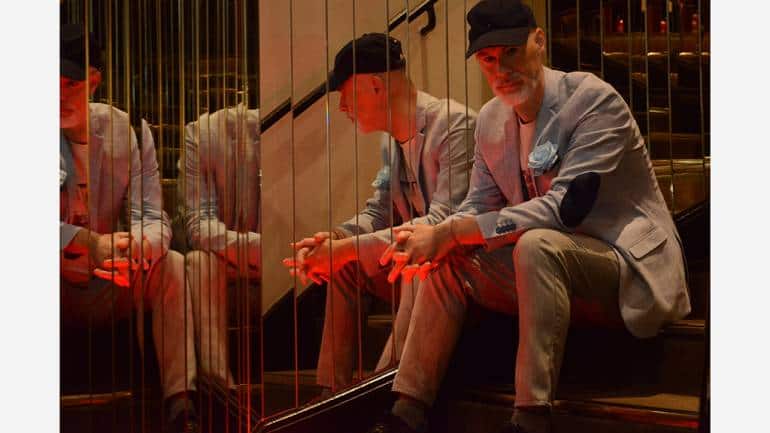 Documentary filmmaker Stéphane Ghez at the 78th Cannes Film Festival. (Photo: Stephanie Cornfield)
Lynchian is a word in the dictionary. Please throw some light on the enigma of David Lynch.
There’s this whole mysticism around him. There are several enigmas. That’s why it’s in the title of our documentary movie [David Lynch: Une énigme à Hollywood/Welcome to Lynchland]. David Lynch was an abstract artist and he was working and living in Hollywood. He was the only one to make that style of art in Hollywood. So, it is an enigma that a guy like that was working in Hollywood and was able to show his movies there.
The second enigma is when you, as an audience, discover a movie by David Lynch. He wanted the spectator to be a detective. To solve the meaning of the movie and work very hard to find the solution. And for each one, it will be a different answer. And there is a lot of enigma in David Lynch himself. We can make hundreds of documentary movies about it.
How did you gravitate towards the cinema of David Lynch?
David Lynch is one of my favourite filmmakers. I remember watching his movies when I was a teenager. The first movie was The Elephant Man (1980), but I didn’t know it was by him. I thought it was a classical movie from the 1930s. After I’d seen Wild at Heart (1990), which won the Palme d’Or and became very famous in France, watching each of his movies was really a shock, a very strong experience for me. I didn’t really understand what it was about, but I could feel that the movie and the picture was strongly talking to my subconscious, and I didn’t know how he did that. And I wanted to know. That was the first mystery I wanted to solve about David Lynch. And the first time I went to the US, I bought the complete season of Twin Peaks (1990) from a New York shop, and that was a very strong experience again, and I loved it. From that time on, I wanted to know everything about David Lynch.
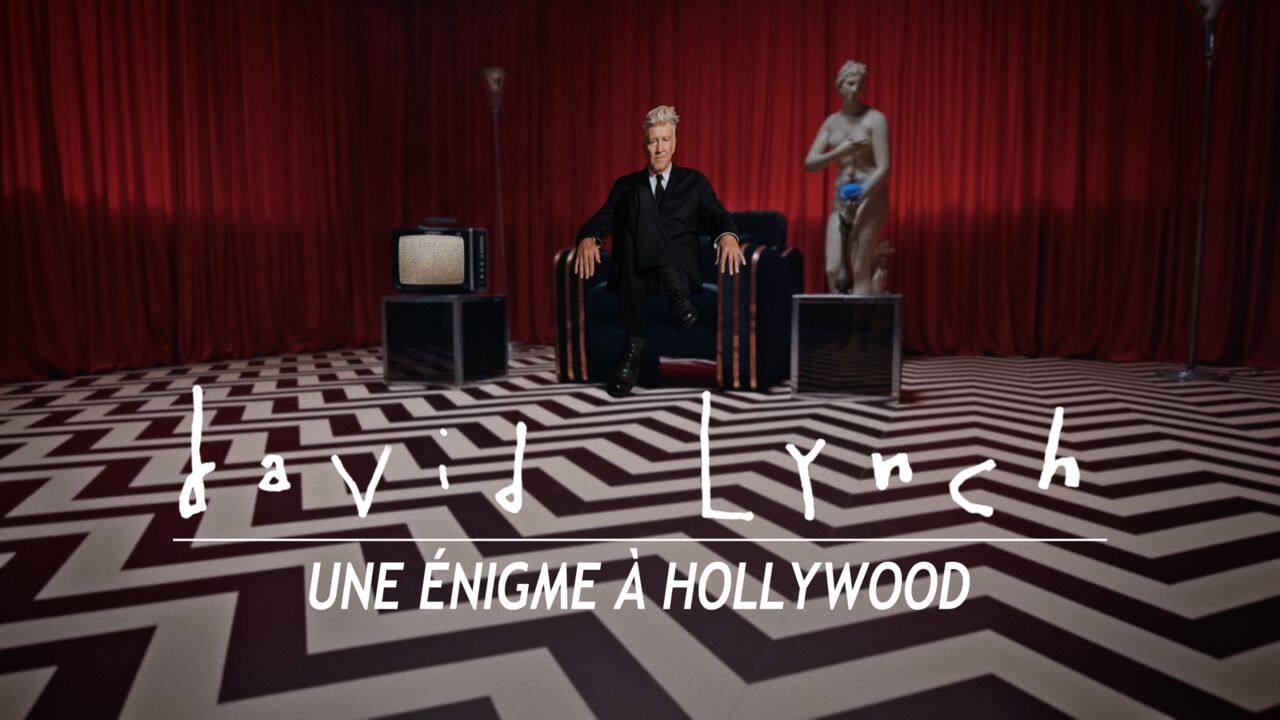 Poster of 'Welcome to Lynchland'.
Your documentary follows a linear narrative while Lynch’s films defy linearity. Was it a conscious decision to follow a chronology?
When you are making a movie like that, you have to answer to what the TV channel asks you. I was in between wanting to make that movie and also finding a channel. In France, the only channel which can broadcast a movie about David Lynch is Arte Channel (Arte TV). But they try to talk to a large audience. I wanted to make a Lynchian movie and to go inside the Lynch universe and try to use his vocabulary, for example, and pictures and set-up, etc. But I had to find a way to talk to a large audience and even to people who don’t really know David Lynch movies and to grab them and to take them with us into the Red Chamber, in the Red Room [a recurring motif in Lynch’s work, often symbolising hidden truths, the subconscious, or the mysterious nature of reality]. And, so, that’s why I had to be more chronological. Also, I wanted to show that when you read all of Lynch’s movies together, there is a whole story. So, we had to go back to the beginning, to Eraserhead. And before that is a painting. And to show how from the painting he goes to Eraserhead and then to The Elephant Man, Dune (1984), and Wild at Heart, and later, Twin Peaks. And things begin to twist and change in his narrative story. So, it was also very interesting to show how he evolves in his own movies.
The documentary segments where David Lynch speaks to the camera are in black-and-white while the others interviewed in the film are in colour. Why so?
In 2023, when the channel gave a go-ahead with the film, we made a Skype call with David Lynch. He was very generous and welcoming. He gave me two advices. The first one is to have fun. That’s what we tried to do. And the second one was: ‘tell that I’m the best director in the world’. But he was laughing about that. And he told us that he will not be interviewed by us for the movie as, at the time, he was closed in his house since he was already ill and could not go outside his house or meet people from outside because of Covid. So, I found a lot of interviews of him. He was very generous in the past to have given a lot of interviews and to explain a lot of things. We used those footages. By working with David and his team, we had access to different people who knew him very well, his main actors like Kyle MacLachlan, Laura Dern, Isabella Rossellini and people from his family, his two ex-wives (including his first wife Peggy Reavey) and also his best friend, with whom he began in the movies. So, with time, at the end, I discovered that I didn’t need anymore to bother David Lynch with an interview because I had everything I needed.
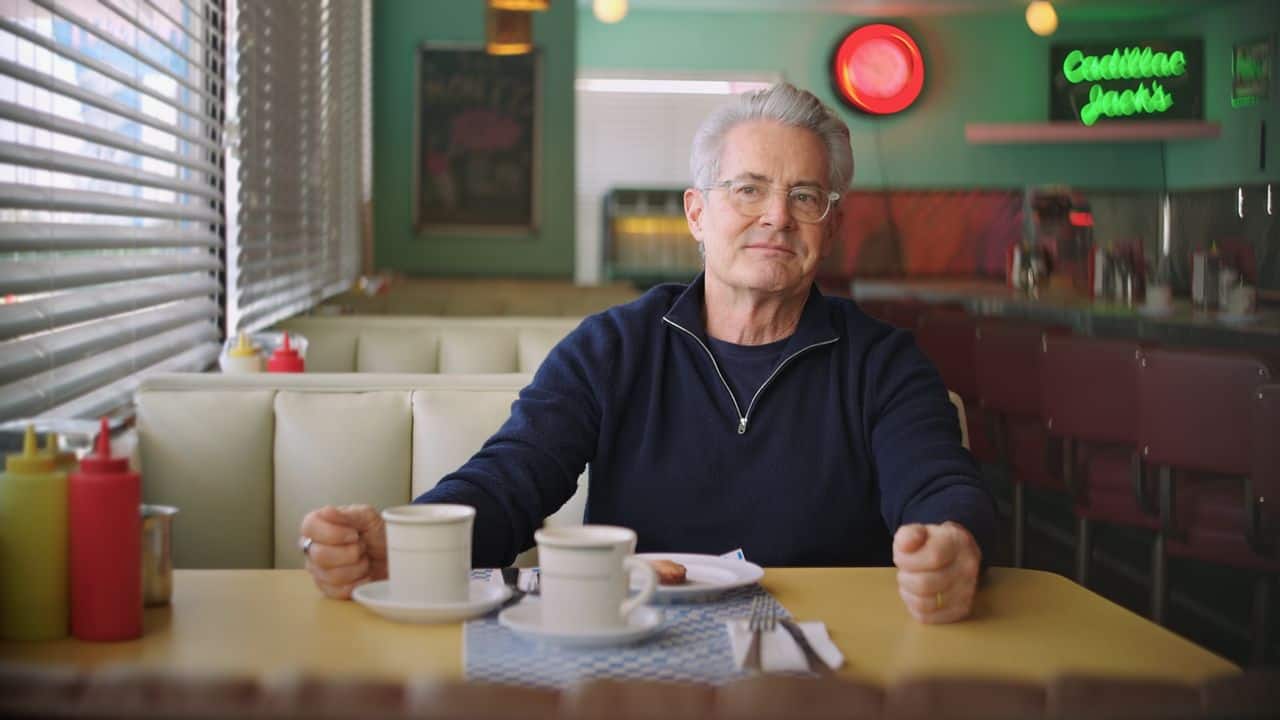 Actor Kyle MacLachlan in a still from the documentary 'Welcome to Lynchland'.
The documentary doesn’t delve much into his personal life, which is also an enigma for his audience. We don’t get to know who David Lynch was in his intimate relationships, in his personal life as a father, as a husband.
I’m more interested by his work than by his life. But I know part of his life. And for me, what I have to know is the things that helped me to understand his work.
You weren’t treating this as a biography of David Lynch? Was your focus only on his filmography?
It’s a mix. But the goal is to understand his creative process, and why he did that style of movie. So, there are things that in his biography are very important to understand. Like Isabella Rossellini said at the beginning of the movie, that a lot of documentarians or journalists want to make the link between the life and the work. Sometimes, it’s interesting, and sometimes, it’s not. So, it’s another enigma to know if there is a link. I’m sure there is a link with his childhood and his childhood traumas, which you carry into your adulthood and it shows in your work. That would have been interesting. But it’s a mystery that we have to respect. And, maybe, someday somebody will find something.
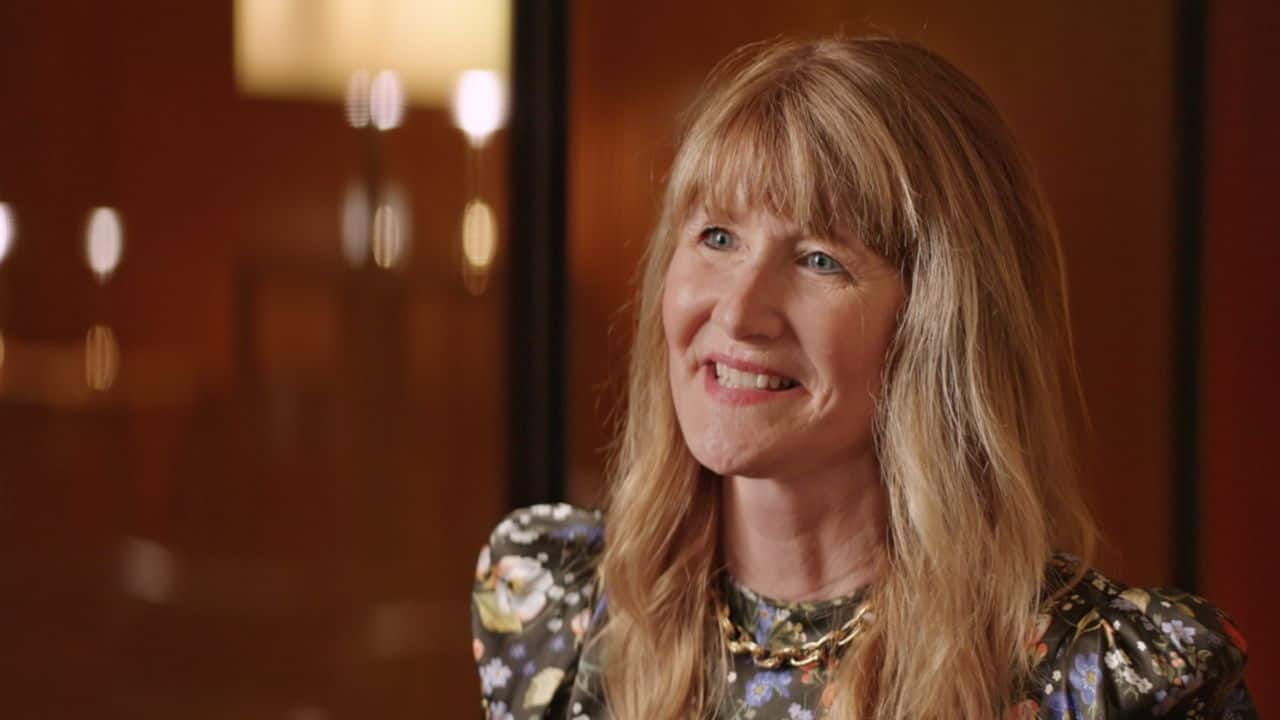 Actress Laura Dern in a still from the documentary 'Welcome to Lynchland'.
The documentary throws light on Lynch’s relation with France. Could you elaborate on his artistic shift in France?
He’d wanted to go to Festival de Cannes since his first movie Eraserhead but that was not possible at that moment. So, the Palme d’Or win (for Wild at Heart) was a very important moment in his career, it changed his professional life. He developed a very strong relationship with France at that moment and with Festival de Cannes. What was the most important thing for him was to have the final cut of his movie. And that was something he couldn’t have for real in Los Angeles and the US, because the relationship between director and producer is very different in America, where, the producer is the most important person on a film, while in France, it’s the director. That culture and respect was what David Lynch sought. After the Palme d’Or, he came to France and began to work with French producers. The first one was CiBy 2000, created by Francis Bouygues, a French businessman. The complete final cut on his movies rested with Lynch here. He was free to do exactly what he wanted, shoot for as long as he wanted. He then worked with StudioCanal, which is a major cinema producer/distributor in France. Lynch was able to make his movies like Inland Empire as a very experimental movie. It’s a crazy movie, which I’m not sure whether he would have been able to make in America.
After Dune flopped (doomed by Hollywood studio interference), he made Blue Velvet, which, I think, after Eraserhead, is really his first very personal movie. He put in it a lot of his own story. And, for a lot of people, Blue Velvet is the first real classical David Lynch movie. After that, he made Wild at Heart. Then, wanting to do something different, he came to France. After Inland Empire, which was not a commercial success, he was not able to make more movies because the doors were closed for him. So, he returned to painting. He made a huge exhibition in the Fondation Cartier in Paris, which was extraordinary. This launched his artistic painter career. It was a different way for him to experience himself. He spent several months each year in France to make his art (including lithography).
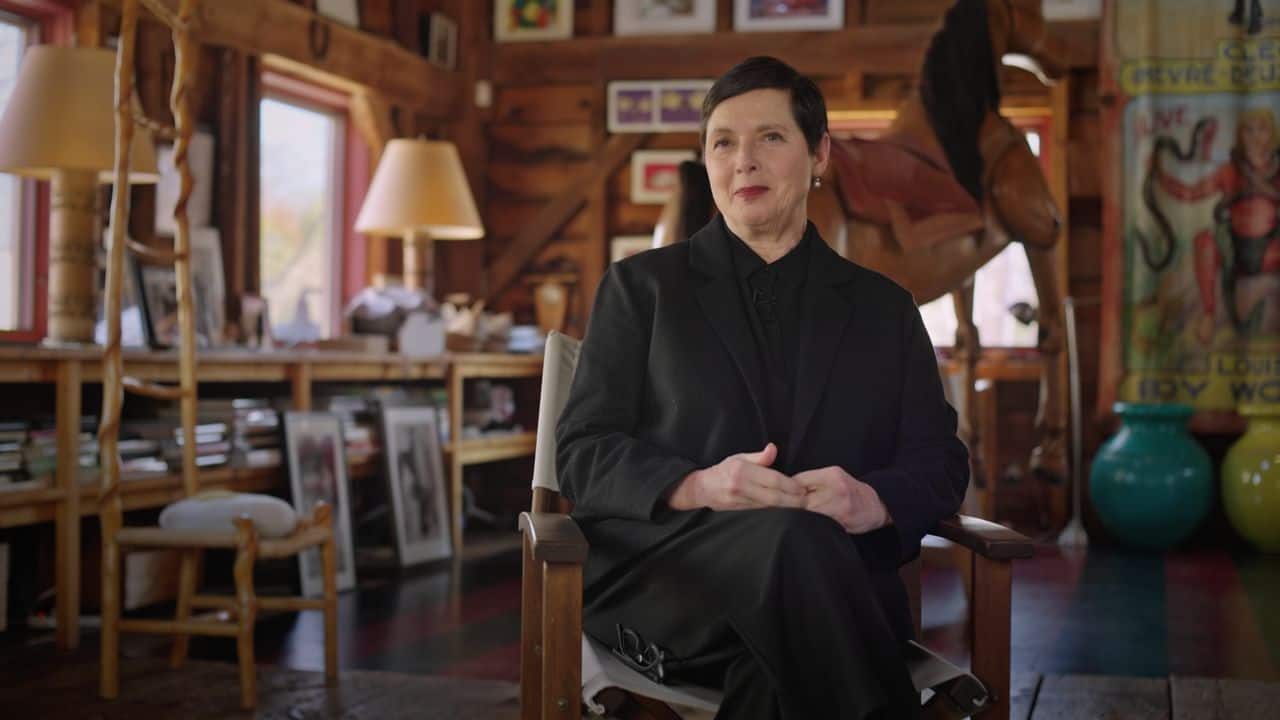 Actress Isabella Rossellini in a still from the documentary 'Welcome to Lynchland'.
Lynch’s cinematic inspiration began with painting (the abstract art of Francis Bacon) and to painting he returned. Painting is a leitmotif in your non-fiction work. In 2022, you made a documentary on the American abstract painter Joan Mitchell.
At that time, there was a huge exhibition [of Joan Mitchell’s works] in Fondation Louis Vuitton in France. So, we had a chance to make this movie [Joan Mitchell: Woman in Abstraction]. I had the chance to make several documentaries about painting: Mitchell, but also the French painter Bernard Buffet, and now I’m working on a new painter. He’s Chinese and French. Zao wou-ki came to France in the 1950s. His work is a very beautiful mix between Chinese traditional painting, for example, ink painting and abstract Western painting. It’s a new quest for me to understand how he evolved. My work on Mitchell taught me a lot about the link with poetry, with feelings and the subconscious. Abstract painting could be a lot of things and could be very personal. It’s the same for Lynch. He mixed a lot of things in his movies. He came from abstraction in painting, and while he developed his work in cinema, he remained an abstract artiste.
I’m very passionate by the arts at large and I’m a musician. I play the saxophone. By making documentaries, I had a chance to discover the other arts, like painting, but also design, architecture, sculpture, and writing. I’m passionate about the creative process. Each time, I make a quest to try and understand how these artists discover and create what they did. That was the same for David Lynch. There is a quote I love from the painter Paul Klee. He said that an artist is not here to copy the reality, he’s here to reveal, to make visible the invisible. And for me, it’s really what David Lynch does in his movie. He reveals something, which is here, around us, but under the surface. And by showing it in his movie, we can see it.
Is there any French filmmaker who follows in the Lynchian tradition of filmmaking?
I think there are a lot of people who don’t want to say that they are inspired by Lynch but they are very inspired. There is this French director named Bertrand Bonello, who just made a movie named La Bête (The Beast, 2023). It’s really inspired by the David Lynch universe.
Did Lynch see your final film?
When I finished the editing, I sent the movie to David Lynch. He watched it and was very generous to write a mail. He wrote everything in caps, that he loved the movie. And there were two things that he liked a lot. The first one was Pacôme Thiellement, the specialist (exegete) we had in the movie, he’s interested in different sciences, history, and spirituality and has written a lot about Lynch and his Twin Peaks. Lynch told me that Thiellement was investigating inside the movie and discovered things and links that nobody else had before him. The best things I’ve read about David Lynch were in his (Thiellement’s) books.
And the second thing that Lynch liked a lot was the ending of the movie. We put his voice at the end, telling a prayer, like a Buddhist prayer. And he loved that. He said he liked the end because it didn’t end. And today, this end has another meaning since he’s gone.
Discover the latest Business News, Sensex, and Nifty updates. Obtain Personal Finance insights, tax queries, and expert opinions on Moneycontrol or download the Moneycontrol App to stay updated!
Find the best of Al News in one place, specially curated for you every weekend.
Stay on top of the latest tech trends and biggest startup news.