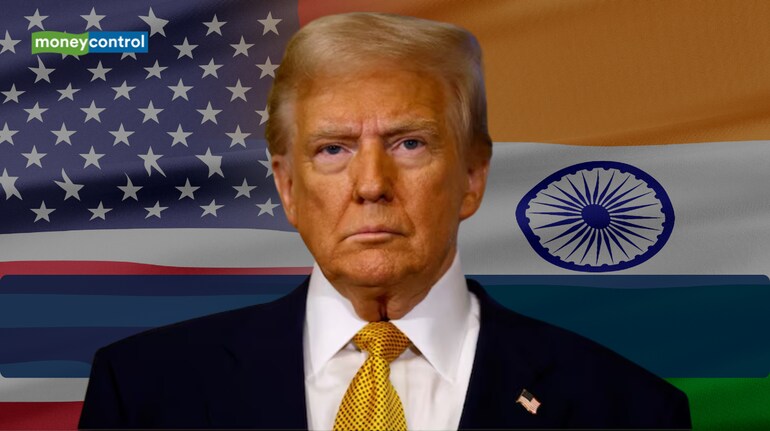
A new policy memo from the Trump administration has sent shockwaves through the world of higher education, but the real story isn't just about who gets blocked at the gates. The directive, targeting nine elite US universities, proposes a restructuring of academia, with consequences that could ripple across the globe, creating unexpected winners and forcing a strategic rethink for thousands of aspiring students, particularly from India.
The core of the "Compact for Academic Excellence in Higher Education" is a dual cap: limiting international undergraduates to 15% of the student body, with no more than 5% coming from any single country. For Indian students, who constitute one of the largest and most vibrant international cohorts in the US, this seems like a direct blow. However, a deeper analysis suggests this move may accelerate existing trends and unlock opportunities far beyond the nine named institutions.
Read Also - NRI Village of India: Where BMWs & Mercedes are common, bank deposits exceed Rs 1000 crore
The immediate impact of the policy is concentrated on the nine prestigious institutions explicitly named in the memo: the Massachusetts Institute of Technology (MIT), the University of Pennsylvania, the University of Arizona, Brown University, Dartmouth College, the University of Southern California, the University of Texas, the University of Virginia, and Vanderbilt University.
The initial impact is undeniable. Universities like MIT, the University of Pennsylvania and the University of Texas at Austin are dream destinations for top Indian talent in STEM and business. The 5% per-country cap will create an unprecedented bottleneck for applicants from India and China, making admission to these schools more competitive than ever.
While the headlines focus on the nine universities, the policy may inadvertently benefit hundreds of other top-tier American institutions. Prestigious public universities like the University of Michigan, UC Berkeley, and private colleges like Rice University or Notre Dame, which are not bound by this memo, suddenly become more attractive and potentially more accessible for high-achieving Indian students.
One of the memo's most overlooked clauses requires universities with massive endowments (over $2 million per student) to waive tuition for students in "hard science" disciplines. For Indian students pursuing advanced degrees in fields like physics, chemistry, computer science, and engineering, this could be a significant financial incentive.
While the undergraduate cap is restrictive, this provision signals a continued desire to attract top-tier graduate researchers in critical STEM fields. It creates a paradoxical situation: the path to a bachelor's degree at these schools narrows, while the funding for a PhD in sciences could become more generous, reinforcing America's drive for research supremacy.
The proposed policy does not exist in a vacuum. Competing study destinations like Canada, the United Kingdom, Germany, and Australia have been aggressively marketing themselves to international students with favorable post-study work visas and streamlined immigration pathways.
While it creates immediate hurdles for Indian students targeting a handful of elite schools, it may ultimately democratize the pursuit of an American education and empower students to make more strategic, global choices about their future.
Discover the latest Business News, Sensex, and Nifty updates. Obtain Personal Finance insights, tax queries, and expert opinions on Moneycontrol or download the Moneycontrol App to stay updated!
Find the best of Al News in one place, specially curated for you every weekend.
Stay on top of the latest tech trends and biggest startup news.